Italian National Agency for New Technologies, Energy and Sustainable Economic Development

MEDIA - Press office ENEA
Press releases and news
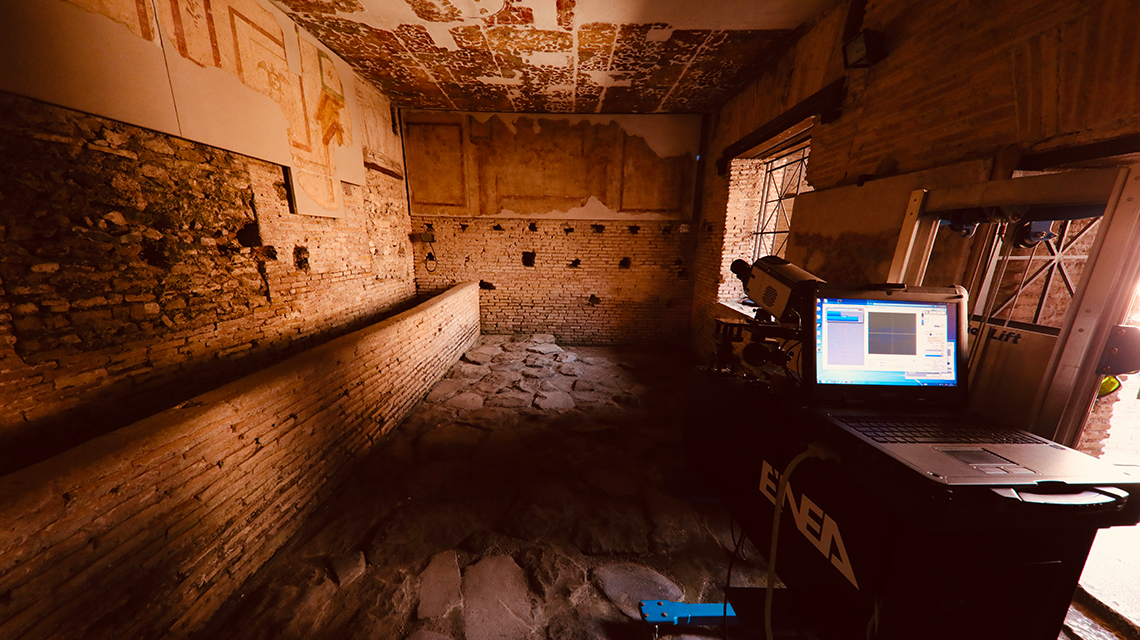
An innovative 3D virtual method for interacting with inaccessible cultural heritage- allowing to capture details not visible to the naked eye- based on a combination of 5G technologies, the cloud, satellite services, photogrammetry and multimedia information, is the outcome of the project VADUS, conducted by ENEA, Sapienza University of Rome, the Colosseum and Ostia Antica Archaeological Parks, the Pietro Micca and the 1706 Siege of Turin Museum, TIM, Next-Systems Engineering (coordinator) and funded by the European Space Agency (ESA), presented on 9 and 10 May at the ENEA Frascati Research Center at the Workshop “Research, Development and Applications to the Cultural Heritage. Project VADUS, from outcomes to future collaborations”.

Working from home reduces the emission of approximately 600 kilograms of carbon dioxide per year per worker (-40%)[2] with considerable savings in time (approximately 150 hours), distance traveled (3,500 km) and fuel (260 liters of petrol or 237 liters of diesel), as shown by an ENEA study on the environmental impact of remote working in Rome, Turin, Bologna and Trento over the four-year period 2015-2018, published in the international journal Applied Sciences.

ENEA presents the first Italian model of Renewable Energy Community (CER), an actual urban district self-producing and sharing energy and providing services to citizens.

ENEA has patented an innovative and low-cost technique to manufacture fiber optic sensor chains to be used for the structural monitoring of large civil and geotechnical engineering works like viaducts, dams and pilings. The system was developed at the ENEA Micro and Nanostructures Laboratory for Photonics and is already suitable for industrial use with a Technological Maturity Level of 8-9, although it is possible that further engineering to better solve construction site problems and achieve certifications for specific applications will be needed.

Steps forward in cancer treatment: TOP-IMPLART an innovative linear proton accelerator dveloped at the ENEA Frascati Research Center (Rome), in collaboration with the Istituto Superiore di Sanità (ISS) and the Regina Elena National Cancer Institute (IRE-IFO), has reached for the first time a delivered energy of 71 MeV, the value required for medical application in the treatment of some superficial tumors like ocular melanoma. The plant, unique in Italy, also for its increasingly effective and less invasive oncological radiotherapy applications, is based on advanced technology, can also treat tumors in close proximity to critical organs, reducing collateral damage and protecting healthy tissues .
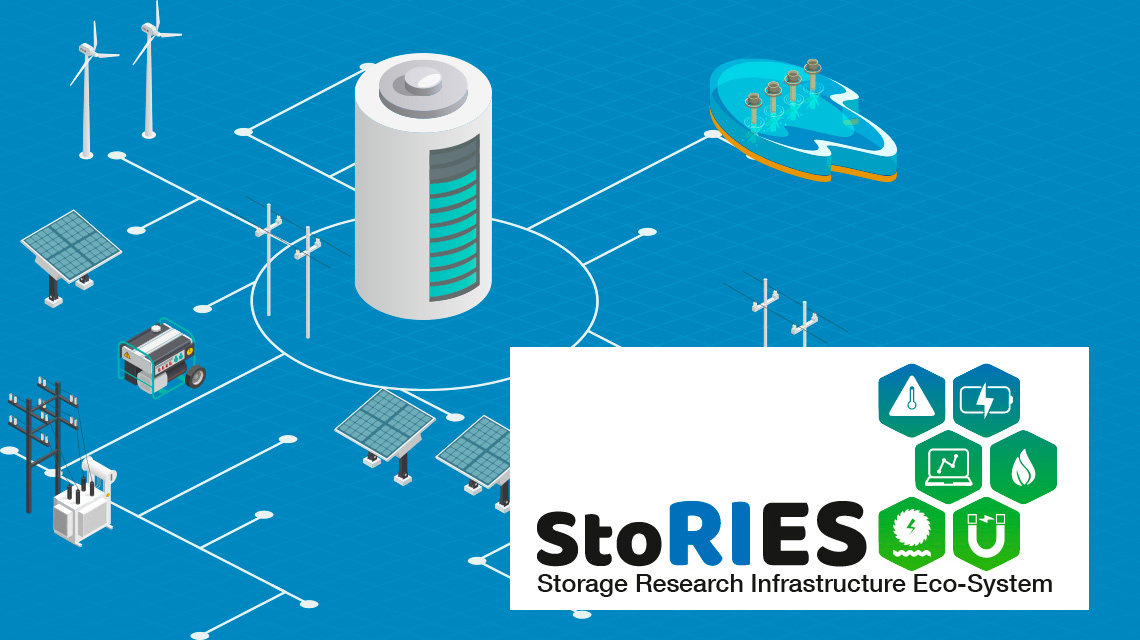
Creating the first European network of energy storage research infrastructures to encourage growth and diffusion of renewable sources is the objective of the project StoRIES comprising ENEA, Cnr, Eni and 43 partners from 17 European countries, including the German research center Karlsruhe Institut Fur Technologie as coordinator. The four-year project is funded with 7 million euro as part of the European Horizon 2020 program and involves research institutions, technology institutes, universities, industries, members of the European Energy Research Alliance (EERA) and associations, including the European Association for energy storage (EASE). To access the research infrastructures made available by the project partners, just participate in the Transnational Access (TNA) calls.