Italian National Agency for New Technologies, Energy and Sustainable Economic Development

MEDIA - Press office ENEA
Press releases and news
The energy performance of the certified national building stock continues to increase significantly as shown by the IV annual report on the energy certification of buildings by ENEA and the Italian Thermotechnical Energy and Environment Committee (CTI), drawn up on the basis of approximately 1.3 million energy performance certificates (APE) registered in the SIAPE and issued in 2022 from 17 Regions and 2 Autonomous Provinces. The report highlights a percentage decrease in properties in the lowest energy classes F and G (-3.7%), compared to a mirror increase in the highest classes A4-B (+3.7%). However, distribution by energy class confirms that approximately 55% shows low energy performance (classes F-G).
In Italy, around 10 billion m3 of methane gas[1] were saved in eight months (August 2022 - March 2023), 18% less than the average consumption for the same period in the last 5 years, exceeding by about 20% (approximately 2 billion m3) the reduction of 8.2 billion m3 set by the national plan for containing natural gas consumption, as calculated by ENEA, which also reported a reduction in consumption slightly higher than the EU average (-17.7%).
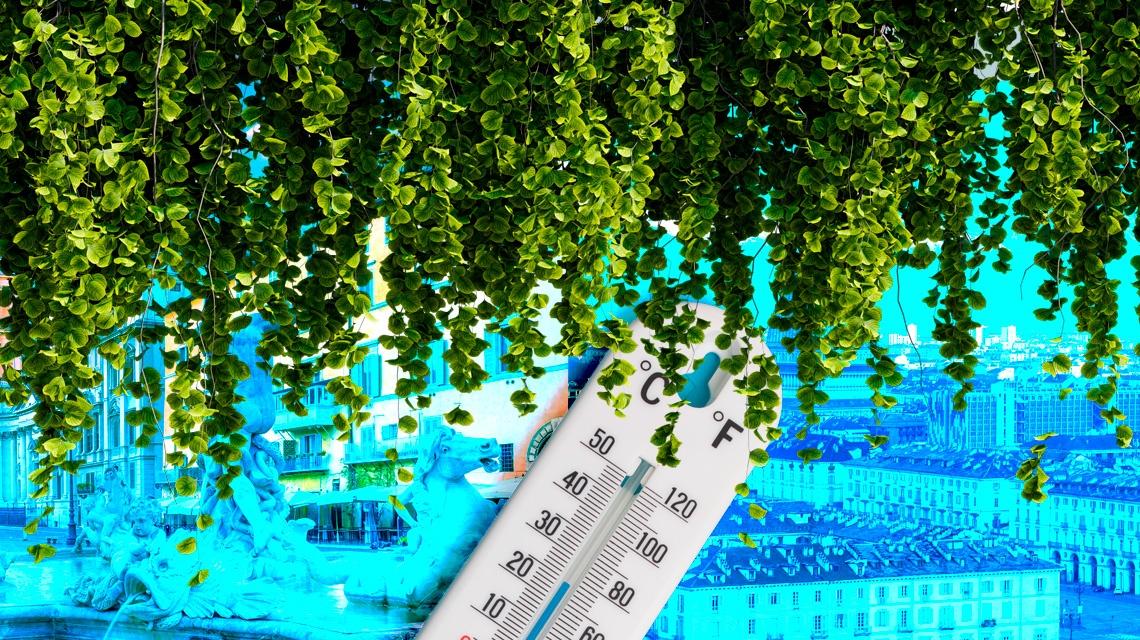
Green coats on buildings reduce urban air temperature by more than 1 °C in summer, as shown by a new ENEA study published in Energy and Buildings. The study evaluated the efficiency of widespread roofs and walls covered with vegetation against heat islands in densely populated urban areas in Rome and Turin in a typical summer day

ENEA and Sapienza University of Rome are developing wearable and customized devices ENEA and Sapienza University of Rome are working on a wearable and customized sensor which alerts users to the strenght of UV radiation, with the aim of measuring skin exposure to solar radiation and avoiding exceeding recommended limits of ultraviolet radiation, which synthesises vitamin D that helps the body absorb calcium.
ENEA has signed a collaboration agreement with the National Council of Shopping Centers (CNCC) and Italian Creative Talents Foundation (FCI) to promote sustainable management and behavior models in commercial activities from an environmental and social viewpoint and in various areas like nutrition, use of materials and end-of-life products, energy and natural resources.
A pilot model for turning manufacturing waste into resources to be reused in other manufacturing processes in the Marches region, with over 30 companies brought together, about 200 shared resources and almost 90 potential synergies including supply and demand. These are some of the results of the MARLIC project, funded with 11.4 million euro by the Marches Region, comprising ENEA and 20 universities, research institutions and local companies, including the Cnr, the Marche Cluster Foundation and HP Composites (coordinator).