Italian National Agency for New Technologies, Energy and Sustainable Economic Development

MEDIA - Press office ENEA
Press releases and news
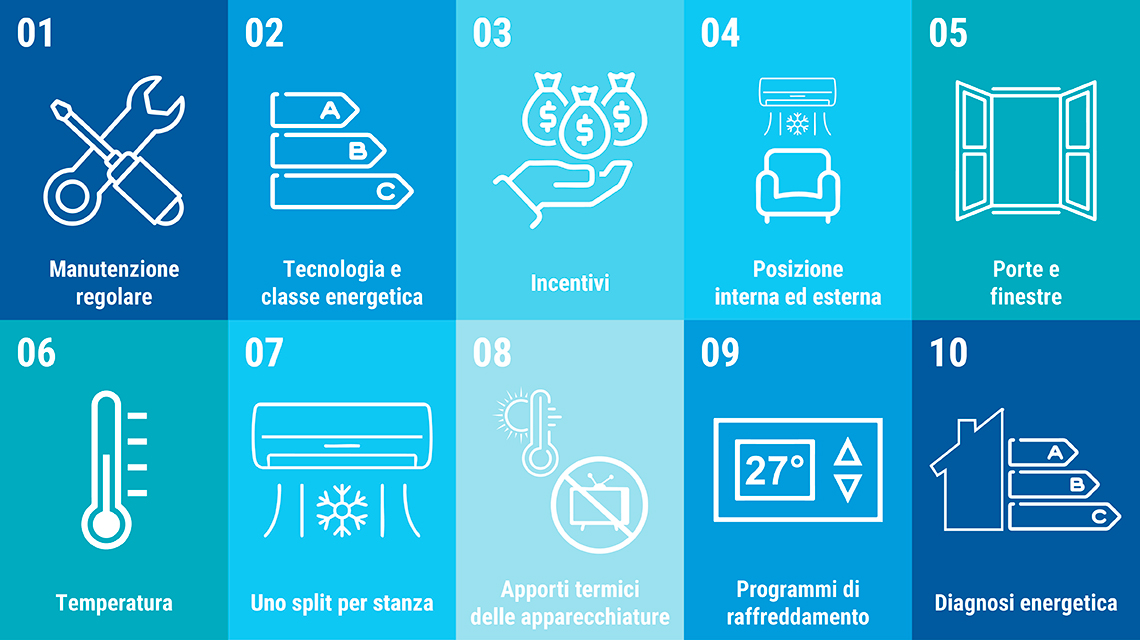
Here’s ENEA advice to keep your home cool and your utility bills in check while minimizing your environmental impact: in addition to how to improve the performance of existing air conditioners, ENEA experts recommend replacing older air conditioning units with a single heat pump system for both summer cooling and winter heating, which reduces both costs and environmental impact.
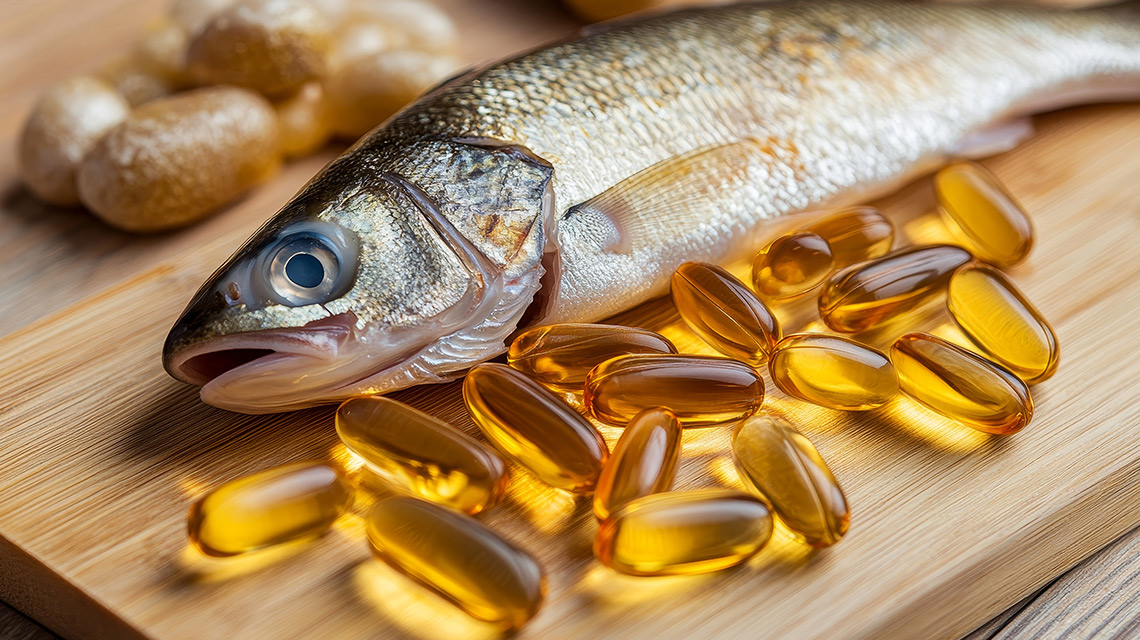
ENEA has developed an environmentally friendly process to extract vitamin D and Omega-3 from Blue Fish waste like sardines and mackerel for use in new nutraceutical products. The activity was conducted as part of the VitaDwaste project [1], coordinated by the University of Camerino, whose partners include the CNR, the universities of Eastern Piedmont and Bologna, and CREA.
ENEA has developed the TE3C software, at the request of Utilitalia, which enables companies to quantify energy savings and CO2 emissions avoided by using secondary materials (waste, by-products or recycled materials) in place of virgin raw materials.

Basilicata is the first region in Italy to have joined the ENEA PELL public lighting platform, a monitoring system for public energy infrastructures to guide and support the transition towards more efficient, effective, resilient and sustainable cities. The information collected on 131 Lucanian municipalities will be evaluated through performance indicators, both at the urban and individual system level, to set up and define an infrastructure management process with a smart city and smart land perspective.

The next milestone in human space exploration envisions long-term human presence beyond low Earth orbit. Long-duration space missions, taking place outside the protective shield of Earth's magnetic field, expose humans to extreme conditions —including altered gravity, prolonged isolation, and cosmic and solar radiation —that can compromise astronauts’ physical and psychological health, as well as the functionality and resilience of bioregenerative systems.
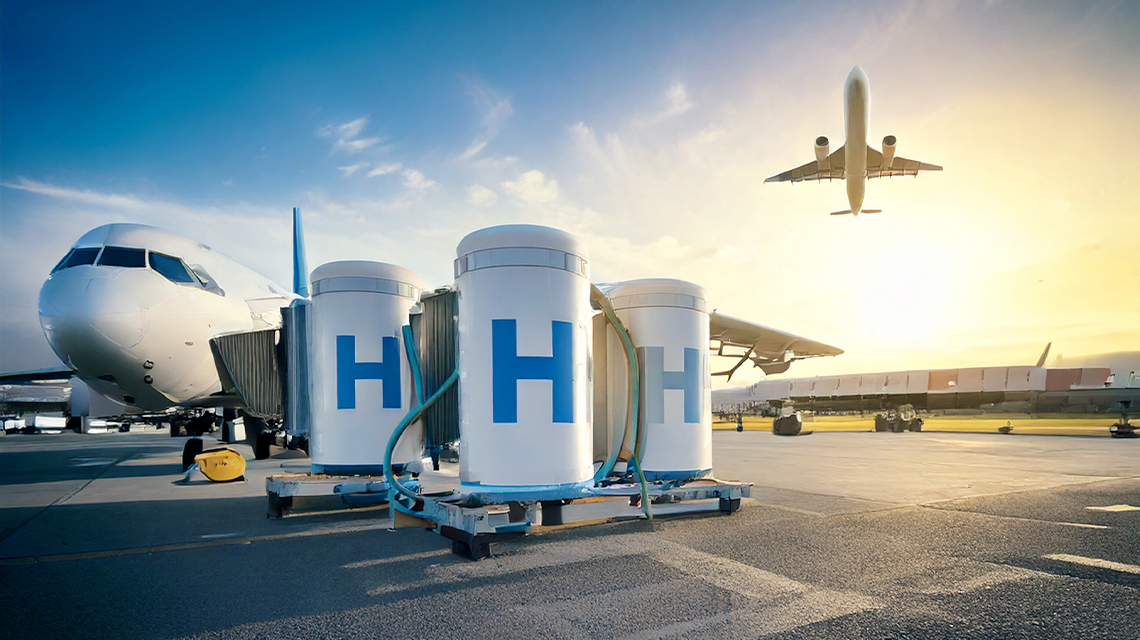
ENEA and Enac (National Civil Aviation Authority) have developed the first guidelines on the use of hydrogen at airports, which outline specific actions and pathways for decarbonizing air transport. The handbook, available online and titled Hydrogen in the Airport Supply Chain, provides operational guidance, starting with an analysis of air transport regulation and airport traffic classification, offering measures based on airport size and user type.