Italian National Agency for New Technologies, Energy and Sustainable Economic Development

MEDIA - Press office ENEA
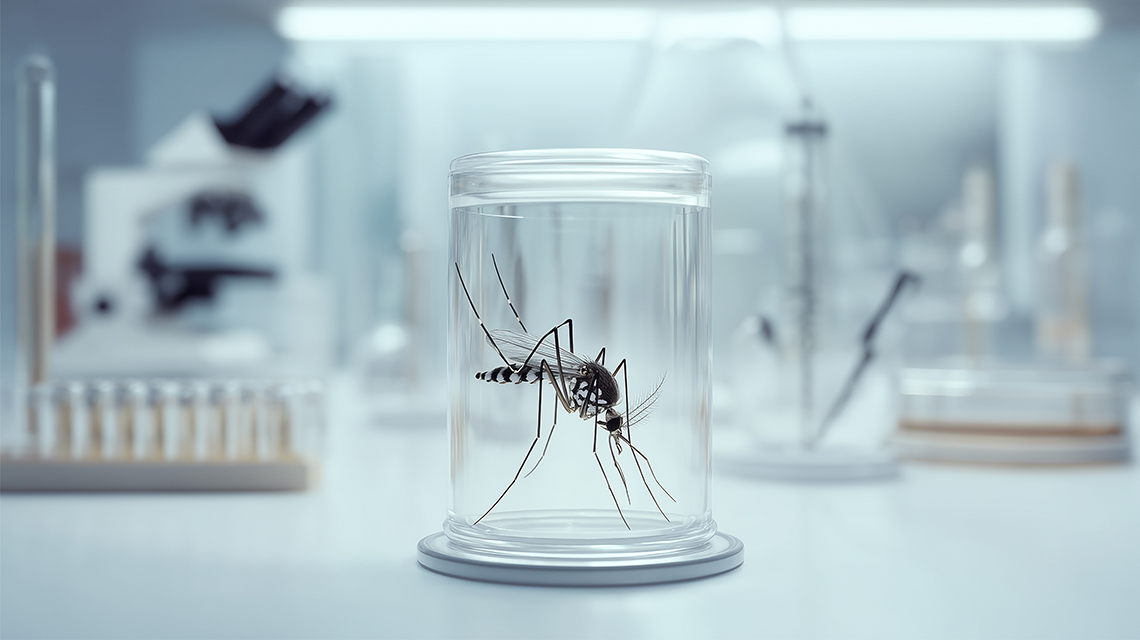
Health: Asian tiger mosquito reproductive capacity reduced by 90%
Results of tests conducted by ENEA, Debug by Google and Sapienza University at the Casaccia Research Center (Rome)
For the first time in Europe, an innovative platform developed by ENEA for the application of the Incompatible Insect Technique (IIT) is being tested on a large scale. IIT is a sustainable strategy for controlling the Asian tiger mosquito and other harmful insects by naturally reducing female fertility.
Conducted at the ENEA Casaccia Research Center (Rome) as part of a collaboration between ENEA, Google LLC (Debug Project), and Sapienza University of Rome, the first part of the experimental campaign showed a significant reduction in the number and fertility of Asian tiger mosquito eggs, resulting in an 88% reduction in the species' ability to produce fertile eggs that will overwinter compared to the control group.
The Asian tiger mosquito (Aedes albopictus) is an invasive insect that, in addition to being a nuisance for residents and workers, can transmit dengue, chikungunya, and Zika viruses, responsible for diseases prevalent in tropical and subtropical regions. Climate change is causing rapidly increasing cases in Europe, too, with hundreds of human infections in the last year.
The IIT technique is based on the release of large numbers of males that, thanks to a symbiosis with a very common and harmless bacterium, Wolbachia, are reproductively incompatible with wild females. Following these matings, all the eggs produced by the wild females are sterile. The higher the number of sterilized mosquitoes, the greater the strategy's impact on the mosquito population's ability to reproduce and multiply.
"This approach, applied exclusively to the Asian tiger mosquito, offers a concrete alternative to the widespread use of chemical insecticides. The observed result is particularly significant because a stable reduction in the presence of mosquitoes capable of carrying dangerous viruses means strengthening health prevention, particularly in the most exposed urban and peri-urban contexts. The resumption of activities in 2026 is expected to further amplify this positive effect," said Riccardo Moretti, researcher at ENEA's Agriculture 4.0 Laboratory. "Furthermore, by acting on population dynamics over time, the foundation is laid for more long-lasting, effective, and sustainable control of populations, keeping them consistently below epidemiological risk thresholds."
The ENEA research team was the first in the world to obtain an Asian tiger mosquito line with the characteristics described. Debug, a Google initiative, also developed this control strategy to combat other mosquito species and is already involved in several large-scale IIT implementation programs in different areas of the world. As part of this project, Debug is responsible for mass rearing the Asian tiger mosquito population that produces incompatible males, developed by ENEA, selecting only males, and handling their packaging and air transport from Miami, USA, to the release area. Debug is also responsible for providing release support technologies. ENEA is responsible for the releases and monitoring the results in the treated area. Sapienza University of Rome, thanks to its experience studying pathogen-transmitting mosquitoes, is contributing to the program through validation methods and monitoring untreated control areas.
"The project is part of a broader vision that considers biological vector control as an integral part of ecological transition strategies, climate change adaptation, and urban regeneration," said Maurizio Calvitti, researcher in the Sustainable Agri-Food Systems Division at ENEA. "From this perspective, the ENEA Casaccia Center represents a pilot model of particular value for the transferability of the methodology to other operational contexts, both in Italy and internationally, a concrete example of how scientific innovation, sustainability, and land management can converge towards shared goals of climate change adaptation and mitigation" he concluded.
The experimental campaign at the ENEA Casaccia Research Center
Between the end of July and the end of October 2025, a total of approximately 1.6 million incompatible Asian tiger mosquito males were released on the 53-hectare campus of the ENEA Casaccia Research Center, selected for its environmental characteristics and its representativeness as a peri-urban area of Central Italy. Monitoring, conducted with ovitraps and adult traps, allowed us to compare data from the treated site with those from the previous year and with a control area in Rome monitored at Sapienza University.
The data collected show that, in the ENEA-treated area, the average weekly number of eggs collected was significantly lower than in the controls, and that the reference threshold of 100 eggs per trap, indicated in the literature as a warning value for circulating mosquito-borne viruses, was exceeded in only two out of 16 samplings, compared to 12 out of 16 in the Sapienza control area and 14 out of 16 in the ENEA 2024 sampling. Added to this, there was a marked reduction in egg fertility, with values approaching zero in the final phase of the experimental season despite a not so high mean ratio between incompatible and wild males (1.7:1) during the trials.
In light of the results obtained, the team from the ENEA Department for Sustainability, Circularity, and Adaptation to Climate Change of Production and Territorial Systems (SSPT), in collaboration with the same partners, is continuing the experimentation throughout 2026, following a logic of continuity with the previous year. This involves bringing forward the releases to target the Asian tiger mosquito population from the start of the breeding season, as well as increasing the release doses. Depending on the needs, the team will also evaluate whether to integrate the IIT with other compatible measures, such as the removal of larval breeding grounds and the support of larvicidal treatments.
Wolbachia and the Incompatible Insect Technique (IIT)
Wolbachia is a harmless bacterium present in most insect species with which it lives in symbiosis, meaning a close biological relationship. It is transmitted by female insects to all their offspring, and therefore beneficial for the bacterium itself in promoting survival and reproduction. Specifically, Wolbachia makes females in which it is present reproductively compatible with both males in which it is present and males that lack it; females lacking Wolbachia, on the other hand, are sterilized by males that host this bacterium. ENEA has reproduced this natural mechanism by replacing the Wolbachia present in the Asian tiger mosquito with another strain of the bacterium already widespread in nature because it is hosted by the common mosquito. The males of this new lineage sterilely fertilize wild females and, when released in large numbers to outnumber wild males, can sterilize the majority of eggs produced by the target population, resulting in its progressive decline. Male mosquitoes do not bite, and their use makes the technique highly specific because, once released, they will only target females of their own species. Since it does not rely on the release of any molecules or organisms not already commonly present, this strategy is safe. This technique, developed by ENEA and other research groups worldwide, currently represents one of the most innovative strategies for sustainable vector management and is being used in various regions of the world (especially in tropical climates), so much so that it has been recommended by the WHO as one of the most effective and safe strategies for combating mosquito-borne diseases. This approach fits perfectly within broader policies for promoting public health and the environmental, economic, and social sustainability of the cities of the future.
Fotogallery


Main scientific articles published by ENEA on the topic
- Lampazzi E, Virgillito C, Caputo B, Lombardi G, Santarelli G, Moretti R, Calvitti M. Spatial Dynamics and Sterilization Range of Incompatible Aedes albopictus Males: Advancing Toward an Optimized IIT Approach. Tropical Medicine and Infectious Disease. 2026; 11(2): 45.
- Moretti R, Lim JT, Ferreira AGA, Ponti L, Giovanetti M, Yi CJ, Tewari P, Cholvi M, Crawford J, Gutierrez AP, Dobson SL, Ross PA. (2025) Exploiting Wolbachiaas a Tool for Mosquito-Borne Disease Control: Pursuing Efficacy, Safety, and Sustainability. Pathogens, 14(3): 285.
- Branda, F., Cella, E., Scarpa, F., Slavov, S.N., Bevivino, A., Moretti, R., Degafu, A.L., Pecchia, L., Rizzo, A., Defilippo, F., Moreno, A., Ceccarelli, G., Alcantara, L.C.J., Ferreira, A., Ciccozzi, M., & Giovanetti, M. (2024). Wolbachia-Based Approaches to Controlling Mosquito-Borne Viral Threats: Innovations, AI Integration, and Future Directions in the Context of Climate Change. Viruses, 16(12): 1868.
- Lombardi G, Lampazzi E, Calvitti M. (2024) Incompatible insect technique: insights on potential outcomes of releasing contaminant females: a proof of concept under semi-field conditions. Pest Management Science, 80(10):5342-5352.
- Cholvi M, Trelis M, Bueno-Marí R, Khoubbane M, Gil R, Marcilla A, Moretti R. (2024). Wolbachia Infection through Hybridization to Enhance an Incompatible Insect Technique-Based Suppression of Aedes albopictus in Eastern Spain. Insects, 15: 206.
- Caputo, B., Moretti, R., Virgillito, C., Manica, M., Lampazzi, E., Lombardi, G., Serini, P., Pichler, V., Beebe, N.W., della Torre, A. and Calvitti, M. (2023), A bacterium against the tiger: further evidence of the potential of non-inundative releases of males with manipulated Wolbachia infection in reducing fertility of Aedes albopictusfield populations in Italy. Pest Management Science, 79: 3167-3176.
- Moretti R, Lampazzi E, Damiani C, Fabbri G, Lombardi G, Pioli C, Desiderio A, Serrao A, Calvitti M (2022) Increased biting rate and decreased Wolbachia density in irradiated Aedes Parasites and Vectors, 15: 67.
- Moretti R, Calvitti M (2021) Issues with combining incompatible and sterile insect techniques. Nature, 590(7844): E1-E2.
- Moretti R, Marini F, Lampazzi E, Calvitti M (2021) On the suitability of Aedes vexans to Wolbachia-based control strategies. Entomologia Experimentalis et Applicata, 169: 772–778.
- Caputo B, Moretti, Manica M, Serini P, Lampazzi E, Bonanni M, Fabbri G, Pichler V, Della Torre A, Calvitti M (2019) A bacterium against the tiger: preliminary evidence of fertility reduction after release of Aedes albopictus males with manipulated Wolbachia infection in an Italian urban area. Pest Management Science, 76: 1324-1332.
- Calvitti M., Moretti R., Lampazzi E (2019) The role of the endosymbiotic bacterium Wolbachia in the control of Aedes albopictus-borne human diseases. Atti Accademia Nazionale Italiana di Entomologia. Anno LXVI, XXIII: Approcci Genomici e Molecolari per il Controllo di Specie Invasive di Insetti di Interesse Agrario e Sanitario; 2018: 135-139.
- Moretti R, Marzo GA, Lampazzi E, Calvitti M (2018) Cytoplasmic incompatibility management to support Incompatible Insect Technique against Aedes albopictus. Parasites and Vectors 2018, 11(Suppl 2): 14-28.
- Moretti R, Yen P-S, Houé V, Lampazzi E, Desiderio A, Failloux A-B, Calvitti M. (2018) Combining Wolbachia-induced sterility and virus protection to fight Aedes albopictus-borne viruses. PLoS Neglected Tropical Diseases 12(7): e0006626.
- Puggioli A, Calvitti M, Moretti R, Bellini R (2016) wPip Wolbachia contribution to Aedes albopictus SIT performance: advantages under intensive rearing. Acta Tropica, Oct 23. pii: S0001-706X(16)30483-1.
- Calvitti M, Moretti R (2016) La tecnica dell’insetto sterile per il controllo integrato di insetti nocivi: evoluzione e prospettive. Energia Ambiente e Innovazione 3/2016: 14-21.
- Atyame CM, Labbé P, Lebon C, Weill M, Moretti R, Marini F, et al. (2016) Comparison of Irradiation and Wolbachia Based Approaches for Sterile-Male Strategies Targeting Aedes albopictus. PLoS ONE 11(1): e0146834.
- Dritsou V, Topalis P, Windbichler N, Simoni A, Hall A et al. (2015). A draft genome sequence of an invasive mosquito: an Italian Aedes albopictus. Pathogens and Global Health, 109(5): 207-20.
- Calvitti M, Marini F, Desiderio A, Puggioli A, Moretti R (2015). Wolbachia Density and Cytoplasmic Incompatibility in Aedes albopictus: Concerns with Using Artificial Wolbachia Infection as a Vector Suppression Tool. PLoS ONE. 2015;10(3): e0121813.
- Bourtzis K, Dobson SL, Xi Z, Rasgon JL, Calvitti M, Moreira LA et al. (2014) Harnessing mosquito-Wolbachia symbiosis for vector and disease control. Acta Tropica, 132S: 150S–163S.
- Moretti R. and Calvitti M. (2013). Male mating performance and cytoplasmic incompatibility in a wPip Wolbachia trans-infected line of Aedes albopictus (Stegomyia albopicta). Medical and Veterinary Entomology, 27(4): 377-86.
- Calvitti M, Moretti R, Skidmore AR, Dobson SL (2012) Wolbachia strain wPip yields a pattern of cytoplasmic incompatibility enhancing a Wolbachia-based suppression strategy against the disease vector Aedes albopictus. Parasites and Vectors, 5: 254.
- Calvitti, M., Moretti, R., Lampazzi E., Bellini R. e Dobson S. L. (2010). Characterization of a new Aedes albopictus (Diptera: Culicidae) - Wolbachia pipientis (Rickettsiales: Rickettsiaceae) symbiotic association generated by artificial transfer of the wPip strain from Culex pipiens (Diptera: Culicidae). Journal of Medical Entomology, 47(2): 179-187.
- Calvitti, M., Moretti, R., Porretta D., Bellini R. e Urbanelli S. (2009). Wolbachia removal in the mosquito Aedes albopictus: effects on male fitness. Medical and Veterinary Entomology, 23: 132-140.