Italian National Agency for New Technologies, Energy and Sustainable Economic Development

MEDIA - Press office ENEA
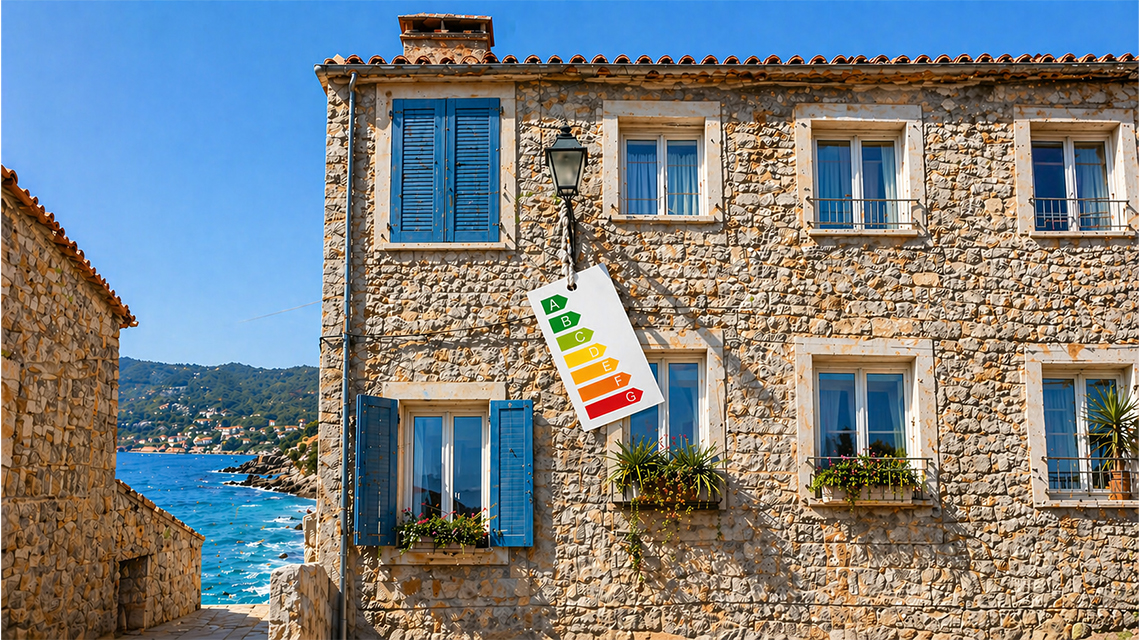
Energy: Vacant homes - energy retrofits boost market value by 45%
A study conducted by ENEA and MCE Lab showed that energy retrofits of vacant homes in Italy can increase their market value by up to 45%, boosting both tourist and residential rental rates thanks to lower utility bills, superior comfort and improved HVAC systems. The study identified the actions needed to revitalize and bring back to the market approximately 10 million vacant apartments in Italy (equivalent to about 27–30% of the national housing stock), taking into account costs, technical interventions and potential return opportunities.
“Most of these properties were built before 1980 and require energy and regulatory upgrades to become attractive in a market increasingly oriented toward green and smart homes” pointed out Nicolandrea Calabrese, head of the ENEA Laboratory for Energy Efficiency in Buildings and Urban Development. “Despite the improvements recorded between 2018 and 2023, with an increase in Class A buildings from 7.8% to 11.3%, approximately 70% of Italy’s housing stock remains in the three lowest energy efficiency classes” said Calabrese.
“In this regard, tax incentives—the Ecobonus, Bonus Casa and Conto Termico 3.0—can make a real difference, covering up to 50% of the costs of insulation, windows and doors, heat pumps and solar panels. And in turn, these upgrades allow homeowners to recoup their investment through energy bill savings that can exceed 50%” Calabrese continued.
The study examined the primary energy efficiency measures for residential buildings and estimated the related investments, based on Ecobonus data submitted to ENEA:
- thermal insulation of opaque, heat-dispersing upper components like roofs and ceilings: average cost 170 euros/m²
- Wall insulation: average cost €200/m². It varies according to the type of material and the technologies used (for example, insulation panels made of rock wool or glass wool are generally more expensive than those made of expanded polystyrene);
- window replacement: average cost €900/m². It varies according to the material (PVC, wood, aluminum, or wood-aluminum) and the type of windows and glass. These measures help improve airtightness and energy savings;
- sunshades: average cost €280/m². They help reduce electricity consumption for summer cooling;
- gas heating systems with heat pumps: costs vary based on power output and the technology chosen. Up to 10 kW: 950 euro/kW. Between 10 and 35 kW: 1,300 euro/kW. For a 150 m² apartment: between 10,000 and 12,000 euro;
- photovoltaic panels for electricity: average cost €2,300/kWp[1]. A 3 kWp system requires approximately 18 m² of surface area. It can be combined with an electric storage system, at an approximate cost of €950/kWh. Photovoltaic panels reduce energy bills and increase energy independence;
- Solar thermal panels for domestic hot water: average cost €1,600/m². For a family of four, approximately 4 m² of panel surface area is required;
- Building automation (home automation): average cost €70/m². Intelligent building management systems that ensure greater comfort and energy savings.
The ENEA-MCE Lab analysis presented three concrete examples demonstrating how energy retrofitting projects can increase a property’s market value by up to 45%, with benefits also extending to tourist and residential rental rates, thanks to lower utility bills and greater living comfort. Three property types were analysed: a city apartment, a vacation home in a tourist destination and a mountain chalet, all of which presented an increase in value and profitability following the renovations.
City apartment (Milan)
Initial situation (Class G): An older apartment has a lower market value. In Milan, this can be around 4,000 euro per square meter. The rent is also affected by the property’s poor energy efficiency, averaging about 180 euro per square meter per year.
After renovation (Class B): With a comprehensive renovation, the same property becomes a premium product. The sale price can rise to €5,800/m² (+45%), while the annual rent can reach €220/m² (+22%) thanks to lower utility bills for the tenant.
Beach house (Sestri Levante, Genoa)
Second homes in tourist destinations, which are often outdated, have enormous growth potential tied to the short-term rental market.
Initial situation (Energy Efficiency Class G): An apartment in need of renovation in a semi-central area may be worth around €3,200 per square meter. On the tourist rental market, during peak season, it can generate approximately €700–800 per week.
After renovation (Class B): the property not only increases in value, reaching €4,200/m² (+31%), but becomes much more competitive in the tourist market. Equipped with efficient air conditioning, new windows and modern amenities, it can be rented for €1,100–1,200 per week during peak season (+40%), attracting a more discerning clientele and ensuring higher occupancy even during the transitional season.
Mountain chalet (Madonna di Campiglio, Trentino)
In mountain areas, where heating costs are a critical factor, improving energy efficiency is even more rewarding.
Initial situation (Class G): An apartment in a 1980s condominium may be valued at around 5,500 euro per square meter. Its appeal for winter rentals is limited by high operating costs and suboptimal comfort, with a potential rental income of €900–1,000 per week during peak season.
After renovation (Class B): an upgrade with exterior insulation and state-of-the-art systems transforms the property. The sale price can jump to €8,000/m² (+45%), bringing it in line with new construction. The weekly rate during peak season can exceed €1,400 (+40%), and the property remains attractive even in summer if equipped with air conditioning.
“The EU Green Buildings Directive (2024/1275 on the energy performance of buildings) establishes a binding national trajectory for Member States for the gradual renovation of the residential building stock, with the goal of reducing the average primary energy consumption of the entire building stock by at least 16% by 2030 and 22% by 2035, compared to 2020 levels and net-zero emissions by 2050,” explained Calabrese. “Taking advantage of the tax incentives still available” he said “will maximize market value and, above all, ensure compliance with the objectives of the European Directive”
Notes
[1]The unit of measurement €/kWp (euro per kilowatt peak) is commonly used in the photovoltaic sector to indicate the installation cost of a system in relation to its rated power. The kWp (kilowatt peak) represents the maximum power that the system can produce under standard conditions of solar irradiance (1 kW/m²) and a temperature of 25°C.