Italian National Agency for New Technologies, Energy and Sustainable Economic Development

MEDIA - Press office ENEA
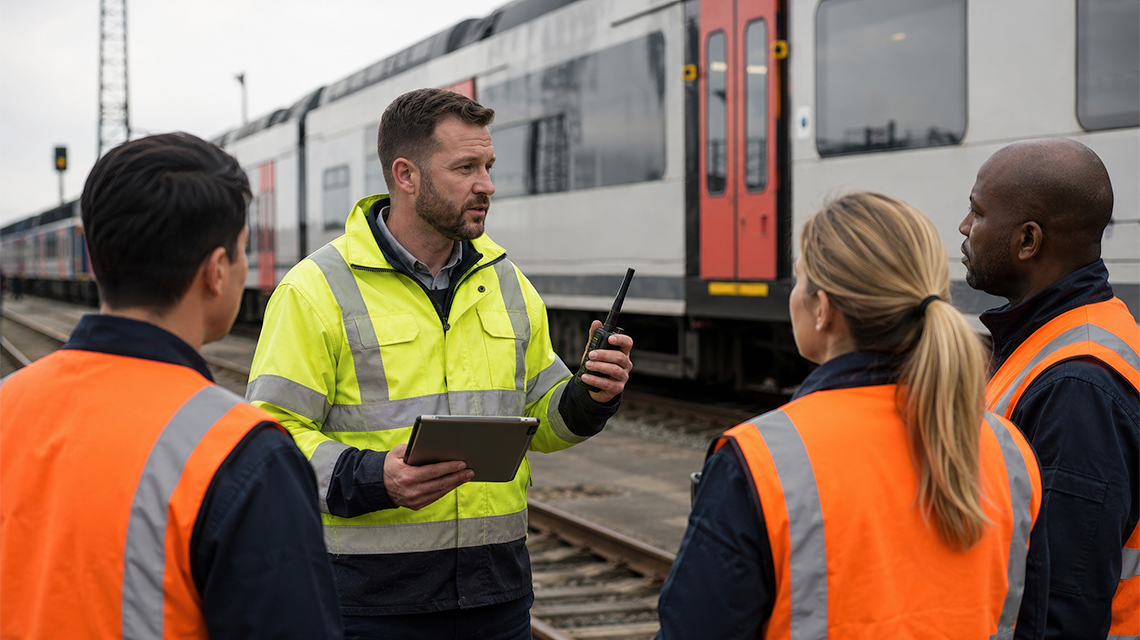
Training: ENEA contributes to keeping railway stations safe
Improving European railway stations safety by supporting the training of incident management personnel that handle chemical, biological, radiological, nuclear or explosive (CBRNe) agents is the objective of the European project CBRNe4rail, comprising twelve partners—including ENEA—from six European countries.
Railway hubs, by their very nature crowded and open spaces, are in fact critical infrastructure particularly difficult to control. They must be equipped with the most appropriate and efficient safety measures to prevent and, if necessary, respond to any crisis scenario, including CBRNe incidents. Among these measures is adequate and up-to-date training for railway operators to harmonize and optimize collaboration with the institutions responsible for emergency management.
The CBRNe4rail project aims to contribute, through the research community, to the improvement of training programs by introducing new emerging technologies and innovative teaching methodologies successfully developed and tested in previous European projects, with the goal of enhancing railway operators’ awareness and operational capabilities in the effective management of emergencies.
“The project addresses the need to enhance safety at railway stations. One of the unique aspects of CBRNe4rail is the proposal to include non-specialized personnel—so-called ‘zero responders’—in the training programs. In the event of an emergency, these individuals can play roles of practical importance in managing the very earliest stages of a crisis” said Valeria Spizzichino, ENEA project coordinator and a researcher atthe Physical Technologies and Safety Division (Nuclear Department).
As part of the project, ENEA and its partners have begun preparations for five exercises to be held at five European stations in the first half of 2027. Organized and coordinated by ENEA, they will be based on CBRNe crisis scenarios and serve to validate the tools, procedures and training content developed during the project.
“We recently approved the methods for conducting the exercises. The selected stations represent different types (small, large, passenger/freight, at street level and underground), so as to cover all possible scenarios” said Spizzichino. “The threats we will test and simulate are chemical, biological and radiological—associated or not with the use of explosives—and include scenarios in which simulated releases are caused by both accidental events and deliberate actions. The exercises will be conducted in full compliance with all safety regulations and with the appropriate authorizations, involving the closure of traffic in the affected areas. They will test the coordination capabilities among all parties involved, focusing on the immediate response and mitigation of the effects” he concluded.
At the end of the project, a validated CBRNe security concept will be developed, along with operational recommendations for the railway sector.