Italian National Agency for New Technologies, Energy and Sustainable Economic Development

MEDIA - Press office ENEA
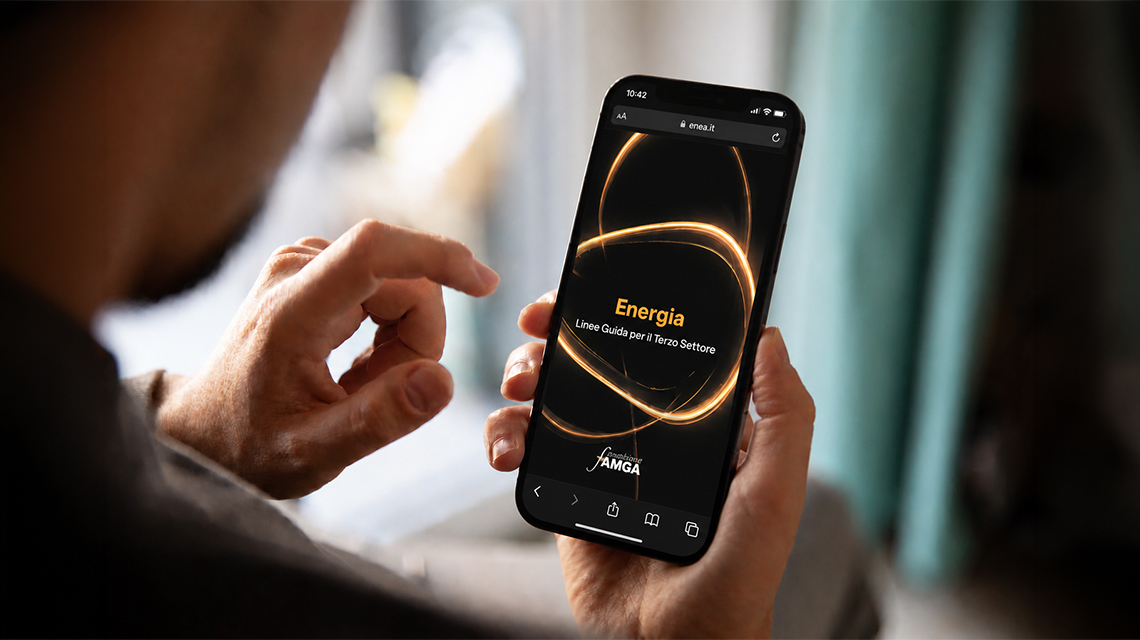
Third Sector: new guidelines for an efficient use of energy and water
ENEA oversaw the energy guidelines update, while the first edition of the water handbook was produced in collaboration with the Polytechnic University of Marche and REF Ricerche
The new “Guidelines for efficiency in the third sector: energy” and the first edition of the “Guidelines for efficiency in the third Sector: water” were presented in Rome at the event “Every watt, every drop: the social value of efficiency.” These documents provide nonprofit and religious organizations with a practical tool to manage energy and water resources effectively.
The project, funded by the AMGA Foundation, involved the collaboration of a network of excellence comprising Fratello Sole Impresa Sociale (lead partner), ENEA, the Polytechnic University of Marche and REF Ricerche.
The presentation took place in the auditorium of the Church of Santa Maria del Carmine alle Tre Cannelle, in the presence of the Minister of the Environment and Energy Security, Gilberto Pichetto Fratin, and the ENEA President Francesca Mariotti.
“Energy efficiency acts as a foundational policy driver thanks to the many economic, social, and environmental benefits it generates. In fact, improving efficiency means lowering energy costs, cutting CO₂ emissions and strengthening the resilience of our systems. In addition to increasing comfort, energy efficiency measures in third-sector facilities that serve the most vulnerable people help reduce consumption and utility bills, allowing to redirect funds toward social services” ,said ENEA President Francesca Mariotti.
“Improving water and energy efficiency is not merely a technical or economic choice, but a profound act of responsibility that allows to redirect reed-up resources into welfare initiatives. Through these Guidelines, we aim to promote a model of eco-welfare where every saved watt and water drop becomes a tangible act of solidarity and care for our common home” pointed out Fabio Gerosa, President of Fratello Sole.
The Guidelines mark a decisive step toward a more conscious resource management. As highlighted by the scientific partners—ENEA, the Polytechnic University of Marche, and REF Ricerche—the goal is to provide social enterprises with technical guidance and specific sustainability profiles to transform every social organization into a hub of sustainability and social cohesion.
The urgency of the transition: toward an eco-welfare model
The Italian Third Sector includes over 140,000 organizations that provide essential services to minors, people with disabilities, and vulnerable individuals. Often operating in historic buildings or facilities characterized by low energy efficiency, these organizations face high operating costs that divert crucial funds away from their social mission.
In this context, improving energy efficiency is not merely an environmental goal tied to the European Green Deal, but a profound act of social responsibility.
Reducing waste, in fact, helps foster a more equitable “eco-welfare” system, where the financial savings generated by the prudent management of water and energy are reinvested into essential community and social services.
Energy: Optimization, Finance and Community
The second edition of the Energy Guide outlines operational pathways for third-sector organizations and religious institutions, offering concrete solutions to reduce greenhouse gas emissions in line with the EU’s 2030 targets.
Operational Framework: The document guides organizations through the process of analyzing utility bills, conducting energy audits and implementing improvements to building systems and envelopes.
Funding: Extensive coverage is given to incentives, like the Conto Termico 3.0, the Transizione 5.0 tax credit, and impact finance tools like Social Bonds.
CER: Renewable Energy Communities are identified as a strategic lever to combat energy poverty, which today affects large segments of the Italian population.
Water: The First National Study Focused on the Nonprofit Sector
The major innovation presented is a study focused on water resources, an area where Italy faces significant vulnerabilities.
The study analyses for the first time, the water consumption of cafeterias, schools, residential facilities and community health centers.
Savings potential: the Third Sector’s water consumption is estimated at between 164 and 272 million m³ per year. Adopting best practices could generate national savings of up to 83.5 million m³.
Water efficiency could reduce utility bills for the non-profit sector by an estimated EUR 182 to 302 million annually.