Italian National Agency for New Technologies, Energy and Sustainable Economic Development

MEDIA - Press office ENEA
Research: Multi-radiation testing platform for nuclear, aerospace and medical applications
ENEA has created a network of experimental facilities unique in Italy, capable of conducting tests at different energy levels and with different types of radiation (electrons, neutrons and protons). This innovative infrastructure opens up new prospects for strategic sectors like the nuclear, aerospace and medical sector, offering advanced services and research and development opportunities for companies, universities, scientific institutes, hospitals and clinical centers.
Currently, the research platform comprises four main facilities: the TAPIRO fast experimental reactor, which produces fast neutrons [1], located at the ENEA Casaccia Research Center (Rome), the REX linear accelerator, which generates electron beams; the TOP-IMPLART proton linear accelerator; the FNG neutron generator, all three located at the ENEA Frascati Research Center (Rome). Soon, the network will be expanded with two new facilities that further extend the energy spectrum and types of radiation available: the TRIGA-RC1 research nuclear reactor and the Calliope facility, dedicated to gamma irradiation, both located at the Casaccia Center. All experimental irradiation activities will be planned and carried out in collaboration with the ENEA Institute of Radiation Protection, taking into account the specific experimental configurations and any necessary measurements or evaluations for each irradiation run.
“Our platform is the result of the experience gained by each facility through the Italian Space Agency’s ASIF [2] project, bringing together the expertise and infrastructure of various ENEA laboratories to conduct irradiation experiments on the same type of sample using different types of radiation”, explained Michele Croia, a researcher at the ENEA Nuclear Department. “This is a tangible advantage,” he said “as this integration will accelerate the development of increasingly innovative, safe and efficient technological solutions, ready to be rapidly transferred to the manufacturing sector”.
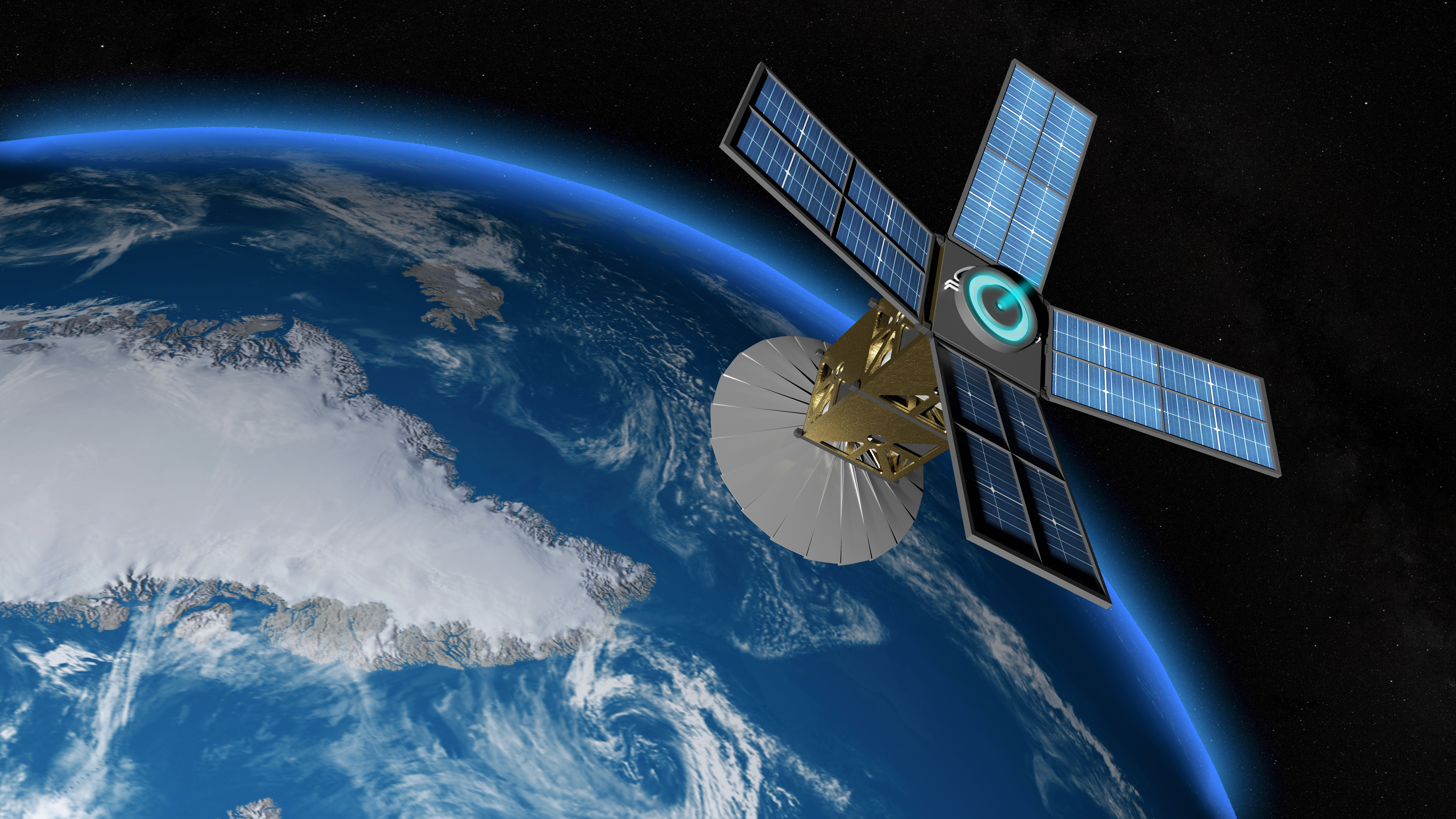
To test the entire multi-irradiation operational chain, the ENEA research team has launched an initial experimental campaign on the outer shell of a small CubeSat satellite, inside which a radiation dosimeter identical to those used in the 2022 “CubeSat ABCS” mission funded by ASI was placed. “The goal is to assess how well ENEA distributed facility can reproduce real space conditions. To this end, the irradiation data collected by our platform are compared with those from the ABCS mission and integrated with numerical simulations developed by ENEA. This comparison allows us to understand how faithfully our infrastructure reproduces the radiation sources present in orbit at different altitudes around Earth” emphasized Nunzio Burgio, a researcher at the ENEA Nuclear Department. “So far” he continued “we have completed tests at three of the four ENEA facilities that make up the experimental platform (TAPIRO, REX, and FNG), and from the measurements taken, we verified that we are able to isolate the contribution of each type of radiation relative to the total measured dose”.
To be more specific, each facility within ENEA innovative platform contributes to the irradiation process with a different type of radiation: the TAPIRO fast experimental reactor provides fast neutrons, the Frascati Neutron Generator (FNG) generates nearly monochromatic neutrons at 2.5 MeV [3] and 14 MeV, while the TOP-IMPLART [4] and Radiation EXperiment (REX) accelerators produce proton beams with energies up to 71 MeV and electron beams with energies of 5 MeV, respectively. “This allows us to conduct experiments and tests, as we have access to different radiation fields with variable energy spectra” Croia continued. “Such tests” he said “are essential for studying materials and devices intended to operate in hostile environments where the radiation field is mixed, that is, composed of different types of particles”.
The platform’s primary applications include sectors where multiple types of radiation coexist, like aerospace, which will be able to conduct advanced studies on damage to materials, electronics and components to improve instrument design and, consequently, the success of future space missions.
Furthermore, ENEA new multi-radiation platform will also find applications in other strategic sectors, starting with the nuclear sector: it will be possible to test devices, electronic components, materials and detectors intended for fission and fusion plants, as well as to carry out metrology, dosimetry and model validation activities. In the biomedical sector, it will facilitate studies in radiobiology and the development of radiopharmaceuticals, as well as research on clinical dosimetry and the verification of the behavior of medical devices exposed to radiation. Finally, in the field of materials science, it will enable the analysis of radiation-induced defects in innovative materials and semiconductors.
Notes
[1]Neutrons produced by nuclear reactions that retain high energy and are not slowed down, unlike thermal neutrons. Their unique interactions with matter make them useful in scientific research and the study of materials.
[2]The ASIF (ASI Supported Irradiation Facilities) program is an initiative of the Italian Space Agency (ASI) aimed at creating a coordinated network of ground-based irradiation facilities (like the ENEA Calliope facility) to simulate space radiation, enabling the qualification and testing of materials, electronic components, optical devices and biological systems—all critical to astronaut safety and the success of space missions—with the goal of enhancing the competitiveness of the Italian aerospace industry.
[3] MeV stands for megaelectronvolt. It is a unit of energy measurement widely used in nuclear physics, particle physics and the study of radiation.
[4] TOP-IMPLART was developed in collaboration with the Istituto Superiore di Sanità and the Istituto Nazionale Tumori Regina Elena, designed as a prototype for proton therapy.