Italian National Agency for New Technologies, Energy and Sustainable Economic Development

MEDIA - Press office ENEA
Nuclear: Fusion energy, Divertor Tokamak Test reaches a major milestone
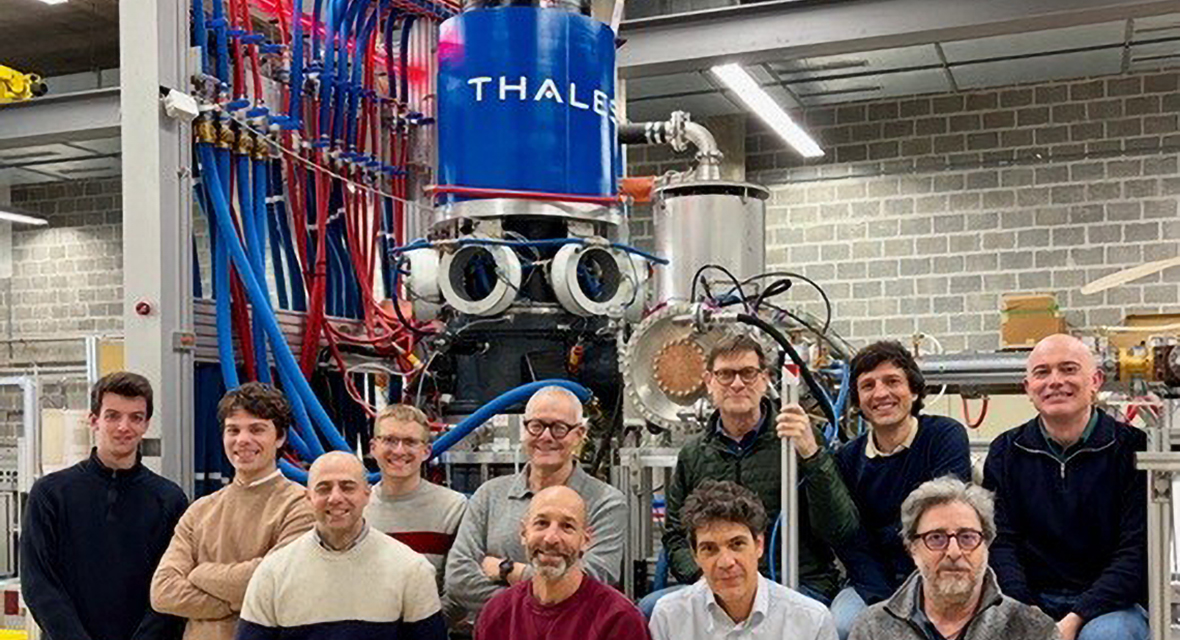
A major breakthrough has been achieved for the Divertor Tokamak Test (DTT) project, the fully Italian experimental fusion reactor under construction at the ENEA Research Center in Frascati (Rome). The first 170 GHz, 1 MW gyrotron for the DTT Electron Cyclotron Resonance Heating (ECRH) system, has successfully completed its acceptance tests at the FALCON facility in Lausanne, hosted by the Swiss Plasma Centre (SPC).
During testing, the gyrotron delivered 1 MW of RF power at 170 GHz with a pulse duration of 100 seconds. Power was injected into an RF load via a 3 cm-diameter Gaussian beam, fully meeting performance expectations. Exceptional operational robustness was also demonstrated, with 95% reliability, achieved through 19 consecutive successful pulses out of 20 attempts.
This result, obtained with the THALES tube TH1509, marks the first European demonstration of an industrial, megawatt-class 170 GHz gyrotron, representing a key step toward the realization of the full DTT ECRH system.
Following the delivery of this first gyrotron to DTT, THALES will proceed with the manufacture of the remaining 15 units, completing the ECRH installation for the first phase of DTT plasma operations, under an already active contract.
The success also reflects the very close collaboration between DTT and Fusion for Energy (F4E), built over the years starting from the joint tender for up 16 DTT gyrotrons for the DTT facility and 6 additional units for the ITER project. Coordinated procurement strategies, alignment of technical requirements across both projects, and joint development activities have not only enabled this achievement but have also generated string synergies between the DTT and ITER ECRH systems.
Beyond the technical achievement, this milestone showcases also the successful collaboration between THALES, Fusion for Energy (F4E), and EPFL-SPC—including the strategic role of the FALCON facility—and demonstrates the emergence of a robust European supply chain capable of supporting the future of nuclear fusion power plants.
For more information: https://www.dtt-project.it/index.php