Italian National Agency for New Technologies, Energy and Sustainable Economic Development

MEDIA - Press office ENEA
Nuclear: ENEA pioneer in the qualification of fourth-generation reactors
Tests on lead cooling systems at the Brasimone Research Center, as part of the €4 million PASCAL project
Developing mechanisms and engineering solutions to ensure safety and reliability of fourth-generation lead-cooled nuclear reactors is the goal achieved by the €4 million PASCAL project, coordinated by ENEA and co-funded by Euratom as part of the EU Horizon 2020 program. The project involved 16 European partners and produced over 40 technical reports and 15 scientific articles.
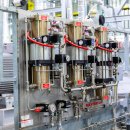
To demonstrate the ability of these systems to operate safely even in the absence of off-site emergency measures, experiments, simulations, and analyses were conducted on various aspects and components representative of nuclear reactors, studying their behavior in both realistic and accidental operating scenarios simulated in the laboratory.
The studies focused on the integrity and resilience of the barriers isolating and confining radioactive material in every nuclear reactor.
The results also confirmed the robustness of the ALFRED reactor design [1], the first industrial demonstrator of a fourth-generation liquid lead-cooled nuclear reactor to be built in Pitești, Romania, by the EAGLES Consortium, comprising ENEA, Ansaldo Nucleare, SCK CEN and RATEN. Included in the Consortium general roadmap, ALFRED is an advanced research platform for the development of innovative technologies, fuel management and study of materials under extreme conditions, aimed at demonstrating the safety, reliability and sustainability of new nuclear systems.
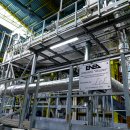
Among the most representative tests, an innovative experiment called FIV[2], conducted at the Brasimone Research Center (Bologna) by a team of ENEA researchers and dedicated to the study of mechanical vibrations induced by the motion of liquid lead on fuel rods containing fissile material, a crucial aspect for ensuring the durability and operational safety of reactors.
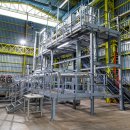
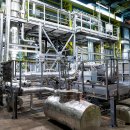
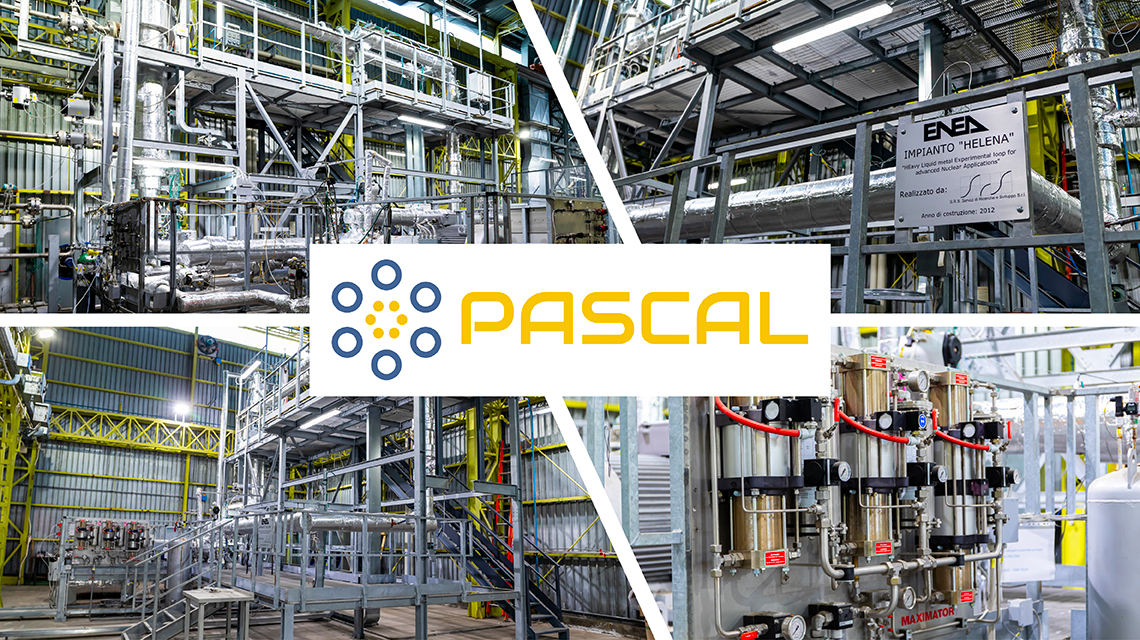
To reproduce real operating conditions, ENEA researchers designed and tested 19 rods perfectly identical to those in the ALFRED reactor. The tests were conducted in the HELENA multifunctional facility, which allows for the controlled circulation of molten lead and is used for fuel and instrumentation development and qualification, safety analysis and code validation.
Equipped with deformation sensors to measure amplitude and frequency of vibrations in real time, the bars were tested at different loads, which showed minor oscillations with maximum amplitudes of approximately 40 microns (less than the thickness of a human hair). The results confirm that the vibrations observed are negligible from a structural point of view, thus validating the design assumptions.
“The FIV experiment represents an important step forward in the qualification of lead reactors and understanding the fluid dynamics phenomena that influence their mechanical behavior,” explained Giacomo Grasso, project coordinator and head of the ENEA nuclear systems design and analysis laboratory. “This result” he said “confirms ENEA’s role as a leader in advanced nuclear research, supporting the development of fourth-generation reactors offering high safety, efficiency and environmental sustainability standards, in line with the European strategy for 2050, which recognizes nuclear power as a strategic lever for accelerating decarbonization and building a more resilient, safe and sustainable energy model.”
Fotogallery