Italian National Agency for New Technologies, Energy and Sustainable Economic Development

MEDIA - Press office ENEA
Innovation: ENEA patents high-tech material for the energy transition
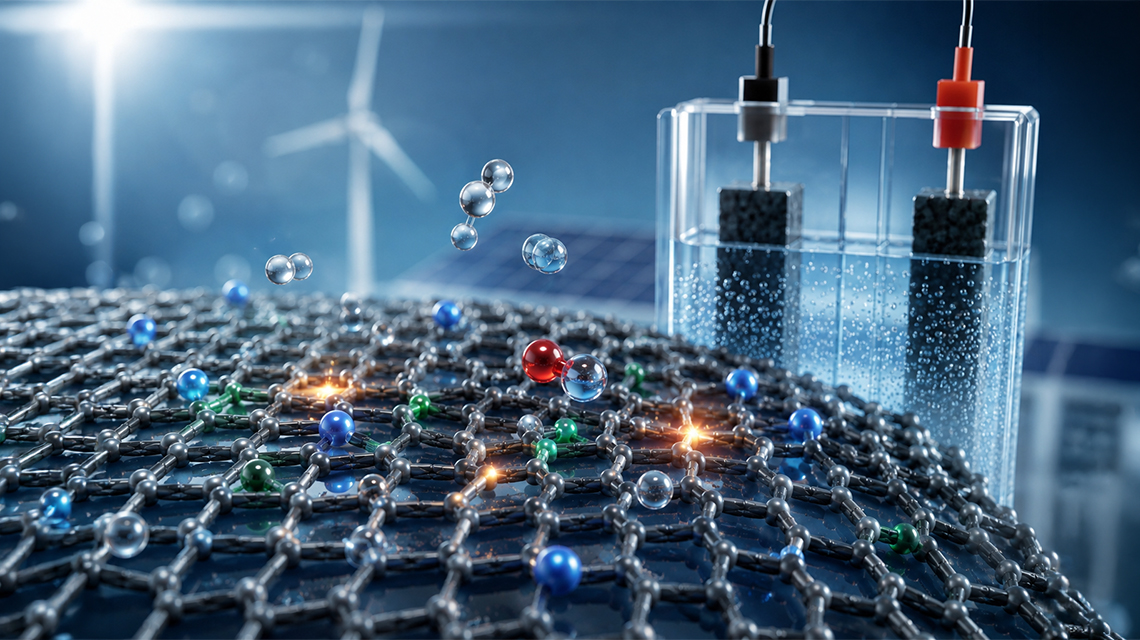
Cost-effective, multifunctional and sustainable: these are the key strengths that make the next-generation material developed by ENEA particularly competitive in promoting the energy transition and the integration of renewable energy sources. It was developed and patented by the Hydrogen and New Energy Carriers Laboratory of the Department of Energy Technologies and Renewable Sources (TERIN), with contributions from two other ENEA units [1] and in collaboration with the University of Salento.
The solution consists of a material free of noble metals like platinum and iridium—very expensive and scarce—for use in fuel cells, electrolysers and metal-air batteries, devices essential for the production of green hydrogen and its use in electric transportation.
The distinctive feature of the new material is its dual function: in addition to catalyzing electrochemical reactions, it acts as a gas diffusion layer thanks to its porous and lightweight structure. This makes it possible to simplify the devices, reducing production time and costs.
“The material is composed of polymer nanofibers obtained through electrospinning [2] and containing active particles based on carbon, nitrogen and transition metal oxides, readily available and inexpensive” explained Maria Federica De Riccardis[*], a researcher at the ENEA Research Center in Brindisi and co-author of the patent along with Marilena Re [*] and Daniela Carbone[**], as well as Professor Claudio Mele of the Department of Innovation Engineering at Unisalento.
The active particles, distributed throughout the fibers, improve the stability and efficiency of the devices compared to traditional systems. Furthermore, the material can be deposited directly onto the electrode, thereby reducing energy losses.
“These characteristics make it competitive with commercial solutions, opening up new prospects for more economical, efficient and sustainable energy systems. This facilitates key steps toward the energy transition and the integration of renewable sources like photovoltaics, into the processes of converting electricity into green hydrogen” concluded De Riccardis.
The research activities, launched as part of the 2022–2024 Three-Year Electric System Research Program Agreement, have continued with funding from the “Hydrogen Research and Development” Operational Plan (POR H2), the Program Agreement between ENEA and the Ministry of the Environment and Energy Security and the PNRR.
Notes
[1] Processes and Materials for Energy Applications Section (TERIN) and Agri-Food Supply Chain Innovation Laboratory (Sustainability Department – SSPT).
[2] An electrodynamic technique that uses a high-voltage electric field to produce fibers with diameters in the nanometer or micrometer range from a polymer solution or melt.
[*] ENEA Researcher – Processes and Materials for Energy Applications Section (TERIN)
[**] Researcher at ENEA – Laboratory for Innovation in Agri-Food Supply Chains (Sustainability Department – SSPT)