Italian National Agency for New Technologies, Energy and Sustainable Economic Development

MEDIA - Press office ENEA
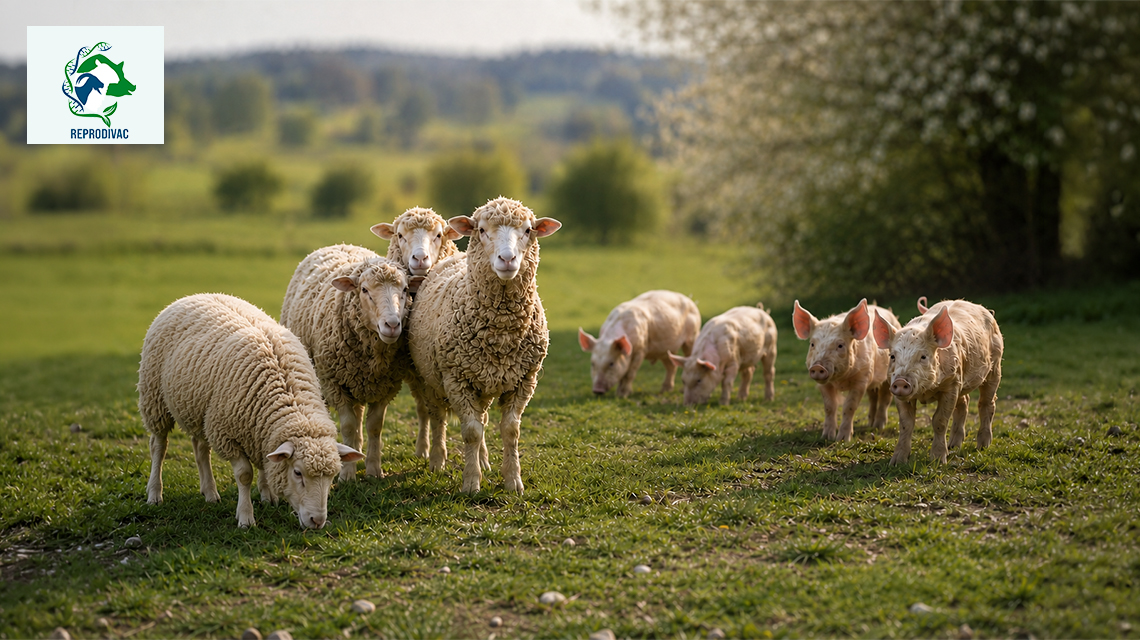
Health: ENEA develops plant-derived veterinary vaccines to combat diseases transmissible to humans
Plants used as “bioreactors” to produce molecules for the development of vaccines and diagnostic kits[1] for certain diseases in sheep and pigs that are transmissible to humans is the objective ENEA is working to achieve as coordinator of the 6-million-euro European REPRODIVAC [2] project, aimed at combating these diseases.
“Currently, our activities focus on the production of antigens—molecules found on pathogenic viruses and bacteria, recognized by the immune system to trigger a specific defense response” explained ENEA project coordinator Selene Baschieri, a researcher at the GREEN Biotechnology Laboratory at the Sustainability Department. “These antigens” she said “are fundamental biological tools and will be used to develop new vaccines, provided that in vitro and in vivo tests confirm their effectiveness in triggering immune responses capable of conferring protection in animals”.
The research is conducted using Plant Molecular Farming, a technological platform developed and refined by ENEA in over twenty years of research, which uses plants as “biofactories” for the production of biopharmaceuticals. To produce viral and bacterial antigens or antibodies, ENEA researchers introduce the genetic information necessary for the synthesis of biopharmaceuticals into theNicotiana benthamiana[3] , plant—a species of wild tobacco—by exploiting the natural ability of the soil bacterium Agrobacterium tumefaciens to transfer genetic material into plant cells. The plant then produces the biomolecule in its tissues, from which it can be extracted and purified.
“The costs and production times for biomolecules using Plant Molecular Farming are significantly lower than those for biologics produced in mammalian cell cultures. It can take as little as a few weeks from concept to product. Furthermore, these technologies could be more accessible to developing countries, where zoonotic diseases—that is, those transmissible from animals to humans—are often more widespread and infrastructure for traditional pharmaceutical production is scarce,” emphasizes Maria Elena Villani, the REPRODIVAC project’s communications manager and a researcher at the ENEA GREEN Biotechnology Laboratory.
The REPRODIVAC project focuses on four reproductive diseases in livestock: porcine reproductive and respiratory syndrome (PRRS) [4] of viral origin, Q fever caused by the bacterium Coxiella burnetii, which primarily affects sheep and goats, enzootic ovine abortion caused by the bacterium Chlamydia abortus, and swine brucellosis caused by the bacterium Brucella suis. These diseases cause significant economic losses globally, as they have a major impact on the reproduction and profitability of livestock—particularly cattle, sheep and swine—with emergency management costs in the event of outbreaks reaching up to $200 billion per year, compared to prevention costs estimated at approximately $20 billion. Furthermore, these three bacteria [5] also pose a risk to public health, as they are pathogens that can be transmitted directly from infected animals to humans.
In general, during the first 36 months of the REPRODIVAC project, the scientific activities of the research teams focused on defining the type of immune response required for protective immunity against each pathogen, on identifying and characterizing the target antigens of the protective immune response, on producing the selected antigens using cells or plants as “bioreactors” and on conducting the first in vitro and in vivo efficacy trials, as well as on developing diagnostic tests. Currently, the REPRODIVAC project is also dedicated to refining and simplifying the production process for an existing vaccine against C. abortus. This activity has been successfully completed and the improved protocol has been submitted to one of the commercial partners for evaluation and further industrialization.
In addition to the development of new products, research efforts are also focused on the development of experimental approaches based on the 3Rs (Replacement, Refinement and Reduction) principles, aimed at replacing, reducing and refining the use of animals in scientific research, while promoting more ethical and scientifically valid methods for evaluating the efficacy of novel drugs.
Photo Gallery


Notes
[1] The diagnostic kits are called DIVA (Differentiating Vaccinated from Infected Animals) and make it possible to distinguish whether an animal is naturally infected with the pathogen or has simply been vaccinated. These are particularly useful tools, designed to verify the minimum animal health and welfare requirements necessary for international trade in animals and animal products.
[2] IThe consortium brings together 16 partners from seven different countries, with complementary expertise ranging from structural biology to microbiology, from immunology to plant and animal biotechnology and to veterinary sciences, in both academic and industrial settings. In addition, the project’s activities are overseen by a bioethics expert and a scientific advisory committee.
[3] A species of wild tobacco that grows rapidly, produces abundant leaf biomass and is ideally suited for this type of processing.