Italian National Agency for New Technologies, Energy and Sustainable Economic Development

MEDIA - Press office ENEA
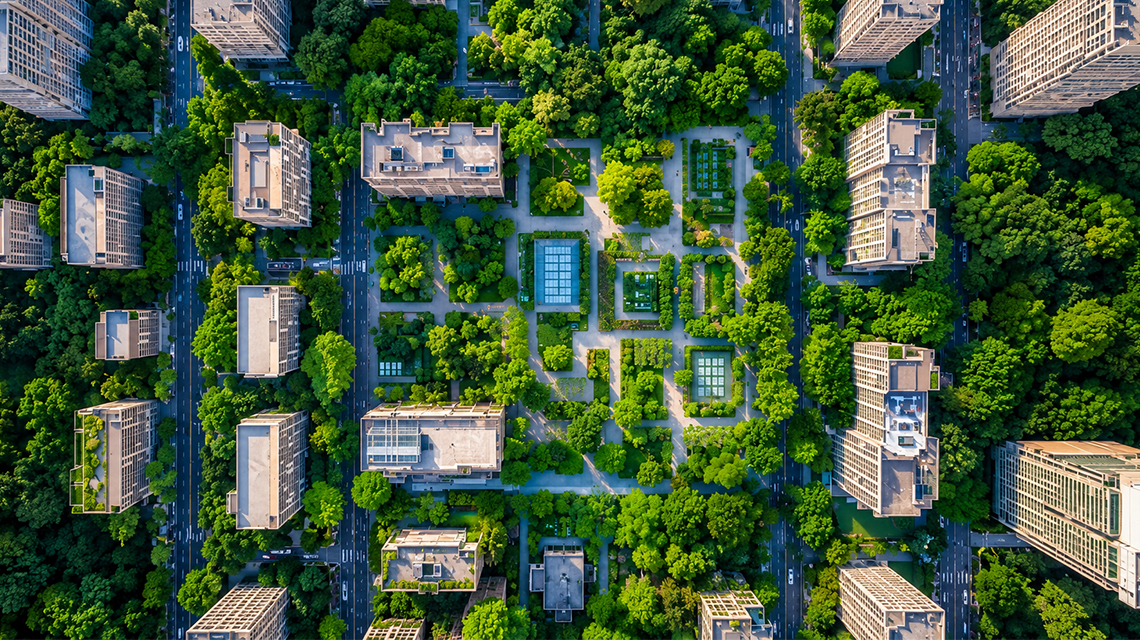
Environment: Peri-urban forests, a shield against extreme temperatures
A study published in the journal *Communications Earth & Environment* (part of the Nature group), conducted and coordinated by ENEA in collaboration with the University of Milan-Bicocca, the National Research Council (CNR), and the ACRI-ST Institute in Sophia-Antipolis, France, found that forests surrounding cities can help reduce urban mortality, particularly that linked to extreme temperatures (heat and cold), and, to a lesser extent, to the effects of air pollution [1]. However, their effectiveness depends on the choice of tree species planted. The study examined various tree-planting scenarios in the areas surrounding Florence and two other European cities [2] —Zagreb (Croatia) and Aix-en-Provence (France)—assessing their impact on heat islands, air quality and mortality, and quantifying the associated healthcare costs.
“Urban greenery is effective only if it is carefully designed and the species best suited to the urban context are chosen, given that some trees emit numerous volatile organic compounds that contribute to the formation of secondary air pollutants, thereby worsening air quality” explained researcher Alessandro Anav of the ENEA Climate Models and Services Laboratory, author of the study together with Alessandra De Marco, Ilaria D’Elia and Beatrice Sorrentino from the Sustainability Department.
To assess the benefits of greening, the researchers simulated two planting strategies: in the first case, they considered the English oak (Quercus robur), a species with high emissions of biogenic volatile organic compounds (BVOCs), while in the second case, they examined species with low BVOC emissions, like the stone pine (Pinus pinea) and the black pine (Pinus nigra). Biogenic volatile organic compounds are substances commonly emitted by plants as a defense mechanism against, for example, insects, pathogens or environmental stress. They are not toxic in and of themselves, but in the atmosphere they react with other compounds, contributing to the formation of tropospheric ozone and fine particulate matter (PM2.5). These pollutants worsen air quality and can cause respiratory and cardiovascular problems in people, leading to increased mortality and hospitalizations.
The study shows that planting species with high BVOC emissions generally leads to an increase in PM2.5 concentrations: on average, at the urban level, the increase is 0.80% in Florence and Aix-en-Provence and 0.12% in Zagreb. Conversely, the use of species with low BVOC emissions results in smaller changes in PM2.5 levels, with an increase of 0.35% in Florence and 0.30% in Aix-en-Provence and a slight decrease in Zagreb (-0.07%).
With regard to the urban heat island effect, the results show that in the three sample cities, peri-urban forests have a limited impact on maximum summer temperatures. “This is because daytime temperatures depend primarily on large-scale weather conditions; consequently, vegetation exerts only a marginal influence on urban temperature regulation. In contrast, the two planting strategies have a more noticeable impact on minimum temperatures, which typically occur at night and are more strongly influenced by local conditions”, said Anav.
With regard to overall mortality, the results across the various planting scenarios show that peri-urban forests help reduce the negative health effects in cities associated primarily with heat stress and, to a lesser extent, with air pollution. For example, in Florence, planting species with low BVOC emissions results in a reduction of 0.9 deaths per 100,000 inhabitants, while planting trees with high BVOC emissions leads to a reduction of 0.4 deaths per 100,000 inhabitants. In both scenarios analysed, the decrease in mortality is linked to reductions in stress associated with high temperatures. “And in an aging population, particularly hot days can have significant impacts” continued the ENEA researcher.
In the other cities analysed, case-specific trends were observed. For example, in Aix-en-Provence, planting low-emission species significantly reduces cold-related mortality, while in Zagreb, deaths caused by high temperatures decrease when high-emission species are planted. “Without going into detail, these differences tell us that green solutions must be designed at the local level. A one-size-fits-all solution is an oversimplification that could lead to additional negative impacts rather than protecting the population” explained the study’s co-authors, Maurizio Gualtieri, a professor at the University of Milan-Bicocca, and Ilaria D’Elia, a researcher at the ENEA Laboratory for Air Quality Models and Measurements and Climate Observations.
Furthermore, the findings highlight how increased urbanization — especially when combined with the complete removal of urban and peri-urban vegetation — would lead to a significant rise in costs associated with higher mortality and hospitalizations. The increase in mortality, primarily due to heat stress days, was highest in Zagreb (+59.4%), followed by Florence (+13%) and Aix-en-Provence (2.9%), with an estimated economic impact of up to 560 million euros in Florence (708 million in Zagreb and 158 million in Aix-en-Provence).
Notes
[1] The benefits of increased urban tree cover on pollution-related mortality are widely recognized: a recent study conducted on 744 European cities shows that, compared to current tree cover, a 5% increase in canopy cover within each city could prevent 4,727 premature deaths, while a 30% increase in canopy cover could prevent 11,974 premature deaths per year.
[2] The cities were selected based on their climatic and topographic characteristics, urban density and pollution levels. These are cities in the Mediterranean basin, a region particularly vulnerable to the combined effects of climate change and air pollution, where an increase in heat-related mortality is projected. Furthermore, these are inland cities surrounded by hills, a topography that restricts air circulation and promotes the accumulation of pollutants. These areas also have limited space for large parks or urban forests and often have pollution levels that exceed the safety thresholds set by the World Health Organization (WHO).
[3] Source EEA