Italian National Agency for New Technologies, Energy and Sustainable Economic Development

MEDIA - Press office ENEA

Environment: Mediterranean, 2024 hottest year in the last 40 years
According to a study published in the journal Frontiers in Marine Science, conducted by ENEA in collaboration with the CNR and the MedSharks association - which analyzed in detail the spatiotemporal variability of the 2024 thermal anomaly and the mechanisms that determined it - the Mediterranean is experiencing a record-smashing climate phase with record temperatures in both the western and eastern Mediterranean and heat waves, combined with a significant increase in the average kinetic energy of currents, with 2024 recording the highest value in the entire historical series (40 years).
“While the basin has been undergoing progressive warming since the early 1980s, since 2022 the increase in sea surface temperatures has taken on exceptional characteristics, culminating in 2024, the hottest year on record” pointed out Ernesto Napolitano, coordinator of the study at the ENEA Laboratory for Climate Models and Services.
The analysis was based on an extensive set of multidisciplinary observations, including satellite observations measuring temperature and sea level, meteorological data providing information on heat exchanges between the atmosphere and the ocean and in situ coastal temperature measurements collected through citizen science activities and data from oceanographic models.
In 2024, the record-breaking warmth was preceded by a significant build-up of heat between spring 2022 and summer 2023, followed—between autumn 2023 and spring 2024—by reduced heat loss to the atmosphere, which kept sea temperatures well above the seasonal average. In February 2024, surface temperatures exceeded 15 °C in the western Mediterranean and 18 °C in the eastern basin, while by the end of August waters in the eastern basin approached 29 °C, triggering an extraordinary marine heatwave. An unusually thin surface mixed layer [1] —that is, the ocean’s uppermost layer—favored the buildup of heat in the surface layers, intensifying and prolonging the anomaly.
The Algerian, Northwestern, and Levantine basins have shown a significant increase in the mean and turbulent kinetic energy of currents and the most pronounced thermal anomalies. More energetic-than-usual mesoscale vortices, that is, circular water currents, have promoted the redistribution of heat in the surface layers,
Altimetric data from the past thirty years (1993–2024) also confirm a steady increase in the kinetic energy of the surface current system, with 2024 recording the highest value of the entire historical series, well above the long-term trend.
“In 2024, atmospheric factors and internal sea dynamics led to unprecedented warming, and initial analyses indicate that 2025 also seems to continue the trend of the past three years, although with values slightly lower than last year’s peak,” Napolitano said. “The recent thermal anomalies observed from 2022 to 2024, when Analyzed in relation to temperature and circulation variability over the past decades, highlight the massive transformation occurring in the basin”, he concluded.
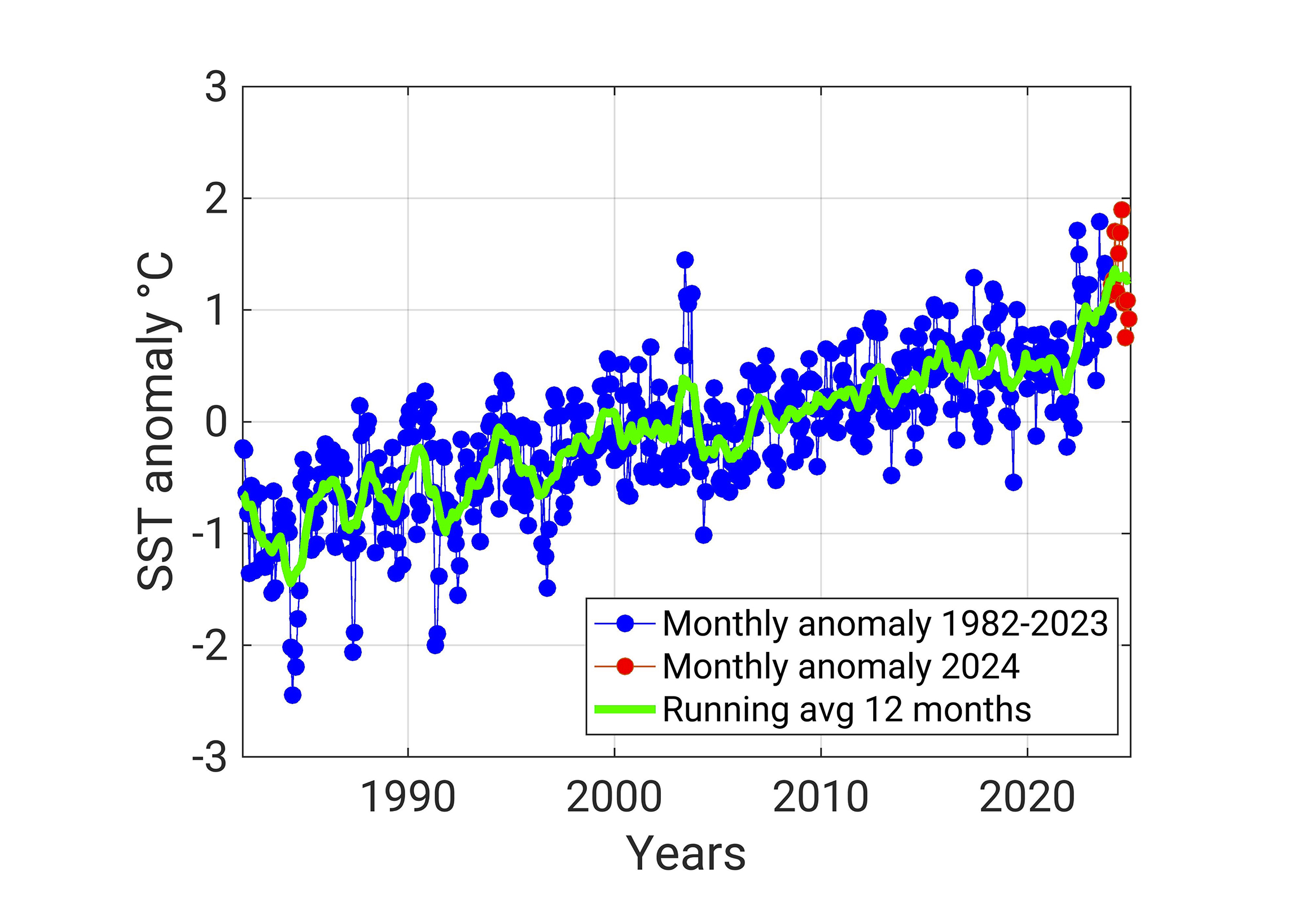
Figure 1 – Monthly time series of sea surface temperature (SST) anomalies, derived from satellite data and averaged over the entire Mediterranean basin, from 1982 to 2024
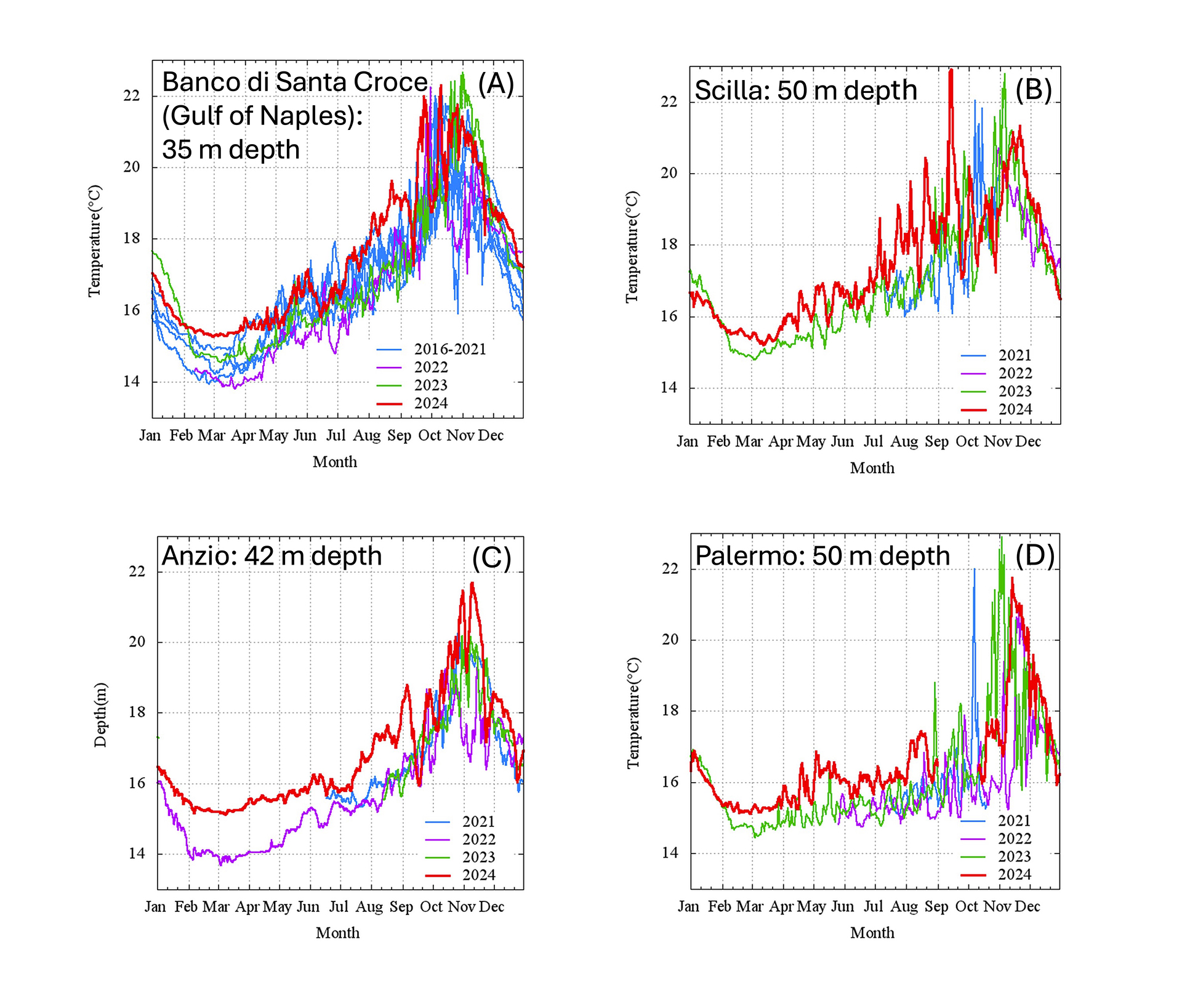
Figure 2 – Seafloor temperatures recorded at four sites along the coastal areas of the Tyrrhenian Sea as part of the MEDFEVER initiative. (A) Santa Croce Bank (Gulf of Naples), (B) Scilla, (C) Anzio, (D) Palermo
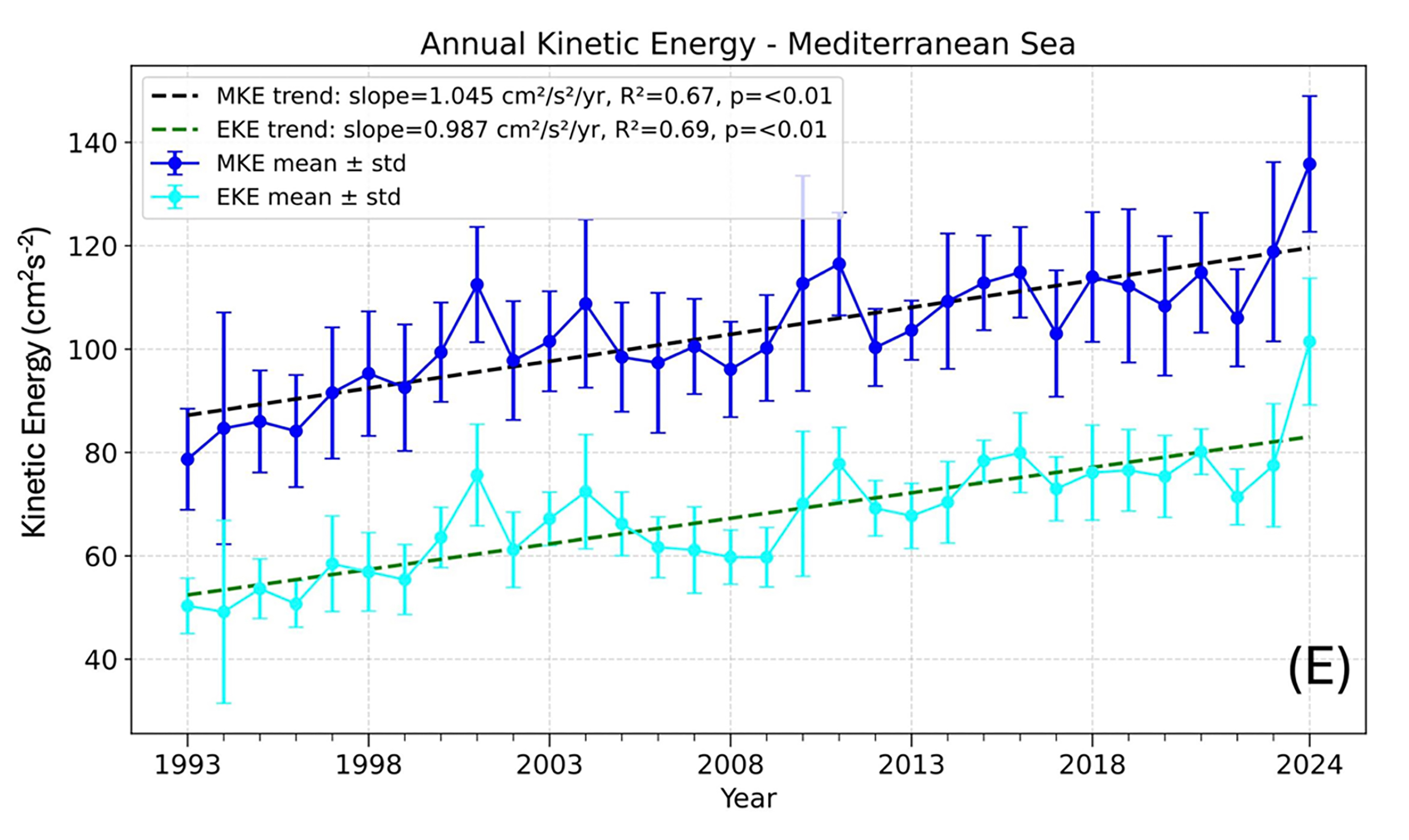
Figure 3 – Time series of mean kinetic energy and turbulent kinetic energy (1993–2024) averaged over the Mediterranean Sea, derived from altimetric data