Italian National Agency for New Technologies, Energy and Sustainable Economic Development

MEDIA - Press office ENEA

Environment: ENEA monitors indoor air quality at Rome-Fiumicino Airport
Monitoring and analyzing indoor air quality at Rome-Fiumicino Airport to protect the health of passengers and worker is the goal of the indoor air quality monitoring program ENEA is conducting with Aeroporti di Roma (ADR), the General Directorate of Health Prevention (Ministry of Health), Cefriel, Concept Reply (coordinator) and Healthy Reply as part of the project OASIS (Optimizing Air Safety in Indoor Spaces).
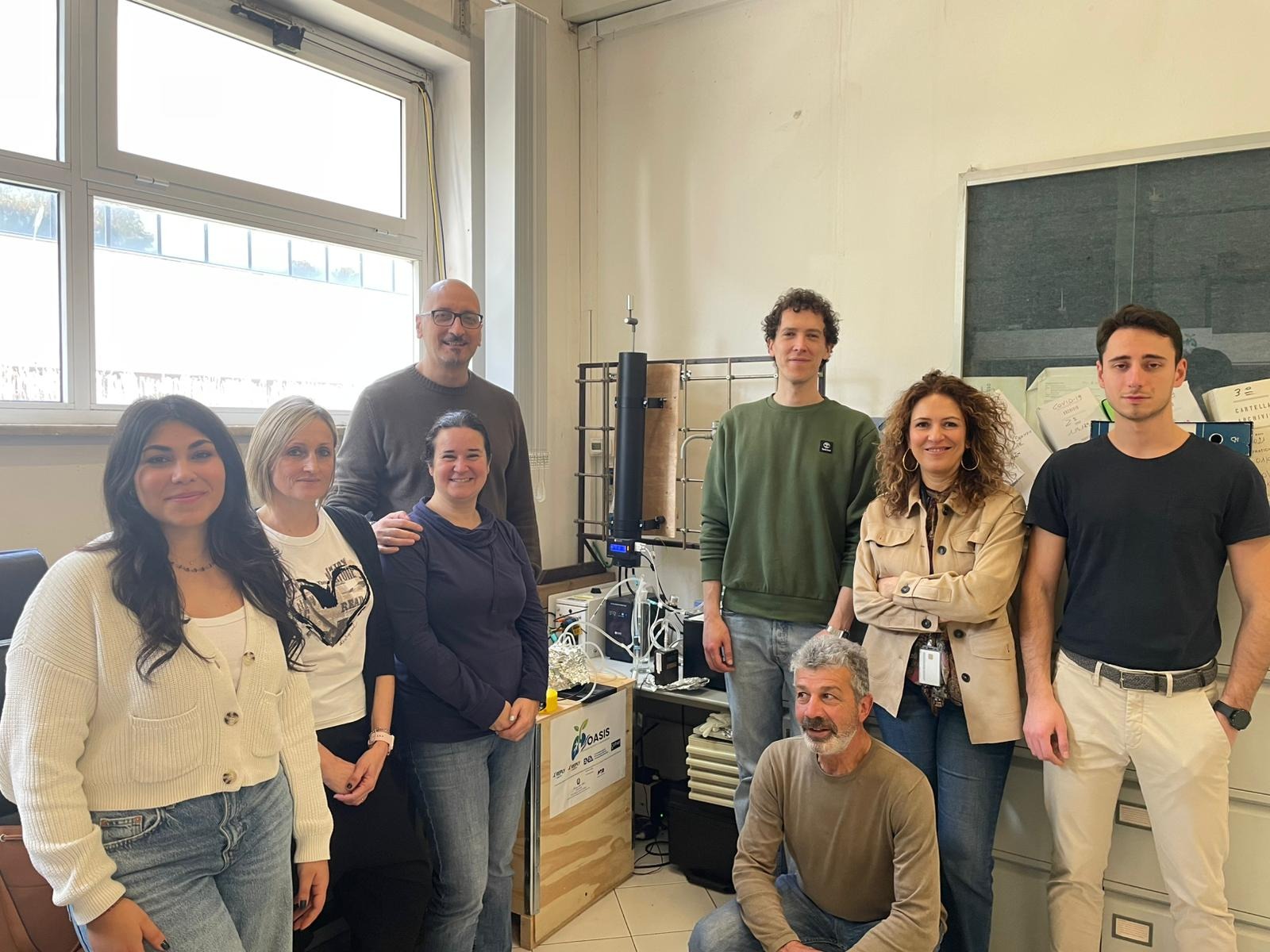
“We installed an integrated network of advanced instruments for monitoring pollutants in some of the airport’s offices”, explained ENEA project lead Massimo Santoro, a researcher at the RED Biotechnology Laboratory. “In particular” he said, “we focused on atmospheric particulate matter—easily inhaled and generated to a even inside buildings—monitoring the interactions of pollutants with the surrounding environment, the effectiveness of ventilation systems and the potential effects on cells of the respiratory system”.
One of the most innovative aspects of the project is a system that exposes human bronchial cells to sampled air. “By analyzing their genetic material—RNA—we will be able to understand how pollutants influence gene activity and identify the main toxicological effects” explained Santoro. “We chose these cells” he said “because they line our respiratory tract and are the first to come into contact with particulate matter, acting as a protective barrier. They are also a very sensitive point: prolonged exposure to particulate matter, quantity of particles and their chemical composition can trigger inflammatory processes, increase oxidative stress in cells and worsen asthma or bronchitis”.
So far, these cells have been exposed for 24 hours to indoor air in certain areas of the airport, for a total of 15 exposures between June and December 2025. To understand how they react to pollutants, a technique was used that allows to measure how much certain genes are activated or silenced in response to environmental stimuli. In particular, three groups of genes were analysed: those activated in cases of oxidative stress, those activated by the presence of foreign substances and those involved in inflammatory processes. For each group, the average of the observed variations was calculated to understand the overall extent to which each type of response was activated in the cells.
Preliminary analyses have shown that the response of bronchial cells depends on both the size and composition of the particulate matter present in indoor air.[1]
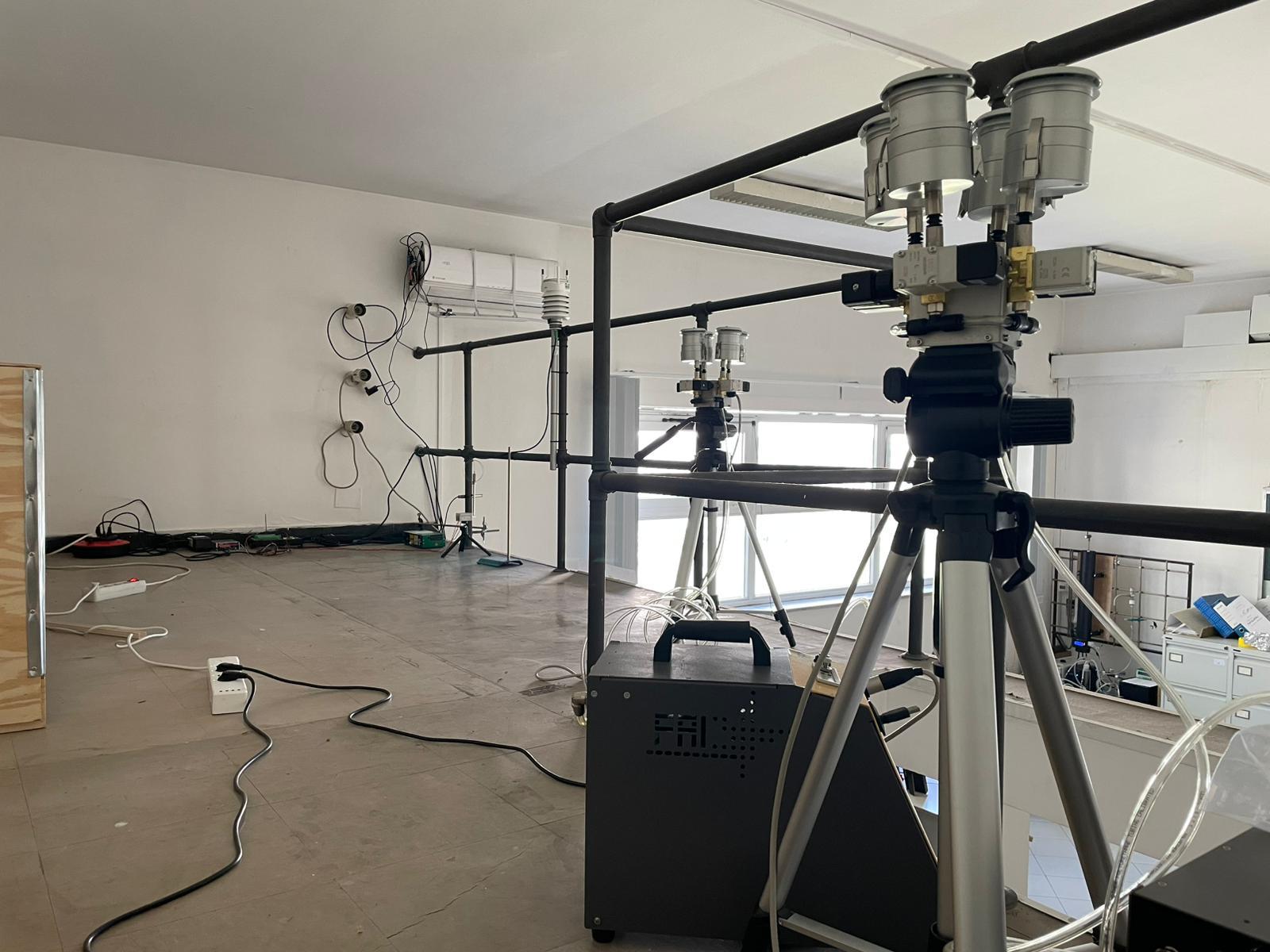
Within the airport facility, the Concept Reply team installed IoT sensors for real-time monitoring of indoor air quality. The devices detect fine particulate matter, volatile organic compounds, various particulate fractions, temperature, pressure and humidity. Some of the collected data is analysed immediately to identify any critical issue, while the cloud allows for data storage and analysis of trends over time, including using artificial intelligence tools. The system includes experimental biotagging technology integrated by Healthy Reply, based on identifiable genomic sequences as unique markers, which allows for the controlled tracking of air and contaminant pathways in enclosed spaces. The biotag is introduced into a liquid solution and subsequently atomized into droplets, enabling spatial tracking, dispersion analysis and the identification of any areas of accumulation. This approach provides a better understanding of how airflow and ventilation systems influence inhalation exposure.
In particular, biotag mapping identified specific areas where droplets tend to concentrate, especially near measuring instruments and air conditioning vents, showing how the airflows generated by the instruments can significantly influence the distribution of aerosols in indoor environments. Motion sensors were also installed to study pedestrian traffic patterns. This system makes it possible to identify moments when air quality changes due to specific events and to assess the impact of everyday actions, like opening or closing doors and windows. Currently, all collected data is being analysed using predictive models based on artificial intelligence.
The OASIS project has gathered a wealth of information covering approximately seven years of outdoor air quality data from Lazio and Lombardy, sourced from OpenAQ, ARPA Lombardia and OpenMeteo. This outdoor data serves as the foundation upon which indoor air quality monitoring will subsequently be integrated. To transform this vast amount of information into reliable forecasts, the Cefriel team developed three different artificial intelligence models, capable of predicting air quality trends up to 6 days in advance for particulate matter and 6 hours in advance for outdoor air pollutants. The models analyse gases[2]
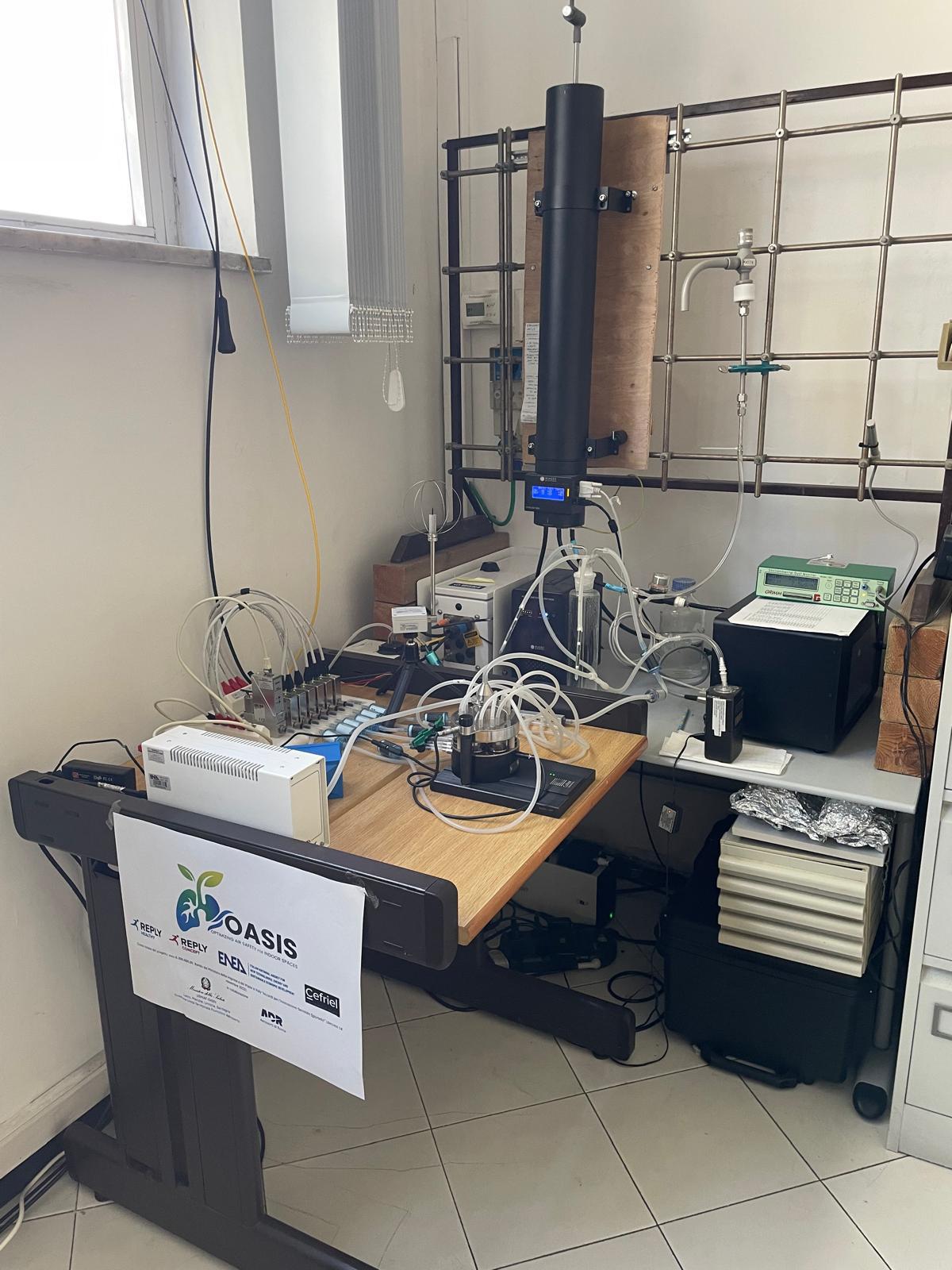
Portable monitoring system connected to a sampling line with a size-selective cyclone for PM2.5. Etalometer for measuring black carbon. Cartridge for sampling and analyzing volatile organic compounds (VOCs). Grimm system for monitoring atmospheric particulate matter (PM10, PM2.5, and PM1).
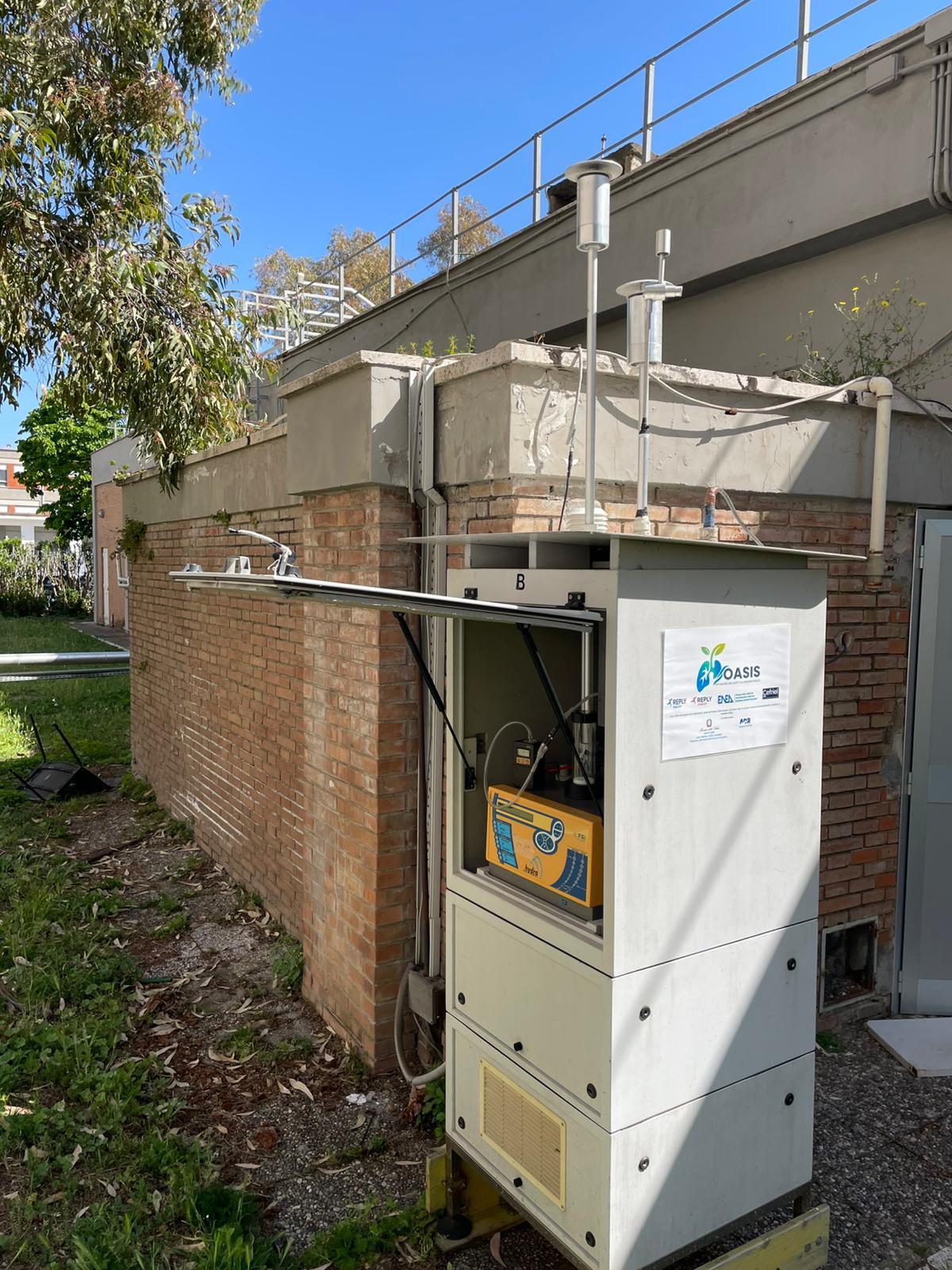
Environmental monitoring station for the OASIS project, installed in an outdoor cabinet and equipped with a FAI sampler for atmospheric particulate matter and a sampling system for volatile organic compounds (VOCs), for integrated air quality assessment.