Italian National Agency for New Technologies, Energy and Sustainable Economic Development

MEDIA - Press office ENEA
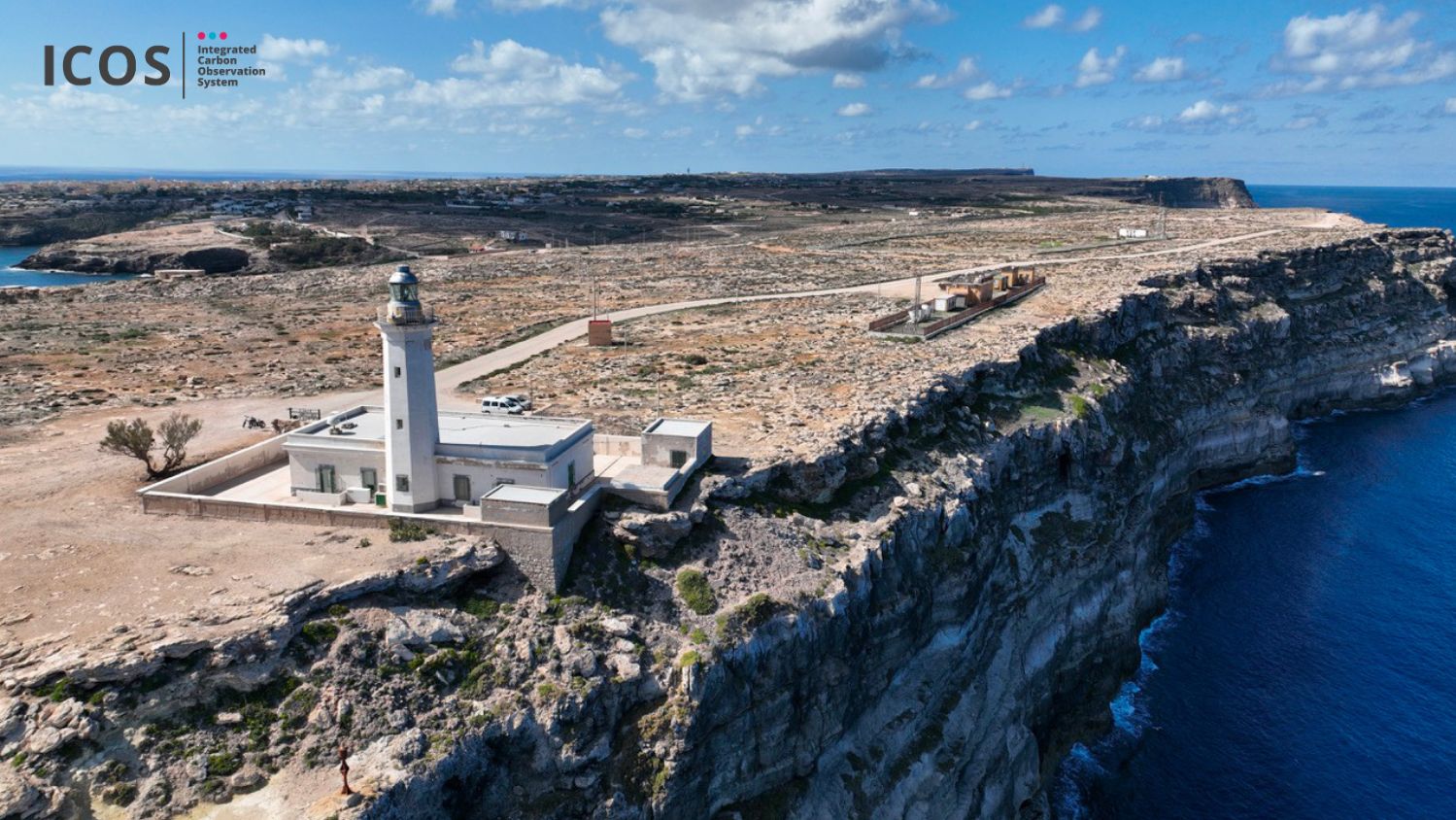
Environment: ENEA Lampedusa climate observatory receives top EU certification
The ENEA Climate Observatory in Lampedusa (Agrigento) has received the highest European certification (Class 1) from the European ICOS network—coordinated in Italy by the CNR—for the quality and reliability of the atmospheric data it provides. This is the first Italian scientific station of its kind to receive this certification, an achievement made possible in part by the acquisition of advanced instrumentation as part of the PRO-ICOS-Med [1] infrastructure project.
“With the upgrade to Class 1, the Lampedusa atmospheric site reinforces the strategic role it plays in the European ICOS climate observation network and for the entire Italian scientific community engaged in the study of climate change”, explained Tatiana Di Iorio, scientific director of the ICOS Atmospheric Observatory and a researcher at the ENEA Sustainability Department.
Thanks to its posiiton in the central Mediterranean, the Lampedusa Observatory serves as a prime vantage point for monitoring changes in the major greenhouse gases—particularly carbon dioxide and methane—and for studying the exchanges between the atmosphere, the ocean and the land, as it is the only station in the entire European network to simultaneously collect data on all three components. In fact, in addition to the Atmospheric Observatory, Lampedusa is home to the Terrestrial Ecosystem Observatory, dedicated to measuring CO₂ fluxes between vegetation and the atmosphere and the Oceanographic Observatory, a high-tech buoy located 5 kilometers off the coast and equipped with advanced sensor systems, which provides the scientific community with data on meteorological conditions, temperature, pressure, salinity, pH, as well as chlorophyll and organic matter dissolved in the water.
"As ICOS Italia, we are very proud to reach this milestone and add a Class 1 weather station. The observatory is the only European site to integrate all three components: ocean, land and atmosphere. The island of Lampedusa is a very interesting location for analyzing greenhouse gas exchanges precisely because of its unique location. A historic observatory like the one in Lampedusa is therefore a source of great pride, both for the Italian network and for the European network” pointe out Carlo Calfapietra, ICOS Italy Focal Point and director of the CNR Institute for Research on Terrestrial Ecosystems (CNR-IRET).
There are a total of 19 ICOS Class 1 atmospheric stations, characterized by the use of advanced instrumentation that enables continuous and highly accurate measurements of numerous atmospheric and environmental variables related to the carbon cycle. Achieving this level requires passing rigorous checks on the quality, reliability and continuity of the data produced over time.
ICOS (Integrated Carbon Observation System) is a European research infrastructure spanning 16 countries, with a total of over 170 stations, dedicated to the study of the carbon cycle, greenhouse gases and climate change. It operates at the European level through a network of approximately 500 researchers and technicians who collect data according to the highest standards of quality and precision, essential for understanding the impact of human activities on the climate. The Italian network currently comprises 25 stations, including 15 for the ecosystem, 5 for the ocean and 5 for the atmosphere. These stations take measurements and collect data essential for understanding carbon exchanges among the three components of the Earth system (atmosphere, land and ocean) and their interconnections with climate and other environmental challenges, thereby helping to guide current and future climate change mitigation policies