Italian National Agency for New Technologies, Energy and Sustainable Economic Development

MEDIA - Press office ENEA
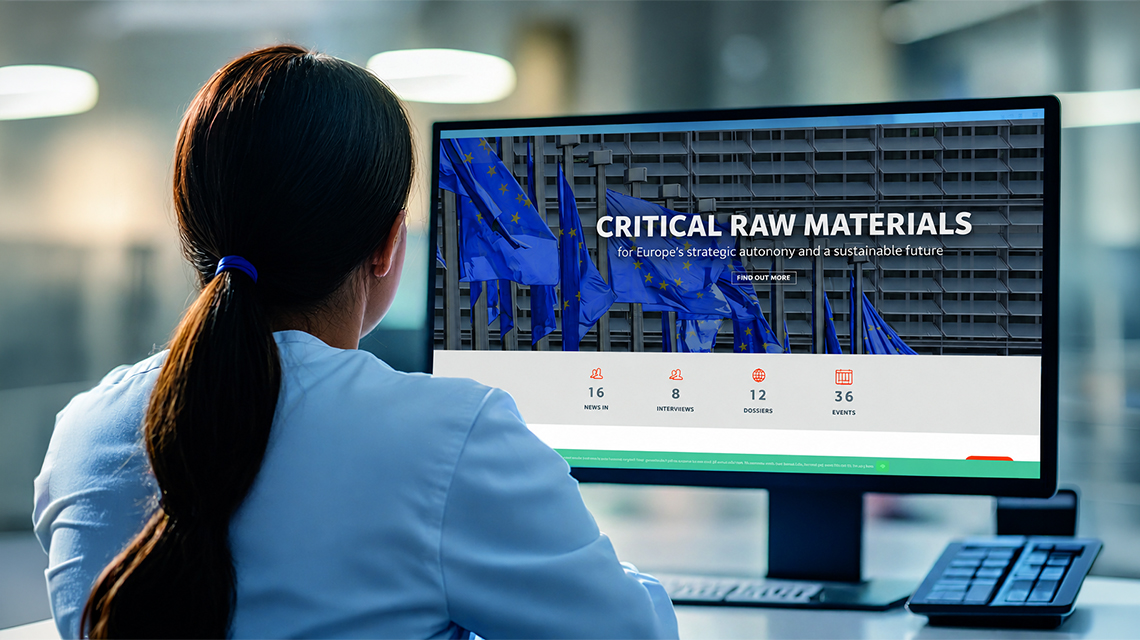
Environment: ENEA joins european project on the supply of critical raw materials
84 key elements for Europe’s strategic autonomy mapped in a centralized database
The goal of the approximately €3 million European SCRREEN3 [1] project is to strenghten the European network of experts dedicated to critical raw materials and to improve, through a centralized database, the quality and accessibility of data on natural resources, crucial for the green and digital transition but face high supply risks. The project comprises 16 partners from research institutions, universities and industry associations, including ENEA.
SCRREEN3 represents the third generation of the SCRREEN project, designed in 2016 to support the European Commission in defining a sectoral strategy and adopting regulations aimed at ensuring a secure, sustainable and diversified supply of critical raw materials in Europe.
“These materials are essential for the ecological, energy and digital transitions and, specifically for a wide range of commercial applications like batteries, electric mobility, renewable energy technologies, electronics, defense and aerospace” explained Rovena Preka, an ENEA researcher at the Sustainability Department. “It is essential to expand knowledge on these materials” she said “not only because demand is constantly growing, but also because of the EU’s heavy reliance on a supply chain tied to third countries and increasingly affected by geopolitical tensions”.
Thanks to the project, approximately 300 experts from industry and research were brought together to provide specialized advice in support of EU decision-making processes, covering critical and strategic raw materials and their value chains. In addition, 84 key elements for the transition—including raw materials, critical raw materials and strategic raw materials—were analysed, tracing their origins, extraction techniques, procurement strategies, prices and sectors of use.
For each element, a technical data sheet—a sort of identity card—was developed and made accessible through a public portal, designed as a tool to support EU institutions, both for analysing critical issues and prospects and, above all, for the periodic update of the list of critical raw materials that the Commission is required to carry out every three years.
ENEA is overseeing the development of data sheets for eight elements (selenium, rhenium, indium, bismuth, aluminum and bauxite, samarium, gadolinium and boron) that span non-ferrous metals, transition metals and rare earth elements—essential for applications in the energy, aerospace and pharmaceutical industries.
“By working closely with the European Commission’s Directorate-General for the Internal Market, we aim to complete the digitization of the fact sheets and the automation of data flows, in order to make the information more accessible and easily updatable. Furthermore, we aim to strengthen the integration of our studies with the demand forecasting analyses conducted by the Commission’s Joint Research Centre, to consolidate the network’s role as a knowledge infrastructure on critical raw materials”, concluded the ENEA researcher.
For more information on the project: scrreen.eu