Italian National Agency for New Technologies, Energy and Sustainable Economic Development

MEDIA - Press office ENEA
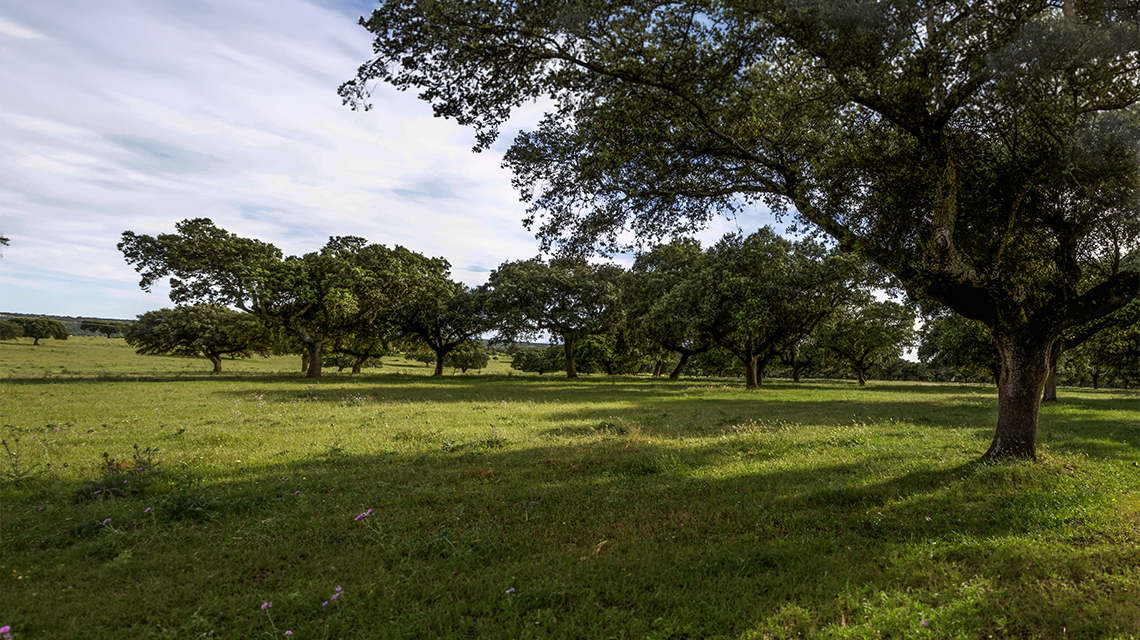
Environment: ENEA finds holm Oaks more resilient to climate change than pines
According to a study [1] promoted and coordinated by the Scientific Council of the Castelporziano Presidential Estate, in collaboration with ENEA, Sapienza University of Rome, the National Research Council (CNR) and the European Forest Institute, the spread of insect pests, combined with increased drought, has damaged 13% of the 6,000 hectares of forest on the Castelporziano Presidential Estate, a nature reserve on the Lazio coast within the territory of Rome.
The study highlights that the most affected areas are the pine forests [2], which have been plagued since 2018 by infestations of the pine bark beetle and the tortoise scale insect. In contrast, holm oaks have proven to be more resilient, continuing to play an important role as a carbon sink and in absorbing atmospheric pollutants such as ozone.
“Satellite images acquired by the Sentinel-2 mission[3] proved to be an essential tool for analysing the health of the vegetation across the entire estate” explained Alessandro Sebastiani, a researcher at the ENEA Sustainability Department and co-author of the study with Giuseppe Scarascia-Mugnozza (vice president of the Scientific Council of the Castelporziano Presidential Estate and a member of the European Forest Institute and the National Academy of Sciences, known as the “Accademia dei XL”), Fausto Manes (Sapienza University of Rome), and Silvano Fares (CNR).
As a result of the infestation, the health of the pine forests has deteriorated drastically. The rest of the vegetation on the Castelporziano Estate, however, remains generally stable, with the holm oak forest maintaining high rates of carbon assimilation and showing minimal variations in response to drought and high temperatures. Specifically, the holm oak forest absorbs an average of 8 metric tons of carbon per hectare per year[4], a figure 20% higher than that observed in similar forest types in the 1990s. In addition, the holm oak is an important ally in the removal of tropospheric ozone, with an average annual absorption of up to approximately 8 grams per square meter.
“The study’s findings suggest that in Mediterranean areas, the focus should be on more resilient species like the holm oak, rather than more vulnerable ones like the stone pine and certain deciduous oaks. This is a true paradigm shift in forest management, especially since many of the most affected species are among the most characteristic of the Mediterranean landscape. In fact, only species capable of adopting effective adaptation strategies will be able to thrive in a changing climate. The selection of suitable species will be crucial for sustaining the ability of urban and peri-urban forests to provide valuable ecosystem services like CO₂ absorption, mitigation of the urban heat island effect and the removal of pollutants” said Sebastiani.
With over 30 years of field data collection, the Castelporziano Estate represents an ecosystem that helps us understand the effects of climate change-related stresses on natural vegetation and the provision of related ecosystem services in the Mediterranean basin; In 2022, it was recognized as a Class 1 station by ICOS[5], the only national forest station to have earned this highest recognition for the quality of the data. For this reason, the natural area is poised to increasingly become a model for a Forest Living Lab—an open-air laboratory aligned with the three objectives of the European Biodiversity Strategy to 2030[6]: halting biodiversity loss, combating the degradation of ecosystem services and promoting their restoration on a large scale.
Notes
[1] Rendiconti Lincei Volume 37, Issue 1 supplement - 2026
[3] Data collected for the years 2018 and 2024, with a spatial resolution of 10 meters.
[4] Through photosynthesis, it absorbs an average of approximately 19 metric tons of carbon per hectare per year, a value intermediate between tropical and northern forests. The final value of 8 metric tons per hectare accounts for the carbon released back into the atmosphere through the ecosystem’s respiration processes.
[5] Integrated Carbon Observation System, a European research infrastructure that provides high-precision data on the carbon cycle and greenhouse gas fluxes.
Key scientific articles published by ENEA on this topic
Lampazzi E, Virgillito C, Caputo B, Lombardi G, Santarelli G, Moretti R, Calvitti M. Spatial Dynamics and Sterilization Range of Incompatible Aedes albopictus Males: Advancing Toward an Optimized IIT Approach. Tropical Medicine and Infectious Disease. 2026; 11(2): 45.
Moretti R, Lim JT, Ferreira AGA, Ponti L, Giovanetti M, Yi CJ, Tewari P, Cholvi M, Crawford J, Gutierrez AP, Dobson SL, Ross PA. (2025) Exploiting Wolbachiaas a Tool for Mosquito-Borne Disease Control: Pursuing Efficacy, Safety, and Sustainability. Pathogens, 14(3): 285.
Branda, F., Cella, E., Scarpa, F., Slavov, S.N., Bevivino, A., Moretti, R., Degafu, A.L., Pecchia, L., Rizzo, A., Defilippo, F., Moreno, A., Ceccarelli, G., Alcantara, L.C.J., Ferreira, A., Ciccozzi, M., & Giovanetti, M. (2024). Wolbachia-Based Approaches to Controlling Mosquito-Borne Viral Threats: Innovations, AI Integration, and Future Directions in the Context of Climate Change. Viruses, 16(12): 1868.
Lombardi G, Lampazzi E, Calvitti M. (2024) Incompatible insect technique: insights on potential outcomes of releasing contaminant females: a proof of concept under semi-field conditions. Pest Management Science, 80(10):5342-5352.
Cholvi M, Trelis M, Bueno-Marí R, Khoubbane M, Gil R, Marcilla A, Moretti R. (2024). Wolbachia Infection through Hybridization to Enhance an Incompatible Insect Technique-Based Suppression of Aedes albopictus in Eastern Spain. Insects, 15: 206.
Caputo, B., Moretti, R., Virgillito, C., Manica, M., Lampazzi, E., Lombardi, G., Serini, P., Pichler, V., Beebe, N.W., della Torre, A. and Calvitti, M. (2023), A bacterium against the tiger: further evidence of the potential of non-inundative releases of males with manipulated Wolbachia infection in reducing fertility of Aedes albopictusfield populations in Italy. Pest Management Science, 79: 3167-3176.
Moretti R, Lampazzi E, Damiani C, Fabbri G, Lombardi G, Pioli C, Desiderio A, Serrao A, Calvitti M (2022) Increased biting rate and decreased Wolbachia density in irradiated Aedes Parasites and Vectors, 15: 67.
Moretti R, Calvitti M (2021) Issues with combining incompatible and sterile insect techniques. Nature, 590(7844): E1-E2.
Moretti R, Marini F, Lampazzi E, Calvitti M (2021) On the suitability of Aedes vexans to Wolbachia-based control strategies. Entomologia Experimentalis et Applicata, 169: 772–778.
Caputo B, Moretti, Manica M, Serini P, Lampazzi E, Bonanni M, Fabbri G, Pichler V, Della Torre A, Calvitti M (2019) A bacterium against the tiger: preliminary evidence of fertility reduction after release of Aedes albopictus males with manipulated Wolbachia infection in an Italian urban area. Pest Management Science, 76: 1324-1332.
Calvitti M., Moretti R., Lampazzi E (2019) The role of the endosymbiotic bacterium Wolbachia in the control of Aedes albopictus-borne human diseases. Atti Accademia Nazionale Italiana di Entomologia. Anno LXVI, XXIII: Approcci Genomici e Molecolari per il Controllo di Specie Invasive di Insetti di Interesse Agrario e Sanitario; 2018: 135-139.
Moretti R, Marzo GA, Lampazzi E, Calvitti M (2018) Cytoplasmic incompatibility management to support Incompatible Insect Technique against Aedes albopictus. Parasites and Vectors 2018, 11(Suppl 2): 14-28.
Moretti R, Yen P-S, Houé V, Lampazzi E, Desiderio A, Failloux A-B, Calvitti M. (2018) Combining Wolbachia-induced sterility and virus protection to fight Aedes albopictus-borne viruses. PLoS Neglected Tropical Diseases 12(7): e0006626.
Puggioli A, Calvitti M, Moretti R, Bellini R (2016) wPip Wolbachia contribution to Aedes albopictus SIT performance: advantages under intensive rearing. Acta Tropica, Oct 23. pii: S0001-706X(16)30483-1.
Calvitti M, Moretti R (2016) La tecnica dell’insetto sterile per il controllo integrato di insetti nocivi: evoluzione e prospettive. Energia Ambiente e Innovazione 3/2016: 14-21.
Atyame CM, Labbé P, Lebon C, Weill M, Moretti R, Marini F, et al. (2016) Comparison of Irradiation and Wolbachia Based Approaches for Sterile-Male Strategies Targeting Aedes albopictus. PLoS ONE 11(1): e0146834.
Dritsou V, Topalis P, Windbichler N, Simoni A, Hall A et al. (2015). A draft genome sequence of an invasive mosquito: an Italian Aedes albopictus. Pathogens and Global Health, 109(5): 207-20.
Calvitti M, Marini F, Desiderio A, Puggioli A, Moretti R (2015). Wolbachia Density and Cytoplasmic Incompatibility in Aedes albopictus: Concerns with Using Artificial Wolbachia Infection as a Vector Suppression Tool. PLoS ONE. 2015;10(3): e0121813.
Bourtzis K, Dobson SL, Xi Z, Rasgon JL, Calvitti M, Moreira LA et al. (2014) Harnessing mosquito-Wolbachia symbiosis for vector and disease control. Acta Tropica, 132S: 150S–163S.
Moretti R. and Calvitti M. (2013). Male mating performance and cytoplasmic incompatibility in a wPip Wolbachia trans-infected line of Aedes albopictus (Stegomyia albopicta). Medical and Veterinary Entomology, 27(4): 377-86.
Calvitti M, Moretti R, Skidmore AR, Dobson SL (2012) Wolbachia strain wPip yields a pattern of cytoplasmic incompatibility enhancing a Wolbachia-based suppression strategy against the disease vector Aedes albopictus. Parasites and Vectors, 5: 254.
Calvitti, M., Moretti, R., Lampazzi E., Bellini R. e Dobson S. L. (2010). Characterization of a new Aedes albopictus (Diptera: Culicidae) - Wolbachia pipientis (Rickettsiales: Rickettsiaceae) symbiotic association generated by artificial transfer of the wPip strain from Culex pipiens (Diptera: Culicidae). Journal of Medical Entomology, 47(2): 179-187.
Calvitti, M., Moretti, R., Porretta D., Bellini R. e Urbanelli S. (2009). Wolbachia removal in the mosquito Aedes albopictus: effects on male fitness. Medical and Veterinary Entomology, 23: 132-140.