Italian National Agency for New Technologies, Energy and Sustainable Economic Development

MEDIA - Press office ENEA
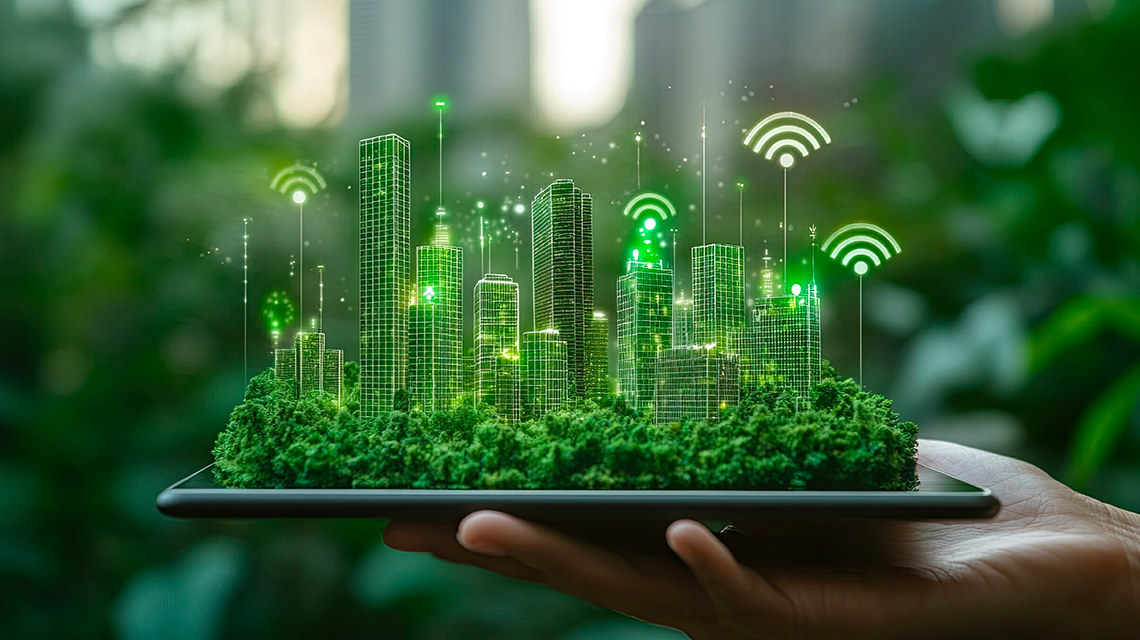
Buildings: ENEA and UNI introduce the smart green city standard
Assessing the entire life cycle of buildings — from design to decommissioning — to enable smart constructions capable of exchanging energy, data and services within increasingly sustainable cities. This is the objective of the new UNI 11973:2025 standard, developed by ENEA and UNI, the Italian National Standards Body.
The standard is intended as a reference framework for designers, companies, public administrations and local communities for the construction, management and decommissioning of buildings, as well as for urban regeneration strategies and territorial development policies.
Inspired by the concept of “Building as a Service”, the standard focuses on the development of buildings capable of exchanging energy, data and services with the urban network, thereby contributing to greater resilience, quality of life and social equity.
The standard introduces a multi-level, multi-scale and multi-temporal approach that integrates the building’s various “vertical” performance dimensions across its entire life cycle — including eventual decommissioning and/or reuse — with a “horizontal” dimension that assesses its capacity to interact with the city and with energy and digital infrastructures.
“Smarter and more sustainable buildings are a strategic investment for competitiveness, efficiency, safety and urban sustainability,” said ENEA Director General Giorgio Graditi. “The new standard introduces an integrated approach throughout the building life cycle, from smart solutions and consumption monitoring to architectural quality and interaction with the urban network, providing updated technical standards and requirements for the entire supply chain. This supports both the ecological and digital transition, as well as the achievement of European emission reduction targets for 2030 and climate neutrality by 2050.”
The standard provides designers with advanced criteria from the earliest project phases, including real-time consumption monitoring, smart systems management and nature-based solutions. For construction companies, it serves as an operational guide for delivering higher-performing buildings, while public administrations may integrate it into regulations, public tenders and urban regeneration programmes. Furthermore, for local communities, it offers clear rules that promote participation and urban quality.
In Europe, buildings account for approximately 40% of energy consumption and emissions, while the built environment absorbs around half of all extracted resources and generates more than 35% of EU waste. With about 75% of the building stock still energy-inefficient, energy refurbishment could reduce consumption and emissions by 5–6%, while the carbon footprint of materials and construction processes could be cut by up to 80%.