Italian National Agency for New Technologies, Energy and Sustainable Economic Development

MEDIA - Press office ENEA
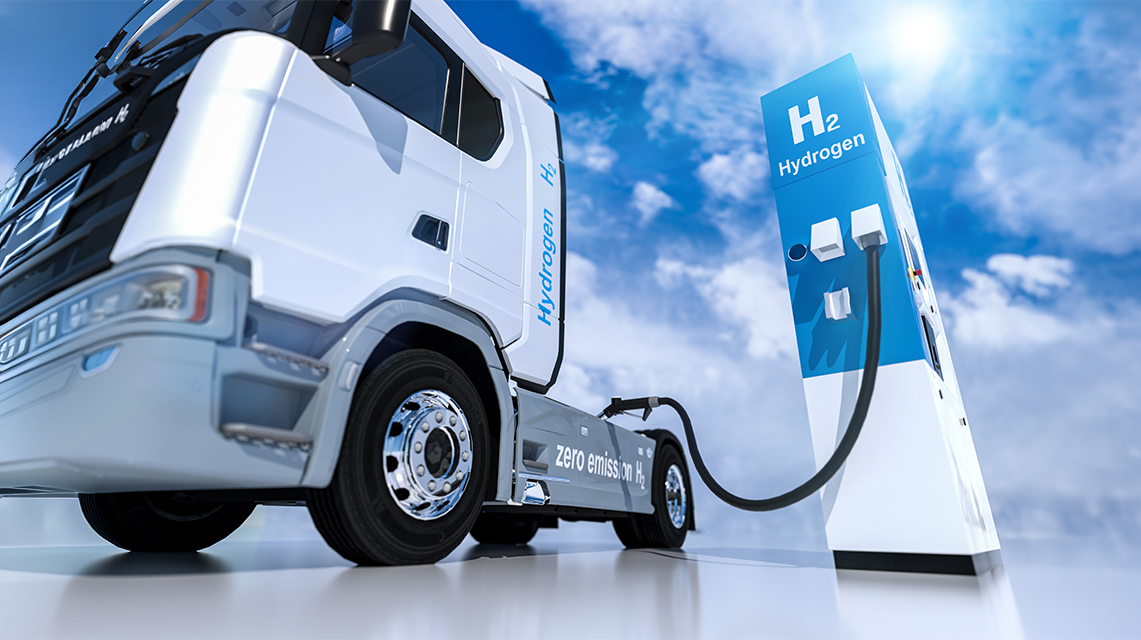
Energy: Freight transport, great potential for hydrogen in fuel cells
A study conducted by ENEA and the University of Tuscia, published in the international Journal of Hydrogen Energy - which provides useful data for future strategies for zero-emission vehicles - shows that hydrogen is becoming increasingly competitive in freight transport: on routes longer than 300 km, in vehicles weighing 3.5–18 metric tons, hydrogen-powered fuel cells can reduce costs by up to 55%[1] compared to electric batteries.
For the first time, the study compares the total costs of purchase, maintenance and operation of commercial vehicles equipped with different propulsion technologies: diesel, internal combustion hydrogen, battery electric and fuel cell (hydrogen-powered, in both constant- and variable-power configurations). The analysis covers four weight classes (from 3.5 to 44 metric tons) and range categories (between 100 and 700 kilometers).
For heavy-duty trucks, battery-electric vehicles appear to be less competitive than fuel-cell vehicles. In fact, when considering the total cost of ownership, BEVs (Battery Electric Vehicles) are more expensive: +14.4% (for the 18-metric-ton category) and +4.9% (for the 44-metric-ton category) over 100 km per day, and up to more than 52% higher on 700-km routes for both weight categories.
“Overall, BEVs achieve optimal energy economy at the cost of haulage capacity, especially on longer routes. The main factors weighing on efficiency are the higher costs of purchasing and replacing batteries at mid-life and, of course, their bulk. As a result, they are less competitive than fuel-cell vehicles” pointed out study co-author Viviana Cigolotti, head of the ENEA Technologies and Vectors for Decarbonization Division within the Department of Energy Technologies and Renewable Sources.
The battery pack can be 12 times larger than a constant-power fuel cell vehicle battery.; in contrast, in variable-power fuel cell vehicles, the battery is 56.2% smaller than in constant-power systems, because the fuel cell adjusts its power output in real time to the vehicle’s energy needs.
Regardless of the type of powertrain, the study highlights that heavy-duty vehicles (18 metric tons and 44 metric tons) have lower lifetime transportation costs than light-duty vehicles (3.5 metric tons and 5.2 metric tons), thanks to their greater load capacity. Furthermore, diesel remains the most economical option, but hydrogen is gaining ground: fuel cells become competitive for ranges exceeding 300 km and for vehicles up to 18 metric tons, with the added benefit of zero emissions.
“The results of our study clearly show that, for zero-emission freight transport, policies should prioritize electric vehicles powered by fuel cells over battery-powered ones. However, this is still an emerging sector that requires further analysis and testing to fully assess costs and efficiency. It will also be essential to broaden our perspective to include broader scenarios, like aspects related to the production and distribution of hydrogen for road transport” concluded Cigolotti.
According to the latest estimates from the European Environment Agency, in 2023 the transportation sector accounted for nearly one-third of the European Union’s total greenhouse gas emissions. In the same year, freight transport accounted for approximately 3.5 thousand billion ton-kilometers [2], representing a 43% increase compared to 1995, despite the effects of the 2009 economic crisis and, to a lesser degree, the COVID-19 pandemic. More than half of all freight (52.6%) was transported by road, confirming this mode as the dominant one and marking an increase of 5.7 percentage points compared to 1995.