Italian National Agency for New Technologies, Energy and Sustainable Economic Development

MEDIA - Press office ENEA
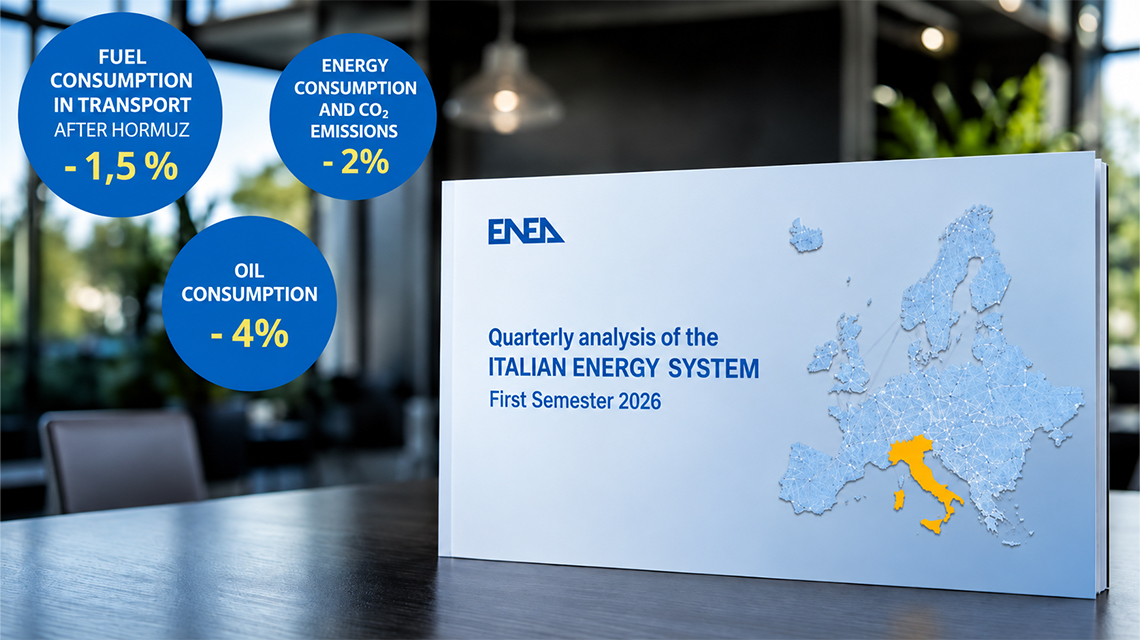
Energy: ENEA Analysis first half 2026, oil consumption falls by 4%, but decline is smaller in transport (-1%)
Energy consumption and CO₂ emissions down by 2%, but the 2030 target moves further out of reach (ISPRED -25%)
Hormuz crisis weighs on energy prices and oil consumption, while electricity demand rises (+2.5%)
During the first half of 2026, oil consumption fell by almost 4% both in Italy and across the European Union, but since the onset of the Strait of Hormuz crisis the decline in Italy’s transport sector has been four percentage points lower than the EU average (-1.5% versus -5.5% [1]). This is one of the findings of the ENEA Analysis of the Italian Energy System, which also highlights the strongest increase in electricity demand seen in the past ten years (+2.5% [2]).
“The decline in oil consumption in Italy was mainly driven by the further sharp contraction in the petrochemical sector, where consumption more than halved. By contrast, transport demand appears to have been less affected by the increase in prices,” comments Francesco Gracceva, who coordinates the ENEA Analysis.
Overall energy consumption declined slightly less across the EU-27[3] than in Italy (1.5% versus 2%), while the opposite was true for CO₂ emissions, which fell less in Italy than in Europe (-2% versus -3%).
“The modest reduction in emissions moves the 2030 target even further out of reach. Achieving it would now require an average annual reduction of more than 7%,” Gracceva adds.
As regards energy prices, the Analysis highlights significant increases across European energy markets, with a sharp acceleration between March and June, particularly affecting crude oil prices (+27% in the first half of the year and +50% after the onset of the Hormuz crisis, between March and June). This was reflected in refined petroleum products: the average retail price of diesel rose by 28% in the EU and by 23% in Italy between March and May. Significant increases were also recorded for gas (+3% over the first half of the year and +27% between March and June) and electricity: after declining on European power exchanges in the first quarter, prices rose by more than 20% across all EU countries following the onset of the Hormuz crisis.
The increase in electricity demand led to greater reliance on gas-fired power generation (+4.4%), while overall renewable generation grew by just over 1%, reflecting a sharp decline in hydropower generation offset by strong growth in wind (+16%) and solar PV (+19%). In May, the two variable renewable sources reached a new all-time high in their contribution to electricity demand (33%), a development that also resulted in a record increase in the number of hours with zero electricity prices on Italy’s wholesale market (88 hours, compared with 20 in the first half of 2025).
Strong electricity demand not only supported gas consumption but also made the filling of gas storage facilities ahead of next winter slower and more costly. By the end of July, storage facilities across Europe were slightly above 55% full, compared with around 70% a year earlier, while in Italy the rate was 75%, compared with 80% in 2025.
Against this backdrop, Italy’s energy transition continues to show a negative trend. By mid-2026, the ENEA ISPRED index[4] is down 25% with respect to a year earlier, primarily reflecting the further deterioration in the outlook for the 2030 decarbonisation target, followed by the sharp increase in petroleum product prices and the persistent severe weakness of energy-intensive industry. On the energy security side, however, the share of petroleum products covered by domestic production has remained broadly stable, with an improvement in the case of jet fuel, for which imports now account for around one third of consumption.
“The closure of the Strait of Hormuz has had significant impacts on energy prices, but these have been less severe than expected given the scale of the oil and gas volumes potentially affected, also thanks to the extensive use of stocks and the sharp decline in Chinese demand,” Gracceva continues. “However, the repercussions for the European productive system are beginning to show tangible signs. First, industrial production continued to decline during the first five months of 2026, particularly in Germany, Europe’s leading manufacturing country. Second, between March and April, Italy’s net energy import bill for oil, petroleum products, gas and electricity was more than €3 billion higher than in the same months of 2025,” Gracceva concludes.