Italian National Agency for New Technologies, Energy and Sustainable Economic Development

MEDIA - Press office ENEA
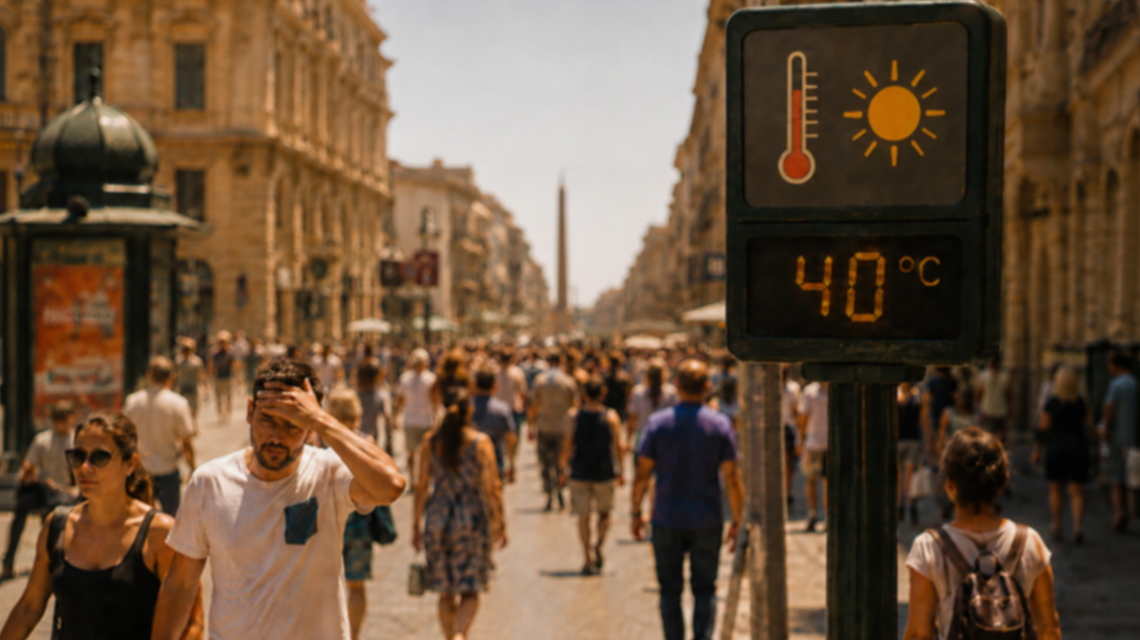
Climate: Rome, ENEA and Sapienza study estimates up to 100 days of heat stress per year
A study conducted by ENEA, Sapienza University of Rome, and SERCO Italia SpA and published in the journal “Atmosphere”, showed that in Rome people are exposed to marked thermal discomfort due to high temperatures for over 100 days a year, a number that far exceeds the number of days marked by heat waves.
The study shows that in 2018, 2020, and 2022, all days classified as heat waves also coincided with days of outdoor heat stress. However, the reverse is not true: not all days of heat stress were heat waves. In 2018, 60% of heat stress days coincided with a heat wave, in 2020, 50% and in 2022, just 40%.
The study analysed the period between May and September of six consecutive years (2018-2023), during which increases in temperature and humidity caused marked thermal discomfort for the population. Daily maximum and minimum temperatures, used to identify both heat waves and episodes of outdoor heat stress, were obtained from data recorded by two meteorological stations located in central areas of the capital (Collegio Romano and Via Boncompagni).
"Based on the data collected, the three-year period 2021-2023 recorded the most extreme conditions: minimum temperatures peaked at 28°C in 2023, while maximum temperatures reached 40.5°C in 2022," explained study co-author Serena Falasca, a researcher at the ENEA Climate Models and Services Laboratory in the Sustainability Department [1].
Considering both heat waves and outdoor heat stress episodes, only in 2022 and 2023 did the two phenomena occur with the same frequency. The case of 2019 is particularly significant: that year, no extreme heat wave was observed, but four distinct periods of outdoor heat stress were recorded, for a total of 99 days.
By comparison, in the other years analyzed, the highest total number of days of outdoor heat stress was recorded in 2018, with 102 days (compared to 27 days of heat waves), followed by 2022 with 101 days (with 66 heat waves), and 2021 with 98 days (with 41 heat waves). The lowest values for the 2018-2023 period were observed in 2020 (85 and 16) and 2023 (81 and 33).
"Overall, episodes of outdoor heat stress exceeded three months in four of the six years considered (2018, 2019, 2021, and 2022), while in the other two (2020 and 2023) they still exceeded two months" said Falasca. "Heat waves, however, have lasted more than a month in only three out of six years (from 2021 to 2023). This means " he continued " that heat stress events for people outdoors not only occur more frequently than heat waves, but are also much more prolonged. In practice, while heat waves typically last between 9 and 26 consecutive days per year, heat stress episodes can extend from 25 to 65 consecutive days, thus covering much longer periods. And even in years with few or no heat wave like 2019, the population still experienced long periods of marked thermal discomfort outdoors."
In the study, outdoor thermal perception was quantified using bioclimatic indices [2] like the MOCI (Mediterranean Outdoor Comfort Index), which is considered one of the most suitable and effective tools for assessing and predicting outdoor thermal comfort in the Mediterranean region: it turns subjective sensations of heat/cold into numerical values, on a 7-point scale, from -3 (extreme cold) to +3 (extreme heat). The index was developed after analysing a large dataset, which included both personal data and thermal perceptions obtained from questionnaires as well as observations of temperature, relative humidity, wind speed and global radiant temperature [3] recorded over an entire year in Rome.
Despite widespread interest from the scientific community, extreme heat events (and heat stress) continue to be defined almost exclusively based on air temperature. This gap is particularly significant for the Mediterranean basin, a climate change hotspot, where numerous studies confirm a strong increasing trend in heatwave intensity and duration. Italy also faces additional challenges, like high population density and the average age of the population. "For this reason, it is essential to broaden the concept of a heat wave, going beyond just temperature and including other factors that determine its overall impact, like the methodology used in this study" concluded the ENEA researcher.
Notes
[1] The study was conducted while Serena Falasca was also a researcher at the Department of Physics at Sapienza University.
[2] Empirical biometeorological indices are tools used to assess human thermal comfort or stress based on real meteorological measurements (air temperature, humidity, wind speed, and solar radiation) and data collected directly from the population through questionnaires or field studies. Several exist, such as the MOCI (Mediterranean Outdoor Comfort Index) for the Mediterranean basin, the TOCI (Turkish Outdoor Comfort Index) for Turkey, and the GOCI (Global Outdoor Comfort Index) with international application. They are used to assess thermal discomfort or comfort in different environmental conditions; guide decisions regarding public health, urban planning, and the management of extreme weather events; design
[3] Globe radiant temperature (or global radiant temperature) is a measurement used to understand how much thermal radiation (heat) comes from everything around a person: direct sunlight, hot surfaces, buildings, pavement. It helps us understand how hot the human body actually feels, because air temperature alone is not enough: a day with lots of sun or very hot surfaces can make us feel much warmer even if the air is not excessively hot.