Italian National Agency for New Technologies, Energy and Sustainable Economic Development

MEDIA - Press office ENEA
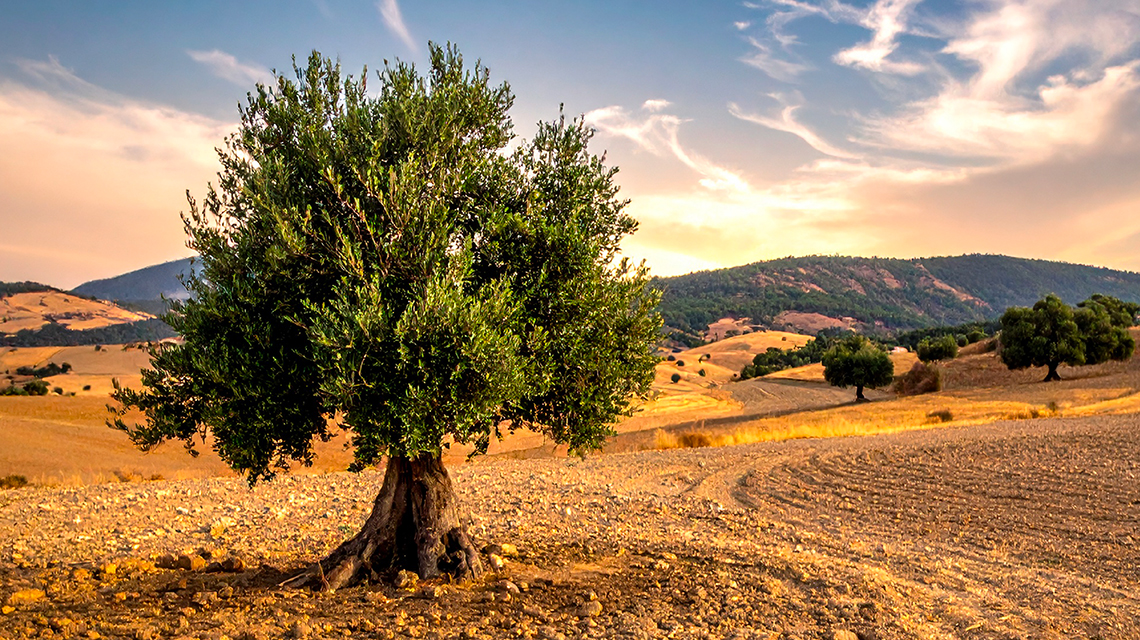
Agriculture: "Tailor-made" microbes save olive trees from drought
Mitigating the effects of climate change on olive trees by adopting innovative agricultural practices exploiting the benefits of microbial communities present in the soil and roots - especially in drought conditions - is the goal of an ENEA study published in Applied Science and conducted in collaboration with the CNR and the universities of Milan, Turin and Tuscia as part of the BIOMEnext international cooperation project [1].
"The olive tree was chosen as a model species to develop an innovative cultivation system representative of Mediterranean agriculture, threatened by intensifying drought" explained the ENEA project manager Gaetano Perrotta, researcher at the Laboratory of Regenerative Circular Bioeconomy. “This study” he said wanted to analyse the resilience and functional adaptation of the microorganisms present in the roots and soil (rhizosphere [2])
of four olive cultivars, comparing irrigated and drought-stricken plants in Umbria in different seasons of the year.”
ENEA researchers monitored and characterized the microbiome that lives in the soil around the roots to identify stress or resistance markers associated with arid conditions. "We have observed that microorganisms in the soil exhibit stability even in water scarcity, thanks to the fact that many species perform similar functions. In the roots, on the other hand, microbial communities change considerably: the plant selects the bacteria that increase resistance to drought" explained the co-author of the study Andrea Visca, biotechnologist at the ENEA Innovation of Agri-food Chains Laboratory.
ENEA researchers then identified the so-called core microbiome, i.e. the set of different microbial groups constantly present in different samples, which play a central role both in soil processes and in shaping the growth, health and resilience of host plants. Three bacteria have been identified as 'allies' of olive trees against drought, each with complementary functions: Solirubrobacter, present in the soil and often associated with the decomposition of organic matter and the nutrient cycle; Microvirga, which can live in symbiosis with plants, helping them to absorb essential nutrients like nitrogen, and Pseudonocardia, known for producing antimicrobial substances and contributing to the defense of plants against pathogens.
Specifically, the study shows that, under drought conditions, soil microorganisms activate or increase the genes necessary to defend and adapt, like those that improve the use of essential nutrients, protect cells from oxidative damage and allow bacteria to move to environments richer in water and nutrients.
"The root-rhizosphere interface represents a crucial area of interaction between plants and microorganisms, where many processes essential for plant health and development, like nutrient and water uptake, take place," explained study co-author Annamaria Bevivino, a researcher at the ENEA Sustainable Agri-Food Systems Division.
Understanding the dynamics of these interactions is becoming a priority for the development of sustainable agricultural practices. Indeed, modulating root-associated microbial communities will improve nutrient uptake and strengthen olive trees' resistance to biotic (like pests) and abiotic (environmental factors like drought) stress.
To achieve these results, the researchers combined three complementary investigative tools: DNA analysis to "photograph" the microbial communities present, the study of the potential functions of these microbial communities and software that examines thousands of scientific articles to retrieve and link the most relevant information in this field (text mining).
"ENEA is actively engaged in the selection and characterization of microbial consortia that improve plant yield, quality, and health. The combined approach of culturomics and metagenomics [3] that ENEA adopts will enable the development of increasingly innovative solutions for agriculture, aiming for sustainability, resilience and high efficiency", concluded Bevivino.
Notes
[1] Modelling integrated biodiversity-based next-generation Mediterranean farming systems.
[2] The rhizosphere is the microcosm immediatly surrounding roots, where a continuous and vital exchange between plants and microbes occurs.
[3] https://www.frontiersin.org/journals/microbiology/articles/10.3389/fmicb.2024.1473666/full