Italian National Agency for New Technologies, Energy and Sustainable Economic Development

MEDIA - Press office ENEA
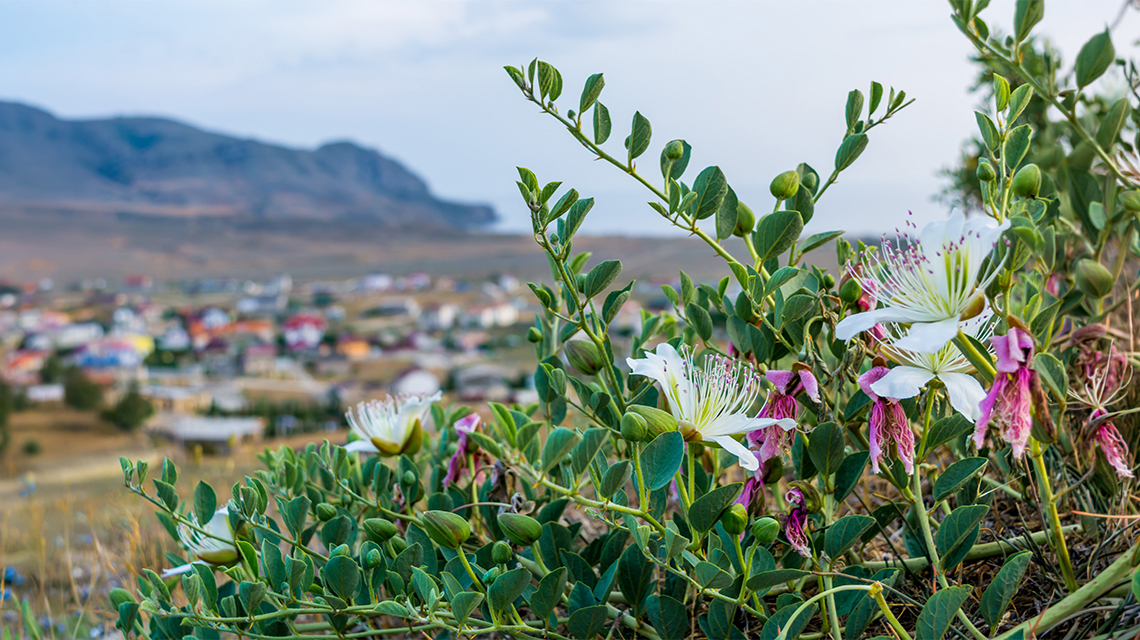
Agriculture: A project to protect Pantelleria’s PGI capers from pests
Protecting Pantelleria’s PGI capers from the stink bug Bagrada hilaris [1], a highly destructive insect capable of causing serious damage to many other food crops as well (wheat, legumes, broccoli, cauliflower), with severe economic consequences for farmers, is the objective of a research project funded by the European Biological Control Laboratory (EBCL) [2] and coordinated by the BBCA (Biotechnology and Biological Control Agency), which conducted on-site investigations, insect rearing and biological and behavioral tests, with the involvement of ENEA in irradiating the insects and validating and analysing the collected data. The initial results, published in the journal *Insects*, pave the way for the adoption of the Sterile Insect Technique (SIT) to control agricultural pests as an alternative to pesticides, especially in areas of particular environmental or productive value.
“The Bagrada hilaris leafhopper is a pest that has spread across the island of Pantelleria in recent years, becoming a phytosanitary emergency that is causing significant damage to the production of PGI capers, a staple ingredient in Sicilian cuisine” explained Sergio Musmeci, a biologist specializing in agricultural entomology at the ENEA Agriculture 4.0 Laboratory and co-author of the study together with, among others, Alessia Cemmi and Ilaria Di Sarcina of the ENEA Gamma-Ray Irradiation Facility.
“In this study, we tested for the first time the effects of gamma rays on the different life stages of this insect—and not just on adult males, as the classic technique does—in order to adapt it as much as possible to the characteristics of the species and the context of a protected area” said Alessandra Paolini, a researcher at the BBCA who oversaw the laboratory bioassays.
Specifically, the researchers tested the effect of gamma rays on fecundity (the number of eggs produced and laid), fertility (the ability of eggs to develop and hatch) and the insect’s longevity at two stages of its life cycle: as a juvenile, when it is not yet capable of reproducing (nymph), and as a two-week-old adult. Irradiation drastically reduced female fecundity, bringing the number of eggs laid to nearly zero. Similarly, female fertility was completely suppressed when untreated females mated with irradiated males. In general, irradiation resulted in nearly complete sterility (over 95%) across all life stages of the insect [3].
Regarding lifespan after irradiation, all life stages exhibited an adult lifespan well above the one-week minimum required for applications of the sterile insect technique. At a total accumulated dose of 80 Gy, adult females lived an average of 36.7 days and males 22.8 days. Males irradiated at the nymphal stage were found to be slightly more sensitive, with an average lifespan of about 22.1 days (15 days in the adult stage), which was still above the minimum required value.
“As part of the project, we also verified another key requirement: irradiated adult males are able to compete with wild ones, and in fact show greater effectiveness during the mating phase[4],” continued Sergio Musmeci of ENEA.
“This finding may reflect a hormesis mechanism—that is, an adaptive hypercompensatory response found in various insect species, triggered by mild stress” explained Chiara Elvira Mainardi, who conducted the behavioral tests for the BBCA and holds a fellowship at the ENEA Gamma Irradiation Facility Laboratory.
To date, the project to protect the Pantelleria PGI caper has involved both field studies and laboratory experiments. In the near future, these activities will make it possible to test a variation of the sterile insect technique that does not require breeding insects in biofactories for subsequent release into the field (the latter being a practice not permitted in protected areas), resulting in significant cost savings. As proposed by entomologist Massimo Cristofaro, who led the project, this new approach involves the mass collection of insects from the wild population[5], their sterilization in the laboratory and the subsequent reintroduction of the treated individuals into the field to help render the remaining portion of the natural population sterile. “This strategy is well suited to the biology of the Bagrada hilaris insect, as its marked gregarious behavior facilitates the collection of thousands of wild individuals in the fall, in the hotspots where they gather for overwintering. Furthermore, since the caper plant is in a state of vegetative dormancy during that period, the presence of the insect would not cause damage to the crop” said Musmeci.
To validate the results obtained in previous laboratory experiments, a second phase is planned that will involve the Pantelleria National Park: a key element will be estimating the ratio of released sterile males to fertile males on the island.
The total annual production of capers in Pantelleria ranges between 3,000 and 4,000 quintals. However, the quantity certified with the IGP label is much more limited (between 1,200 and 1,300 quintals, with some years seeing certified production drop to 500 quintals). The strict production regulations stipulate that the maximum yield is set at 30 quintals per hectare and that harvesting must be done exclusively by hand in stages from May 1 to October 1. (www.masaf.gov)
Notes
[1] Bagrada hilaris is an invasive species of bug that has been considered a pest of Brassicaceae crops in Africa, India and the Middle East since the early 1900s. However, it also infests a large number of plant species, including other crops and ornamental plants, belonging to 23 families. It is also widespread in Southeast Asia and Southern Europe, including the Mediterranean islands of Malta and Pantelleria (Italy). In 2008, it was first reported in Southern California and has since been rapidly expanding its range across several states in the southwestern United States, Hawaii, and Mexico. More recently, the species has also been recorded in Quilicura, Chile.
[2] Administered by the U.S. Department of Agriculture.
[3] Starting at a dose of 80 Gy (Gray), whereas in the case of nymph-stage insects, sterility was achieved at significantly lower doses
[4] Sterile but Sexy: Assessing the Mating Competitiveness of Irradiated Bagrada hilaris Males for the Development of a Sterile Insect Technique (authors: Chiara Elvira Mainardi, Chiara Peccerillo,*, Sergio Musmeci, Alessandra Paolini, René F. H. Sforza, Alessia Cemmi, Ilaria Di Sarcina, Gianfranco Anfora, Daniele Porretta, Francesca Marini and Massimo Cristofaro).
[5] Understanding the effects of gamma rays on all life stages became necessary precisely in view of collecting the insects from the field. In fact, a subsequent laboratory sorting process to select only the adult males for sterilization, as required by the classical SIT, would be excessively time-consuming and labor-intensive.