Italian National Agency for New Technologies, Energy and Sustainable Economic Development

MEDIA - Press office ENEA
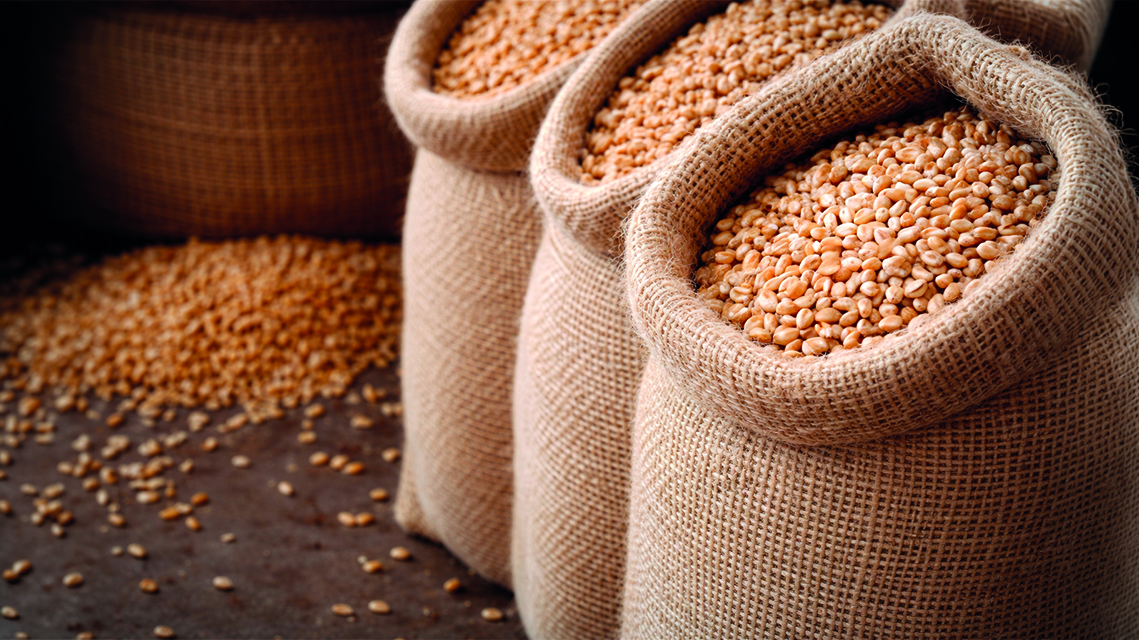
Agri-food: ENEA, gamma rays to enhance wheat safety and extend life-shelf
ENEA has successfully tested gamma irradiation[1] as a safe, effective, and sustainable method to ensure microbiological safety, maintain nutritional qualities and extend life-shelf. The results of the study were published in the open access scientific journal Polysaccharides and confirm its potential as a treatment and preservation method for the cereal and agri-food industry. The tests were conducted at the Calliope irradiation facility of the Nuclear Department at the ENEA Casaccia Research Center (Rome) on four types of Italian wheat: one durum wheat and three soft wheat varieties from conventional, organic and integrated farming.
“The exposure of the ground wheat[2] to a dose of gamma radiation sufficient to eliminate pathogenic microorganisms, fungi and molds, confirmed that the treatment does not cause visible alterations in the appearance or color of the samples and, above all, does not compromise the chemical-physical properties or molecular structure of the starch present in wheat” explained Alessia Cemmi, head of the ENEA Gamma Irradiation Facility Laboratory and co-author of the study together with Rocco Carcione, Beatrice D'Orsi, Ilaria Di Sarcina, Emiliana Mansi and Jessica Scifo.
Gamma ray treatment, using Cobalt-60 generated at the Calliope facility, guarantees the absence of changes inducing radioactivity in food products, allowing extended food shelf life by delaying ripening and deterioration. Furthermore, it allows for the treatment of large quantities of goods in a single batch without generating waste or pollutants and, unlike conventional methods, does not require high energy consumption or involve an increase in temperature.
“Based on the results we have obtained, this type of irradiation can also be applied to other polysaccharide-based products like corn, a cereal that is highly susceptible to contamination by fungi that are dangerous to both human and animal health,” pointed out Alessia Cemmi. “In this context,” she said “we are participating in a project funded by Coldiretti Toscana focused on eradicating this type of biodeterrogens through greener and more sustainable approaches than conventional methods, which rely on the use of pesticides.”
Currently, around 50 countries[3] worldwide are applying this type of treatment, supported by international organizations like FAO, WHO, and IAEA, to ensure food safety for over 50 food categories, for its effectiveness in eliminating bacteria, including pathogens such as Escherichia coli, Salmonella, Listeria and pests and fungal communities in meat, fresh fish, spices, perishable products and frozen foods.
In Italy, gamma irradiation is not yet widely adopted, being employed only for inhibiting sprout formation in potatoes, garlic and onions, and for sanitizing spices and other dried vegetable products.
“High management costs and the necessity for specialized personnel are the main reasons for its limited use in our country,” continued Cemmi. “Furthermore” he said, "the maximum applicable dose is tailored to the specific food matrix. Wheat, for example, can tolerate even relatively high doses without suffering significant degradation because it is composed mainly of polysaccharides organized into robust molecular structures. On the contrary, high doses used in fresh fruit and vegetables can degrade certain components due to more delicate matrix. For this reason, food irradiation tolerance cannot be generalized: each food product must be studied individually to guarantee both safety and the preservation of nutritional and functional properties ".
This study is part of the METROFOOD-IT project, coordinated by researcher Claudia Zoani at the ENEA Sustainability Department, which aims to create a national Italian network capable of strengthening the research infrastructure for metrology and open-access data management in the agri-food sector.
Foto e Video


Notes
[1] Gamma rays are high-energy electromagnetic radiation, more penetrating than X-rays and capable of ionizing matter, i.e., stripping electrons from atoms or molecules with which they come into contact. They are used in medicine, industry and research and are also used in food preservation, eliminating bacteria and parasites without relying on heat by breaking down their DNA. The unit of measurement for the amount of radiation absorbed is the Gray (Gy). This study uses Cobalt-60 (⁶⁰Co), a radioactive isotope of cobalt that emits high-energy gamma rays (gamma radiation) (averaging 1.25 MeV). It is used to sterilize food and medical instruments by destroying bacteria and microorganisms without leaving any chemical residues. It has a half-life of about 5 years, meaning its radioactivity decays naturally (halving) during that period.
[2] Wheat is one of the most economically important crops globally, serving as a conerstone in human nutrition and food production. In recent decades, global wheat exports have grown significantly, from 101 million tons in 2000 to 199 million in 2020. Projections for 2030 indicate continued expansion, reaching 220 million tons.
[3] Currently in Europe, treatment with ionizing radiation is regulated by framework directives 1999/2/EC and 1999/3/EC. The legislation sets out the conditions for the manifacturing, marketing and importation of foods and their ingredients treated with ionizing radiation, also defining treatment conditions, permitted products and health authorization for treatment facilities. All treated foods and/or ingredients must be labeled as “irradiated” (sun symbol), and member states are required to carry out checks to ensure that food labeling is correct.