Italian National Agency for New Technologies, Energy and Sustainable Economic Development

MEDIA - Press office ENEA
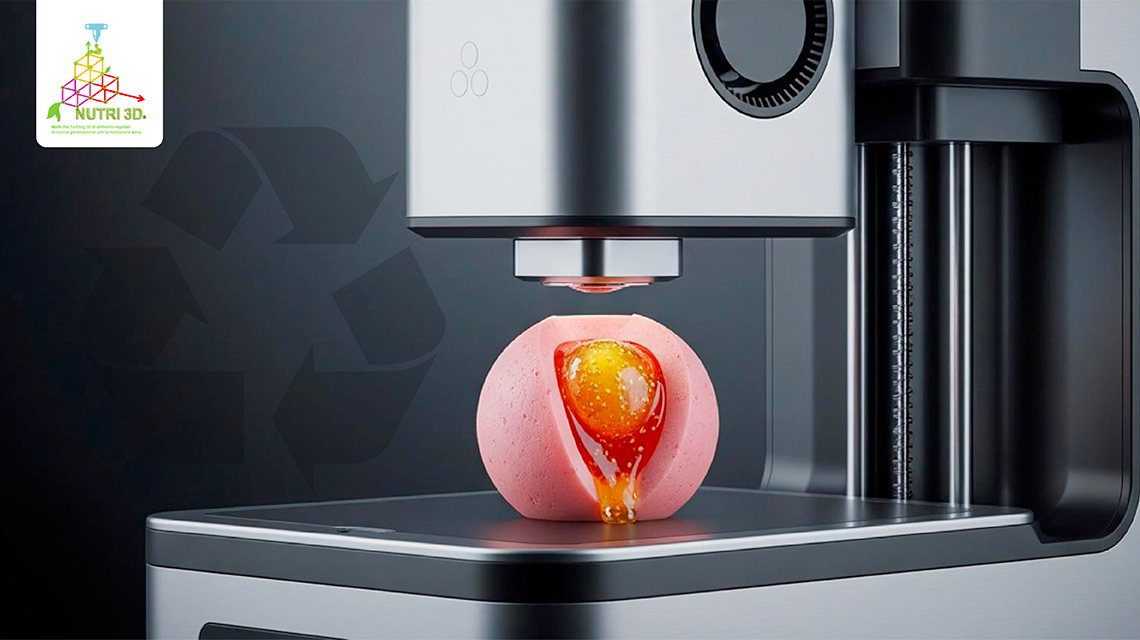
Food: From multilayer snack bars to “honey pearls”, the new frontier combines sustainability and advanced technology
From multilayer snack bars to “honey pearls,” the new frontier of food innovation combines sustainability with advanced technology — and a recent survey shows that consumers are beginning to recognize their value
ENEA is developing sustainable, 3D-printed foods that are nutrient-rich and potentially customizable to individual needs. These results were achieved within the framework of the NUTRI3D project [1], carried out by ENEA in collaboration with Rigoni di Asiago, EltHub (project coordinator), and with the support of CREA – Food and Nutrition Research Center.
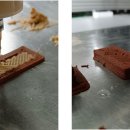
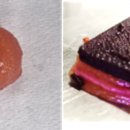
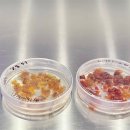
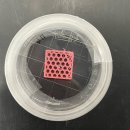
In particular, ENEA researchers have developed ingredients and formulations for high-value snack bars and spheres — the so-called “honey pearls” — produced from plant cell cultures and agri-food fruit processing by-products (provided by Rigoni di Asiago). The 3D printing set-up of these foods was carried out at the ENEA Research Center in Brindisi and, then, 3D printing was performed in a prototype 3D printer specifically designed for the project by Elthub.
To better understand consumer preferences, researchers conducted a study published in Innovative Food Science & Emerging Technologies, which revealed a growing interest in these innovative products, confirming the potential of 3D food printing [2]. The survey, involving over 400 consumers, was conducted through an anonymous online questionnaire designed to assess respondents’ level of acceptance of these new food products. In addition, sensory analyses were performed by trained judges to identify objective differences compared with commercial products.
According to recent estimates [3], 2025 the global 3D food printing market is expected to reach a value of approximately €360 million, driven by the urgent need to feed a global population that, according to the United Nations, is projected to exceed 12 billion people by 2100, placing increasing pressure on natural resources — particularly air, water, and arable land — especially in emerging countries.
“Our studies revealed that the ‘pearls’ enriched with plant cells show improved texture and juiciness, making them more appealing to consumers,” explains Simona Errico, researcher at the Regenerative Circular Bioeconomy Laboratory of the ENEA Research Center in Trisaia.
“Moreover, data from the online survey showed that awareness of the product’s innovative composition increased both interest and attractiveness, suggesting that consumer education and transparent communication are key factors influencing food choices,” adds Paola Sangiorgio, researcher at the same laboratory.
“The impact of climate change and the scarcity of new arable land will make it increasingly difficult to ensure the supply of high-quality plant-based foods,” notes Silvia Massa, Head of the Agriculture 4.0 Laboratory at the ENEA Casaccia Research Center and ENEA scientific coordinator of the NUTRI3D project.
“In this context, developing innovative production and manufacturing systems — such as plant cell agriculture and 3D printing — represents a strategic approach to producing sustainable, health-promoting foods, even from agri-food by-products, thereby contributing to a healthy and safe diet. Such foods could also have customized applications in space missions,” concludes Massa.
ENEA’s research also found that 59% of respondents would be willing to purchase innovative foods produced with these technologies, particularly when linked to health benefits. However, cultural and informational barriers remain: some consumers still perceive such products as “unnatural.” Researchers therefore highlight the need for clear and accessible communication campaigns to bridge the gap between scientific innovation and social acceptance.
In addition to ENEA, Rigoni di Asiago, EltHub, and CREA – Food and Nutrition Research Center. The project initially involved the company G&A Engineering.
Photogallery
Notes
[1] 3D MaNUfacTuRIng of new generation plant-based foods for healthy nutrition funded by the MiSE National Operational Programme
[2] 3D food printing is an additive process that, starting from a digital model, builds innovative food, layer by layer, thanks to specialized printers that extrude edible materials, combined with ingredients capable of maintaining the designed shape.