Italian National Agency for New Technologies, Energy and Sustainable Economic Development

MEDIA - Press office ENEA
Environment: ENEA tests UV technology to remove micropollutants from wastewater treatment plants
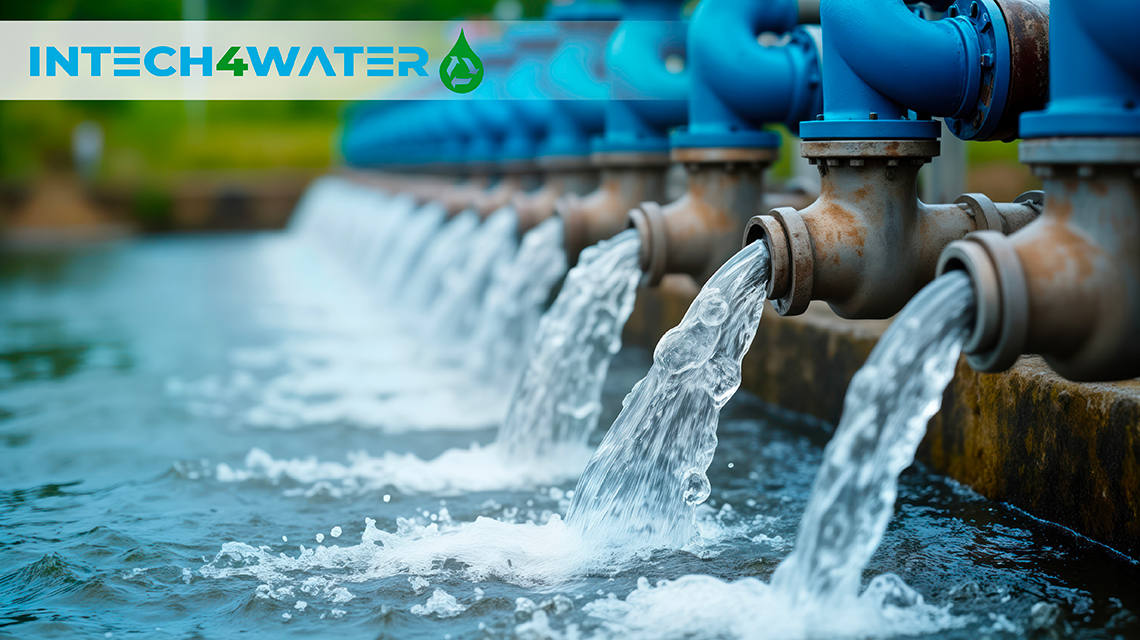
ENEA is developing an ultraviolet (UV) light-based technology to treat wastewater contaminated with nitrogen, phosphorus, pathogenic bacteria and emerging micropollutants, while promoting a sustainable management model in line with the principles of the circular economy. The innovation is part of a system of high-tech solutions being developed as partt of the INTECH4WATER project [1] (funded by the Emilia-Romagna Region), coordinated by the Terra&Acqua Tech laboratory of the University of Ferrara Technopole. Project partners include the ENEA Environment Laboratory (ENEA-LEA) of the Bologna Technopole, the CIRI-FRAME center of the University of Bologna, ProAmbiente and the CNR-ISSMC of Faenza. Industrial partners are the HERA Group (with the Ferrara wastewater treatment plant), CIFO srl (Biolchim spa group), and Naturedulis srl.
As part of the project, the ENEA-LEA team will test the effectiveness of UV technology in removing emerging micropollutants from wastewater. They are molecules used in pharmaceuticals like carbamazepine (anticonvulsant), clarithromycin (antibiotic), diclofenac (anti-inflammatory), levofloxacin and erythromycin (antibiotics), and compounds found in plastics like bisphenol A, an endocrine disruptor capable of altering hormonal systems even at extremely low concentrations.
“In our laboratories we have already begun the first analyses and pollutant-removal tests on both prepared solutions and wastewater samples collected at the HERA Ferrara treatment plant. The first results have been particularly promising for diclofenac, with a removal rate exceeding 99%,” explained Luigi Sciubba, ENEA project coordinator.
“To analyse selected organic micropollutants, we will use a liquid chromatograph coupled with three different detectors [2] recently acquired and installed at the ENEA Brasimone Research Center (Bologna). This tool will allow us to efficiently separate the molecules in the liquid sample and analyse each one separately” said Roberta Guzzinati, researcher at ENEA-LEA.
ENEA researchers will also handle sampling and analysis of microplastics present in wastewater[3]. For sampling, they will use a high-tech instrument optimized through the project; for analysis and preliminary counting, a stereomicroscope will identify particles based on size, color, and shape. Finally, with the use of an infrared spectroscopy-based device (micro-FTIR), it will be possible to determine the bonds and functional groups of particles, distinguishing between plastic polymers and natural molecules like cellulose.
“Together with all the project partners, we aim to improve the efficiency of removing the most common pollutants, both chemical and biological, found in municipal and industrial wastewater treatment plants, ensuring higher water quality, allowing it to be returned to natural watercourses or reused for applications like irrigation,” Sciubba said.
“The new purification process will also allow to recover microalgal biomass, which can be used as secondary raw materials for agricultural fertilizers, animal feed, and energy production,” said Prof. Simonetta Pancaldi at the University of Ferrara and project coordinator.
Overall, the INTECH4WATER project envisages the testing of four different technologies[4]: ozonation, UV degradation, ceramic/photocatalytic/adsorbent filters, and microalgae (the latter capable of absorbing nitrogen and phosphorus to generate biomass as a secondary raw material for organic farming). These will be first tested individually on a laboratory scale and later integrated into a single innovative, safe, and sustainable system, based on results from individual trials. All phases will be supported by advanced statistical analyses and in-depth chemical, biological, and microbiological studies.
“The project is addressed to industries where wastewater composition changes significantly throughout the year, making it difficult to rely on a single purification technology to guarantee effluent quality. In addition, it aims to provide the necessary tools to comply with the new EU Directive 3019/2024[5] on wastewater treatment, which seeks to protect the environment and human health under the integrated One Health principle,” concluded Pancaldi.
Notes
[1] INTECH4WATER - INtegrated TECHnologies for pollutants in (waste) WATERservices.
[2] Diode Array Detector, fluorometric and mass spectrometer.
[3] Microplastics with dimensions between 1 and 5,000 microns.
[4] The technologies that will be tested are: ozonation, UV degradation, ceramic/photocatalytic/adsorbent filters and microalgae (the latter capable of absorbing nitrogen and phosphorus for the production of biomass that can be used as a secondary raw material for organic agriculture).
[5] The main innovations of EU Directive 3019/2024 are: by 2045 (with intermediate targets) Member States will have to guarantee the application of quaternary treatment, i.e. dedicated to the removal of organic micropollutants, in purification plants that treat more than 150,000 population equivalents (or more than 10,000 population equivalents, if falling in sensitive areas); purification plants will have to be more efficient, eliminating micropollutants such as drugs, cosmetics and microplastics (target 80%); microalgae and other innovative solutions can be used to absorb nutrients such as nitrogen and phosphorus and reuse them; the plants will have to become zero energy impact by 2045, i.e. produce all the energy they consume; the polluter pays: the companies producing polluting substances will have to contribute financially to purification; the reuse of treated water is encouraged, for example to irrigate fields, especially in areas affected by drought.