Italian National Agency for New Technologies, Energy and Sustainable Economic Development

MEDIA - Press office ENEA
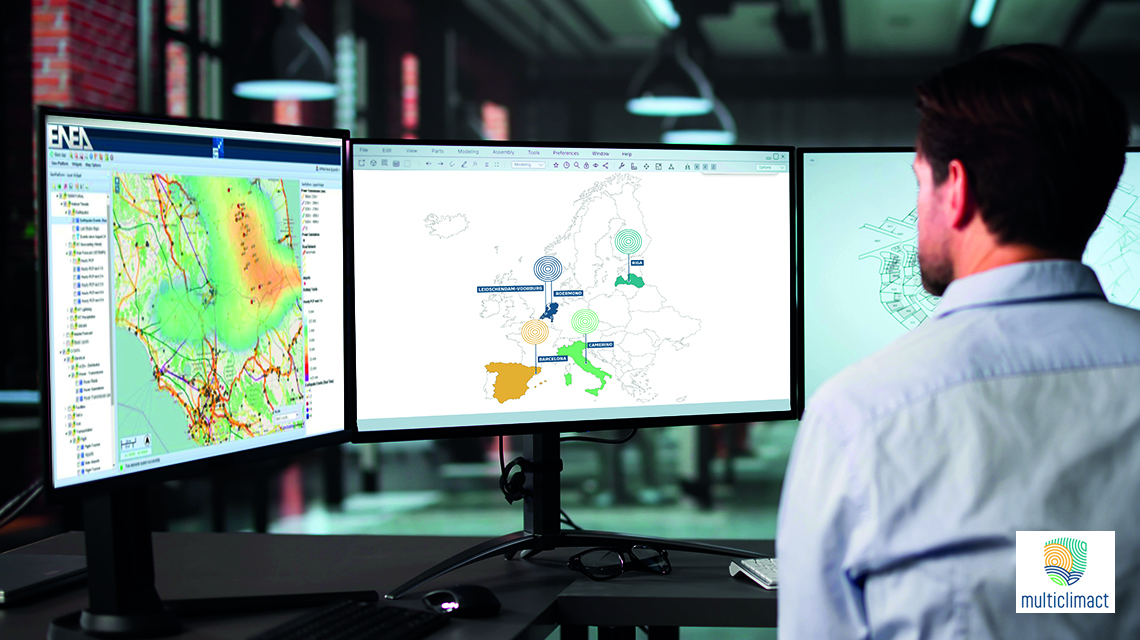
Safety: ENEA, new software version to address the impact of extreme events
Trial to begin in Camerino (Macerata)
ENEA has launched the new version of the CIPCast 5.0 software for managing natural and climate-related emergencies like floods, earthquakes, extreme weather events and heat waves. Addressed to policymakers, civil protection agencies and critical infrastructure operators, the system helps assess the impacts of events that are increasing in frequence and intensity.
Version 5.0 of the CIPCast platform was developed as part of the European MULTICLIMACT project, which involves 25 partner organizations, including ENEA and Rina Consulting S.p.A. (coordinator) for Italy. The software estimates potential damage to infrastructure by combining information on the characteristics and vulnerabilities of structures with a probabilistic assessment of hazard levels.
Unlike traditional warning systems, which primarily describe probabilistic hazard scenarios, the platform is designed for the estimation of potential impacts on the territory: it identifies the most exposed areas, the essential services at risk (transportation, power grids, and strategic buildings) and key intervention priorities. Furthermore, based on available data, it allows for an assessment of the region’s capacity to maintain operational services during and after an emergency, providing resilience indicators.
“CIPCast examines the interconnections between urban infrastructure, analyzing, for example, the effects of a power outage” explained Antonio Di Pietro at the ENEA Laboratory for Analysis and Modeling of Critical Infrastructure and Essential Services—Department of Energy Technologies and Renewable Sources. “The new software” he continued “helps interpret available information into operational terms to evaluate possible countermeasures, since information on natural hazards alone is not sufficient to make effective decisions.”
The data used by the system comes from diverse sources: territorial information on building vulnerability, open-source geographic data, and information from territorial monitoring, including real-time video streaming from drones and sensors.
The platform is already operational for the risk analysis component, while the other modules—including those for assessing resilience and those that integrate data collected via drones—will be made available by the end of the year.
CIPCast 5.0 is currently being tested in the city of Camerino in the Marche region, one of the four pilot sites of the MULTICLIMACT project, along with Barcelona (Spain), The Hague (Netherlands), and Riga (Latvia).
“he 2016 central Italy earthquake sequence, including Camerino, provided instrumental data, damage assessments and highly useful technical information” Di Pietro continued. “To obtain more realistic estimates of potential damage in case of new seismic events” he concluded “the instrumental data obtained were integrated into the system along with the vulnerability characteristics of buildings in the historic center. Furthermore, tests conducted on buildings undergoing reconstruction following the earthquake allow us to validate the platform in a real-world scenario that is also transferable to other urban contexts.”
Once the trial period is over, the software will be made available to the Municipality of Camerino to enhance response capabilities and protect residents.