Italian National Agency for New Technologies, Energy and Sustainable Economic Development

MEDIA - Press office ENEA
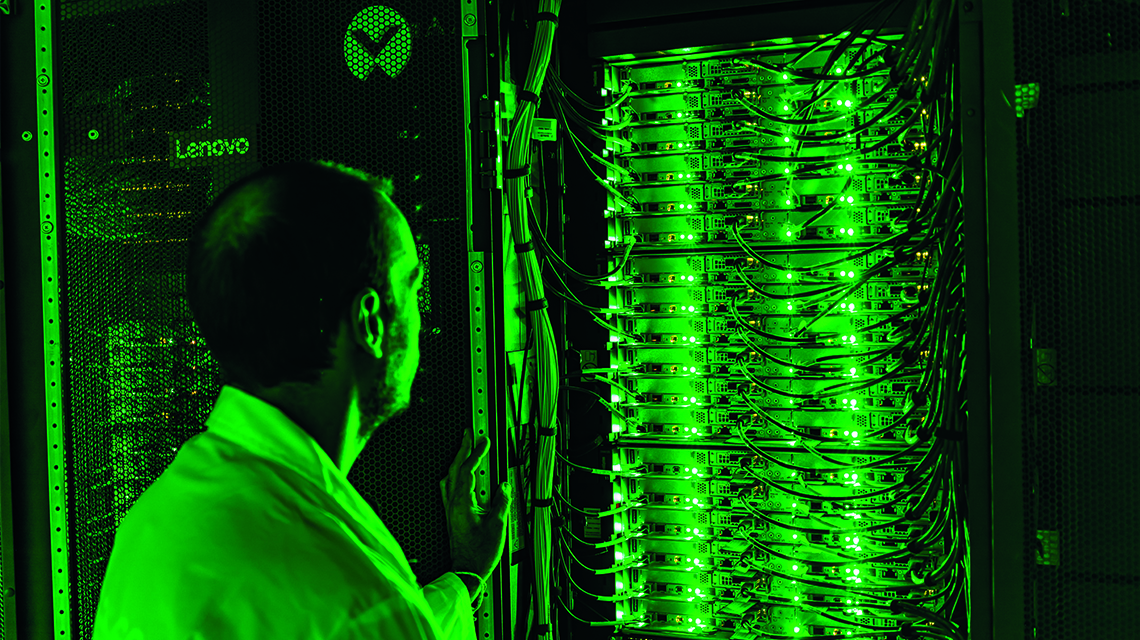
Research: CRESCO supercomputer, 122 million hours of computing for science and industry
With 122 million hours of computation in one year, the ENEA CRESCO supercomputer has contributed significantly to international scientific research, becoming an essential infrastructure for research centers, universities and companies and enabling activities in various application areas, from nuclear energy to materials science, from molecular dynamics to biotechnology and for climate, energy and digital transition, as shown in the report High Performance Computing on CRESCO infrastructure: research activity and results 2024, which collected data on the use of CRESCO.
The main users of CRESCO services include research centers like the Cnr, ICCOM, ICSC, INFN, ITT and the main Italian universities.
Among the most important projects supported in 2024 by the ENEA supercomputing system is the PNRR Divertor Tokamak Test Facility Upgrade (DTT-U) project, aimed at improving the reliability of the systems of the DTT fusion energy plant under construction at the ENEA Research Center in Frascati (Rome). The supercomputer enables the development of advanced models and simulations of plasma behavior in the nuclear fusion reaction.
ENEA main computational resources are located at the Portici Research Center (Naples) and are accessible to both public and private sector scientific communities. CRESCO, which first became operational in 2008, currently has a peak power of over 9 PFlops and consists of 758 computing nodes. In June 2025, CRESCO8 was ranked 228th in the TOP500 list of the world's most powerful computers and the Green TOP500, which measures supercomputer performance in relation to energy efficiency, was positioned at 134th. The infrastructure has low energy consumption thanks to a special water cooling technology, which can dissipate up to 98% of the heat produced by the supercomputer and save 40% of energy.
“CRESCO's contribution to research is constantly increasing, as demonstrated by the upward trend observed since 2008,”pointed out Giovanni Ponti, ENEA Head of the IT and ICT Systems Development Division at the Energy Technologies and Renewable Sources Department. "The launch of CRESCO8 in 2025 represents a strategic step forward, as the new HPC system will significantly expand computational capacity in support of the most advanced research activities, allowing ENEA to maintain its leadership position in the field of high-performance infrastructure available to the national and international community."