Italian National Agency for New Technologies, Energy and Sustainable Economic Development

MEDIA - Press office ENEA
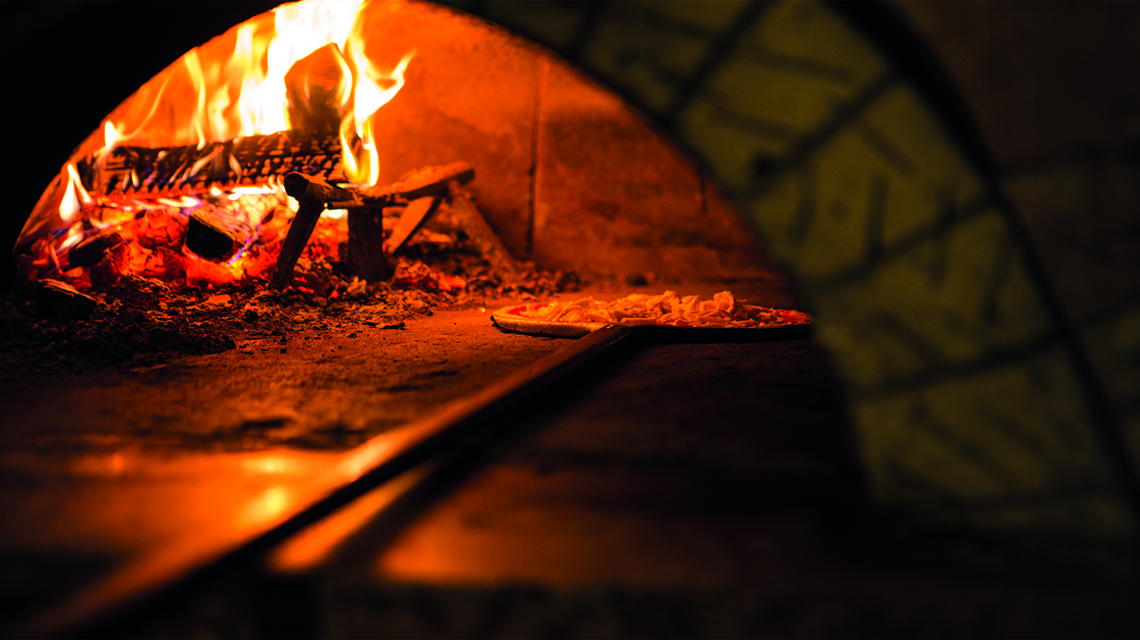
Environment: ENEA measures pollutants emitted by wood-fired pizza ovens for the first time
A study conducted by ENEA, together with Innovhub and the University of Milan, funded by the Ministry of the Environment and Energy Security[1] and published in the journal Environmental Pollution, highlighted that in wood-fired pizza ovens the highest levels of pollutant emissions occur during the ignition phase. Researchers have identified for the first time, through specific experimental campaigns[2], the main factors influencing emissions from wood-fired pizza ovens, a starting point for providing practical recommendations to reduce the environmental impact of pizzerias.
The study shows that the various operating phases of wood-fired pizza ovens exhibit different levels of combustion efficiency, a key factor in the formation of pollutants. For example, starting a cold oven is characterized by inefficient combustion, which leads to peak emissions of various pollutants, particularly polycyclic aromatic hydrocarbons (PAHs), which are present in the form of airborne particles and gases.
During cooking, combustion is more stable. "However, the insertion of pizzas and the entry of cold air alter the temperature and combustion rate, generating peaks of gaseous organic compounds[3] and particulate matter similar to those observed during lighting and the addition of new wood, which are the phases characterized by the highest degree of incomplete combustion" explained ENEA researcher Milena Stracquadanio, coordinator of the "Pizzerie" project.
Finally, the least impactful phase in terms of emissions perspective is the stationary phase, that is, when the oven has reached its set temperature and it’s not actively cooking.
Measurements of particulate matter[4] from wood-fired pizza ovens revealed significant variability in emissions concentrations, depending on the type of fuel used: adding wood in successive loads disrupts the combustion process, leading to a temporary increase in particulate matter emission.
For the experimental tests, the researchers examined three wood-fired pizza ovens—two newly manufactured and one in operation for approximately ten years—to assess any differences in atmospheric emissions. A sampling protocol was designed to reproduce the operating conditions of a real pizzeria, considering the impact of the different phases of use: cold and hot ignition, cooking and stationary phase. Beechwood was used as fuel, the most commonly used wood type in wood-fired ovens in Italy because it reaches high temperatures quickly, produces limited amounts of smoke and guarantees high efficiency.
The study highlights significant differences related to the type of oven. In particular, the largest and oldest model - in operation for about ten years - recorded the highest emissions of carbon monoxide, gaseous organic carbon[5] and particulate matter compared to the two smaller and more recently produced ovens, probably because it requires larger quantities of wood to reach and maintain operating temperatures. “Compared to the two newer ovens, this model produced lower quantities of nitrogen oxides, despite the higher fuel consumption” explained Andrea Bergomi, researcher at the University of Milan and co-author of the study. “This is a surprising outcome – continued Bergomi – which can be explained by the fact that higher concentrations of carbon monoxide in the combustion chamber determine a more oxygen-poor environment and in these conditions the formation of nitrogen oxides is reduced. Overall, the differences between the ovens are more marked during the ignition phase, while they tend to attenuate during the cooking phase, when the emission levels show a progressive alignment”.
The pizza market is experiencing rapid growth and could reach 500 billion dollars by 2032; in 2022, wood-fired pizza ovens represented 41% of the global total and the sector continues to expand with a forecast annual growth rate of 5.3% by 2030. “This increase, especially in large cities, has drawn the attention of authorities to the possible impacts on air quality: while stoves and fireplaces are regulated[6], wood-fired pizza ovens are not subject to specific regulations, also due to a lack of studies evaluating their emissions. For this reason, strengthening the experimental analysis of emissions from wood-fired ovens, as the project “Pizzerie” has done, is essential” concluded Stracquadanio of ENEA.
Note
[1] Collaboration agreement between ENEA and the Ministry of the Environment and Energy Security for the study of air pollution from wood-fired pizza ovens and participation in international and European discussions on air pollution, 2020-2023. This research, conducted in synergy with that envisaged in the Innovhub "Profile" project, has ensured greater representativeness of oven types and fuels.
[2] Nitrogen oxides (NOx), carbon monoxide (CO), gaseous organic carbon (OGC), total suspended particulate matter (TSP), PM10, PM2.5, and polycyclic aromatic hydrocarbons (PAHs).
[3] Carbon monoxide (CO), nitrogen oxides (NOx), and organic gaseous compounds (OGCs).
[4] Total suspended particulate matter – TSP, particulate matter smaller than 10 and 2.5 µm – PM10 and PM2.5.
[5] Gaseous organic carbon emissions (which includes a broad category of volatile compounds released during wood combustion and methane) are influenced by the type of appliance (stove, fireplace, boiler, etc.), the quality of the appliance (traditional, advanced), and the type of fuel (spruce, oak, beech, etc.). In addition, the compounds are highly sensitive to combustion conditions and therefore tend to exhibit the highest variability among gaseous pollutants.
[6] The EU has introduced specific requirements for appliances used in residential combustion, setting emission limits for PM, NOx, CO, and OGC (Regulation (EU) No. 2015/1185). Despite accounting for only 2.6% of total energy consumption, biomass combustion in the residential sector contributes to 36% of PM2.5 emissions (Wolters, 2018) in the European Union.