Italian National Agency for New Technologies, Energy and Sustainable Economic Development

MEDIA - Press office ENEA
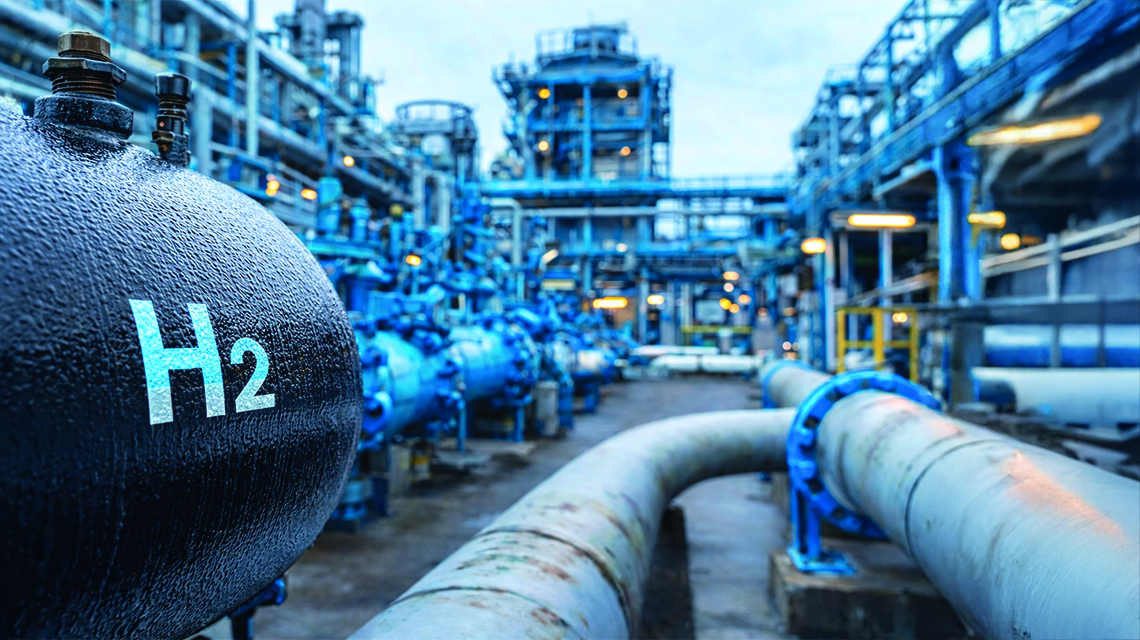
Energy: The impact of hydrogen injection in the gas network
ENEA and the University of Cassino have studied how the use of hydrogen in natural gas networks can influence the measurement of odorants, chemicals that provide natural gas (colorless and odorless) with an intense and characteristic odor that allows for immediate leak detection. The study considered three different scenarios: pure methane, a 20% methane and hydrogen mixture and pure hydrogen, and analyzed the odorants THT and TBM. The outcomes were published in the scientific journal Sensors.
The data show a slight overestimation of THT (+2.3%) in 20% gas-hydrogen mixtures, while in the case of pure hydrogen the presence of the TBM odorant is underestimated (-3.4%).
"The results indicate that, as hydrogen concentration increases, maintaining a consistent olfactory perception becomes more difficult, requiring an udate of current measurement standards," explained study co-author Viviana Cigolotti, head of the ENEA Decarbonization Technologies and Vectors Division. "An overestimation of odorant concentrations" she continued "could pose safety risks by hindering the ability of users to detect hazardous leaks. Conversely, an underestimation could cause false alarms and increase operator costs for ensuring compliance with the minimum odorant concentration threshold in gas reaching homes."
The experimental campaign was divided into two phases: the first phase involved tests on cylinders with mixtures of methane and hydrogen and the second phase tests on odorized natural gas taken from a city network and mixed with hydrogen in a scale network[1].
The introduction of hydrogen into gas distribution networks—currently permitted up to 2%—is a promising strategy for reducing carbon emissions in sectors dependent on natural gas like power generation, heavy industry, home heating and transportation. This solution also allows for the enhancement of existing infrastructure, without requiring significant modifications to piping or equipment, but it does pose technical and operational challenges: hydrogen is a very light gas, with low viscosity and high diffusivity, characteristics that can prevent uniform mixing with the odorant, which is crucial for safety.
As a result, gas chromatograph readings (currently the most reliable tools for gas composition analysis) may be less precise. "Our study provides practical recommendations for improving safety and reducing costs, for example by optimizing odorant injection systems or using hydrogen-resistant materials like stainless steel, in meters" pointed out Giulia Monteleone, Head of the ENEA Department of Energy Technologies and Renewable Sources, co-author of the study. "The results of this research" she concluded, "could help define regulations for hydrogen blending and offer distribution companies useful guidance for updating odorant dosing and monitoring procedures in light of future regulatory requirements".