Italian National Agency for New Technologies, Energy and Sustainable Economic Development

MEDIA - Press office ENEA
Energy: ENEA develops more efficient solar collector
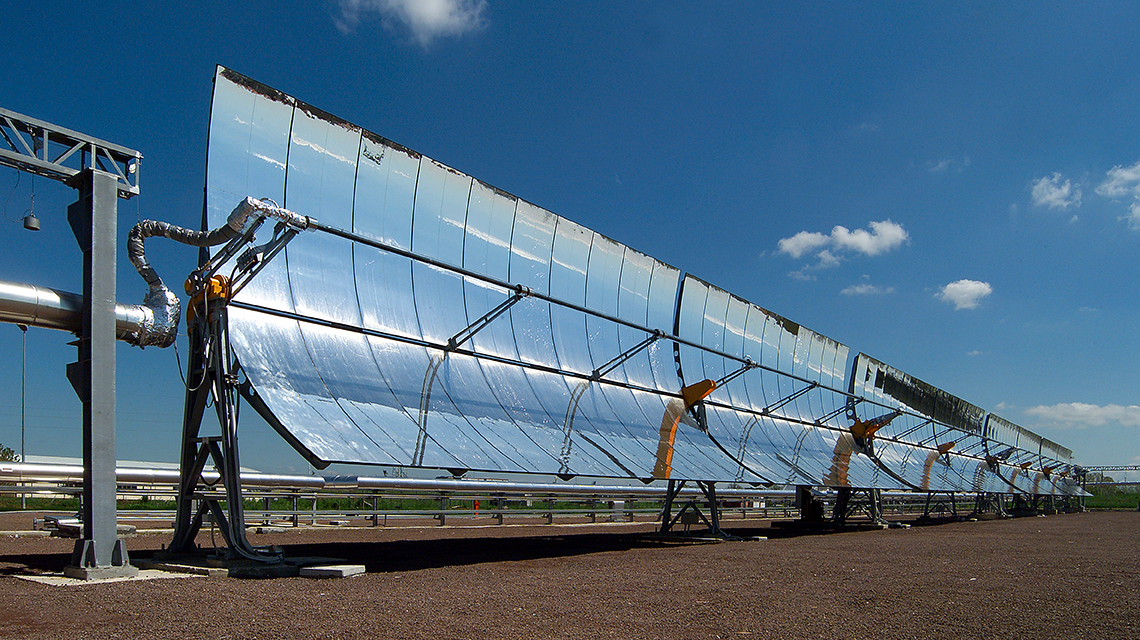
Developing a more efficient, economical and sustainable innovative linear parabolic solar collector[1], compared to conventional technologies and capable of producing high-temperature heat on demand, through an integration with molten salt thermal storage systems, is the aim of the European project MSA Through, coordinated by the University of Évora (Portugal) and including ENEA among its partners [2].
The project involves constructing a 350-meter-long prototype in Portugal that will be tested for mechanical, optical and thermal properties and validated to prove increased efficiency of maintenance and management procedures compared to conventional plants.
“This new solar thermal technology can support the increase in the share of renewable energy in the energy and industrial system, helping to stabilize the electricity grid,” explained Francesco Rovense, at the Energy and Thermal Storage Laboratory of the Energy Technologies and Renewable Sources Department and project coordinator.
ENEA will be responsible for installing the equipment and conducting field tests, and developing a different method for night-time operation of the solar field to significantly reduce operating costs. In particular, ENEA operational strategy will be compared with that of another partner, the German Aerospace Center (DLR).
“In addition, to limit heat loss during the night, an innovative coating for the receiver tube will be developed and tested at the Solar Collector Test Facility (PCS) of the ENEA Casaccia Research Center in Rome” Rovense pointed out.
In the final phase of the project, a technical-economic and socio-environmental analysis will be conducted with a view to the future commercialization of the new collector.
"ENEA has been conducting research and development on the use of molten salts in linear parabolic collectors for over twenty years. In 2004, we were the first in the world to develop a system for the full-scale experimental study of these technologies, and we stand as an international benchmark today. We were chosen as one of the partners of MSA Through thanks to our expertise" concluded Valeria Russo, coordinator of the ENEA activities in the initial phase of the project.