Italian National Agency for New Technologies, Energy and Sustainable Economic Development

MEDIA - Press office ENEA
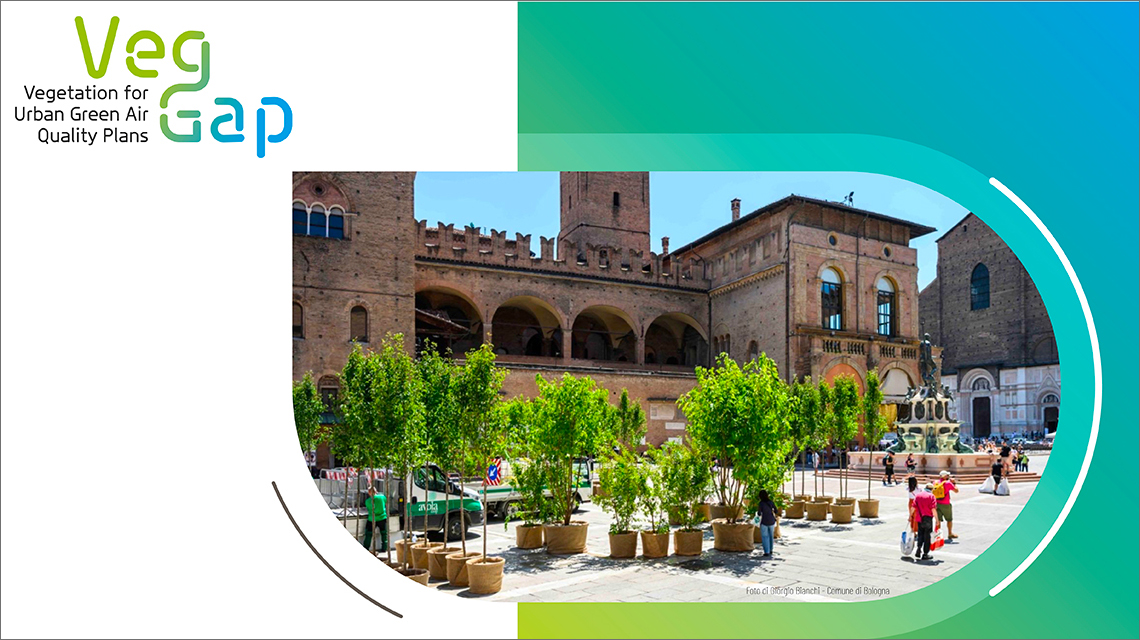
Environment: ENEA, nature-based solutions to improve health in cities
Urban forests, green corridors, vertical farming, green roofs and permeable pavements are among the “Nature-based Solutions” (NBS) that can reduce mortality in urban areas by mitigating extreme temperatures both in summer and winter. This is the conclusion of an international study published in the journal Forests and carried out within European project Life VEG-GAP, coordinated by ENEA. The research assessed the medium- to long-term potential of urban greening for two Italian cities and found that future vegetation interventions could prevent up to 3.4 deaths per year in Bologna and 1.2 in Milan.
“Vegetation helps counteract the urban heat island effect, promoting urban cooling and delivering health benefits to citizens, especially in the most densely built areas,” explains Mihaela Mircea, ENEA researcher at the Laboratory for Air Quality Models and Measurements and Climate Observations. She’s also the coordinator of the VEG-GAP project and a co-author of the study together with colleagues Ilaria D’Elia, Massimo D’Isidoro and Felicita Russo. “Climate variability,” she adds, “not only drives extreme heat or cold events but also influences long-term temperature trends. Understanding how prolonged exposure to temperature variability affects the health of urban populations is therefore essential.”
To evaluate how the vegetation influences city temperatures, the researchers applied two atmospheric modelling systems at high spatial resolution (1 km²) capable of estimating meteorology, air quality and long-term mortality caused by changes in daily temperature – expressed as heat degree days (increases ) and cold degree days (decreases ). The Italian MINNI modelling system, developed by ENEA, was used for Milan and Bologna, while the WRF-CMAQ international modelling system was adopted for the third pilot city, Madrid.
In Milan, the greening plan would result to an increase in average temperatures of +0.1 °C on the hottest days and +2.4 °C on the coldest days. These shifts translate into a slight increase in heat-related mortality (+0.9 deaths per year) and a more significant reduction in cold-related mortality (–2.1 deaths/year), yielding a positive net effect of 1.2 avoided deaths annually. “The limited impact of NBS on temperature in Milan is linked to both the planned greening interventions and to the city’s morphology, flat topography and high building density, which makes it challenging to achieve strong cooling effects with the greening measures considered in the study,” Mircea notes.
In Bologna, a new urban revegetation plan is expected to produce cooling effects, especially in the northern part of the city (up to –0.2 °C), as well as a slight reduction in heat degree days (–0.7 °C). Consequently, health impacts would be more favourable, cold-related mortality would decrease more (3 avoided deaths per year) than heat-related mortality (–0.4 deaths), resulting in a net benefit of 3.4 avoided deaths annually.
However, the effects of introducing green solutions would be more stronger in Madrid leading to a net reduction of 4.1 deaths per year. This is due to the decrease in heat-related mortality (–7.4 fewer deaths per year) and a slight increase in cold-related mortality (+3.2 additional deaths, mainly due to the increase in cold degree days).
‘NBS can play a key role in making cities more resilient as they face of climate change and biodiversity loss — global threats that cannot be addressed separately from urban expansion, considering that around 68% of the world’s population is expected to live in urban areas by 2050,’ Mircea comments. ‘For this reason,’ she concludes, a growingnumber of public administrations are incorporating NBS into their land-use management and citizen-protection strategies to tackle urgent issues such as water scarcity, flood and heatwave risks, and ecosystem degradation caused by urbanisation and climate change.’